


Baltic Sea Prize award to fisheries researcher Henrik Svedäng
Cheers erupted at the Baltic Sea Centre upon hearing the news that our long-standing colleague Henrik Svedäng has been awarded the Björn Carlson Östersjöpris 2026. “This was truly wonderful and well-deserved,” says Tina Elfwing, director of the centre. “I have always held Henrik Svedäng in high regard for his independent and courageous thinking.”
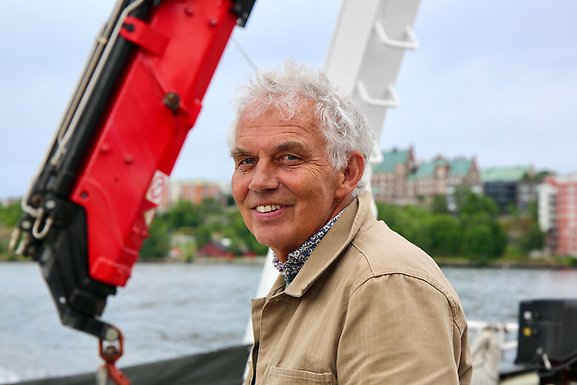
Henrik Svedäng aboard the research vessel Electra. Photo: Lisa Bergqvist
Long experience
Henrik Svedäng has been working on fisheries issues since the 1980s, at several universities and also within the public sector, at the former Swedish Board of Fisheries. He has taken a particular interest in species that have been subject to extensive fishing – such as cod, eel and herring – and has studied their biology, ecology and historical development to gain a deeper understanding of what happens to the stocks, and to the Baltic Sea, as stocks decline.
Works tirelessly to highlight the gravity of the situation facing fish stocks and the Baltic Sea.
”This extensive experience from various fields lends extra weight when Henrik champions a cause,” says Christoph Humborg, scientific director at the Baltic Sea Centre. ”Henrik truly forges his own path in fisheries research, producing interesting and often groundbreaking new analyses, and works tirelessly to highlight the gravity of the situation facing fish stocks and the Baltic Sea. It is truly impressive just how much influence he has, and to see how he – seemingly completely fearless – speaks out in every context, even though the topics are often controversial.
We are very proud!
Prize motivation from the foundation
For his pioneering research in marine ecology, fisheries science, and ecosystem-based management, Henrik Svedäng is awarded Björn Carlsons Östersjöpris 2026. His commitment to raising awareness among policymakers, NGOs, media, and the public, extends his research far beyond academia, and has made him one of the Baltic region’s most influential voices for sustainable fisheries and ecosystem protection.
Last updated: 2026-08-26
Source: Stockholm University Baltic Sea Centre