


Scientific advice used twice to increase TAC for Gulf of Bothnia herring by 15,000 tonnes
2026.08.24 This year’s TAC (total allowable catch) for Gulf of Bothnia herring has been increased by just over 40 percent. The increase followed a push by Finland—and was justified through an unusual maneuver in which the same scientific advice was used twice for different years.
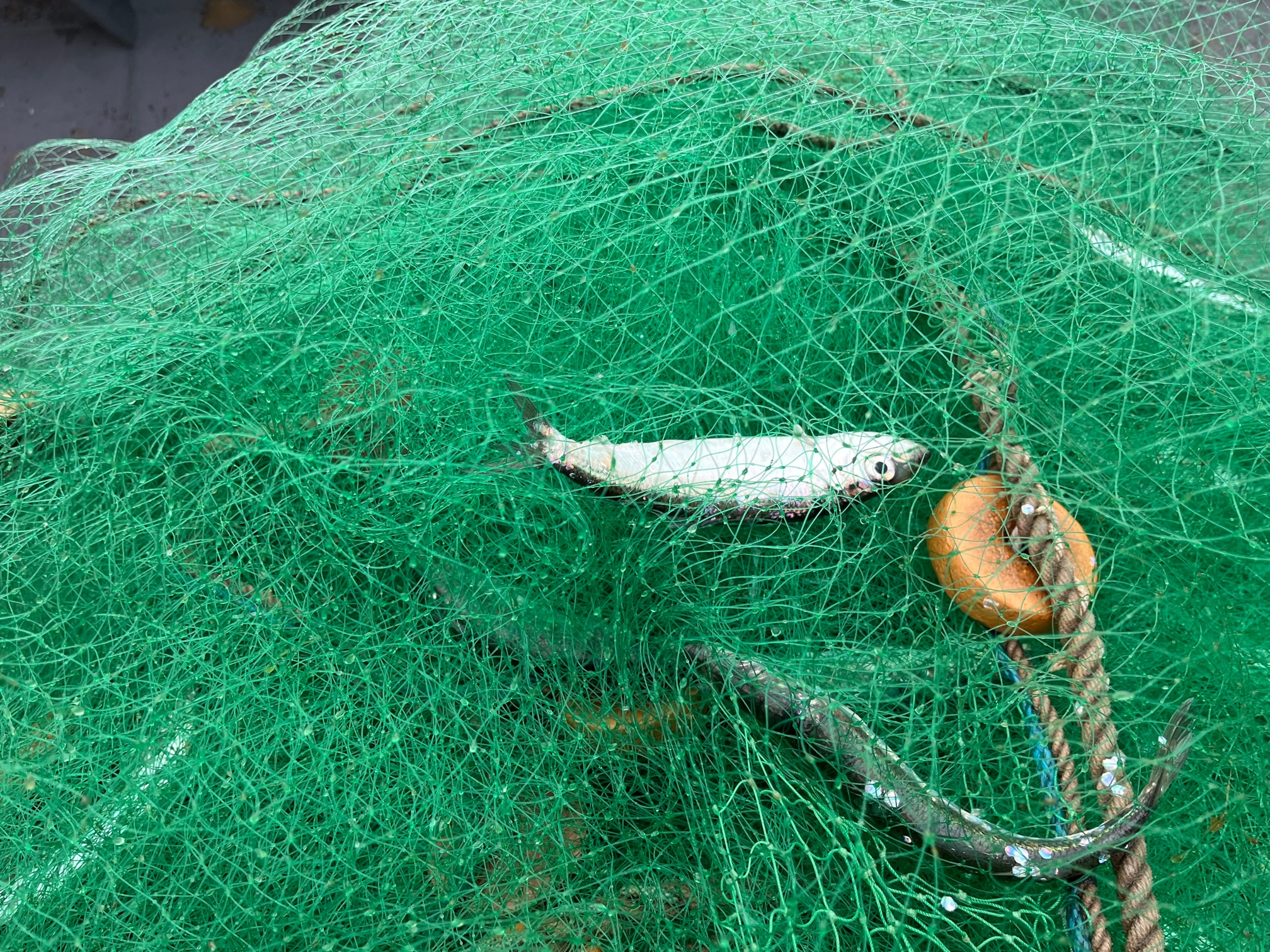
Photo: Henrik Hamrén
During the spring and summer, the catch quota for the Gulf of Bothnia herring stock was reassessed and renegotiated at various levels within the EU, and on July 1, the Council of the European Union adopted a new regulation increasing this year’s TAC by 43 percent, to 55,869 tonnes (Finland is allocated 45,805 tonnes and Sweden 10,064 tonnes).
“Personally, I think this type of renegotiation is a step in the wrong direction,” says David Gilljam, a researcher at the Swedish University of Agricultural Sciences (SLU Aqua) and one of the researchers responsible for the data used in the International Council for the Exploration of the Sea’s (ICES) stock assessments.
“Allowing quotas to be changed during an ongoing fishing year is even more short-term than today’s already short-term management. We should be aiming for the opposite: a more long-term management model that allows stocks at low levels to rebuild over several years,” he says.
The TAC became “provisional”
The original TACs for the 2026 Baltic Sea fisheries were decidedvat the Council meeting in October last year. According to ICES scientific advice, the outlook for the Bothnian herring stock was bleak at the time.
The Commission therefore proposed a sharp TAC reduction, to a maximum of 25,560 tonnes, in order to comply with the so-called ”five-percent rule” in the multiannual plan for the Baltic Sea. However, the Council’s decision settled at a higher level, 39,108 tonnes, prompting Sweden to become the only member state to vote against the agreement.
According to the Council’s decision, the TAC was also to be regarded as “provisional.” Finland had argued that the annual acoustic surveys carried out in the Bothnian Sea in the autumn (September/October) could potentially show that the stock was in better condition than indicated by ICES advice.
The Commission and Finland therefore agreed on a joint statement stipulating that ICES would receive Finland’s latest data from the autumn surveys as soon as they had been analyzed—and would then update its advice for 2026.
Finland’s Minister of Agriculture and Forestry, Sari Essayah, was very pleased with the agreement.
“We managed to reach the best possible solution in light of Finland’s objectives in a very difficult negotiating situation. With this overall solution, the value chains within the fisheries sector remain viable and the fishery is sustainable,” she said after the Council negotiations.
ICES: No “new special calculations”
“There seems to be a perception that this involved completely new survey data submitted to ICES. But that is not the case. These surveys are conducted every year and are a recurring part of ICES’s annual stock assessments,” says David Gilljam.
Finland’s autumn surveys are part of the Baltic countries’ Baltic International Acoustic Survey (BIAS). Since they are conducted in the autumn, they are normally used in the stock assessment carried out by ICES the following year.
The standard advice process would be that the survey data from autumn 2025 should only be used in the ICES stock assessment produced in April/May 2026, which in turn forms the basis for upcoming TAC negotiations for 2027.
Normally, that’s how it works year after year. But this year was different.
This spring, Finland submitted its data and analyses from the acoustic surveys to ICES, as agreed. The Commission then requested ICES to update the scientific advice for Gulf of Bothnia herring.
ICES, however, chose to adhere to its usual advisory process.
“We decided not to carry out any new special calculations based on the Finnish survey results. Instead, we referred to the 2026 scientific advice as well as the new regular stock assessment carried out in May this year,” says Max Cardinale, a researcher at SLU Aqua and Sweden’s representative on the ICES Advisory Committee (ACOM).
There was, however, one exception.
New data lowered risk
With each new stock assessment, ICES scientists perform a wide range of calculations that are normally not reported in the scientific advice – for example how previous years’ TAC and risk levels would have performed in relation to the latest results.
ICES’s previous projections from 2025 showed that a TAC of 55,869 tonnes would entail a 9 percent probability that spawning-stock biomass would fall below Blim by the end of the fishing year – which would constitute a clear violation of the “five-percent rule.”
But when recalculated in the context of 2026, with new data (including Finland’s autumn survey) incorporated into the models, the same probability was only 1.34 percent—and would have comfortably met the “five-percent rule.”
This information was delivered to the Commission in a technical service on June 10 this year:
“The probability of the Gulf of Bothnia herring stock being below Blim in 2027 is estimated to be 1.34 %, based on the short-term forecast carried out to produce advice on fishing opportunities for 2027.”
Same advice used twice
During the summer, the issue of increasing the ”provisional” TAC was discussed politically in several rounds. On June 30, a written procedure was sent to the member states, asking them to respond “Yes,” “No,” or “Abstain” to a propose TAC increase to 55,869 tonnes.
The following day, the Council announced that a qualified majority had been reached in favor of the proposal and that the new regulation for the 2026 fishing year had been adopted.
ICES’s updated retrospective calculations of the risks probably played a major role in the politicians’ decision to increase this year’s TAC. At the same time, it is clear that ICES’s latest stock assessment (2026) is being used twice this year: first to increase this year’s quota, and then as a basis for forthcoming TAC decisions for 2027.
What role did Finland’s survey data from last autumn play in this?
“The model integrates both fishery-independent and fishery-dependent data, so it is difficult to say what had the greatest significance for the latest stock assessment. But in general, the survey data showed that the stock appears to have recovered somewhat,” says David Gilljam.
How so?
“The herring yearclasses born in 2023 and 2024 appear to be stronger than we thought last year, which means that spawning-stock biomass increases quite substantially in the latest stock assessment. At the same time, acoustic survey data are often uncertain and can vary from year to year, particularly when it comes to the youngest year classes. Generally, recruitment in the most recent year is often difficult to estimate, meaning that ICES estimates of the number of one- and two-year-old herring are frequently revised upward or downward from one year to the next as new data are added.”
Fishing pressure should be reduced
Increasing a previously decided TAC during an ongoing fishing year risks making ICES’s work on stock assessments and quota advice more difficuld, and increases uncertainty.
“Moreover, it should be remembered that the Gulf of Bothnia herring stock still has a very low proportion of large, older fish, while the current management system takes neither age structure nor potential genetic subpopulations into account,” says David Gilljam.
According to SLU’s analyses, this situation will persist as long as fishing continues toward the target of maximum sustainable yield (FMSY). To restore the large, older herring in the stock, fishing mortality needs to be reduced to 20–40 percent of the current FMSY level, the researchers argue.
“Given the stock’s overall status, one should ask whether it is really wise to immediately increase the TAC as soon as an increase in the stock is observed,” says David Gilljam.
Missing the actual objectives
The five-percent rule in Article 4.6 of the Baltic Sea multiannual plan is a statutory “emergency brake” intended to prevent fish stocks from collapsing as a result of excessive fishing when stocks have been severely depleted.
According to Charles Berkow, policy expert at the Stokcholm University Baltic Sea Centre, it is unfortunate that management focuses so heavily on this rule while forgetting the actual objectives of both the multiannual plan and the Common Fisheries Policy.
“The EU’s fundamental objective is for spawning-stock biomass to be at least above Btrigger, that is, above the level capable of delivering FMSY. This objective is not mentioned at all, and now that the TAC is being increased, there is also no mention of whether this means that we are moving further away from the target this time,” he says.
The Gulf of Bothnia herring stock has been below Btrigger for at least ten years. According to ICES’s latest advice from May this year, the probability that spawning-stock biomass will be above Btrigger at the end of the fishing year is 38 percent (assuming fishing at the lowest range in ICES’s headline advice, Flower).
“This means there is a risk of missing the target once again. In this situation, increasing the TAC during the current fishing year is a flagrant violation of the spirit of Articles 3.1 and 5 of the Baltic Sea multiannual management plan,” says Charles Berkow.
Text: Henrik Hamrén
Last updated: 2026-08-25
Source: Stockholm University Baltic Sea Centre