News

  • AI helps systems do more with less

    Smarter decision-making can save both energy and bandwidth, for example when your wearables communicate with your phone. Shubham Vaishnav has explored lightweight AI-driven solutions for this.

    Department of Computer and Systems Sciences
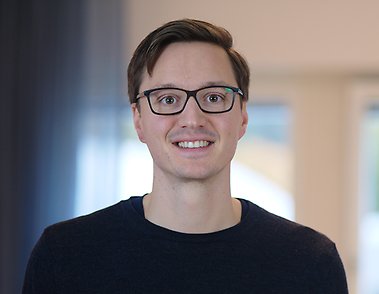
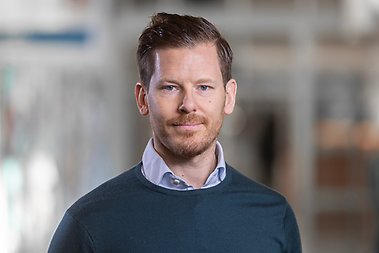
  • Nils Landén Mammos, PhD candidate in economics at Stockholm University.

    Nils Landén Mammos: Parents’ wealth matters significantly for first-time homebuyers

    In his doctoral dissertation in economics, Nils Landén Mammos examines how macroprudential and monetary policies affect households and firms through the housing market. One of the essays studies how parents’ housing wealth helps young people enter the housing market and what this means for the pass-through of mortgage regulations.

    Department of Economics
  • Shape before material: a new design rule for microwave absorbers in cosmic telescopes

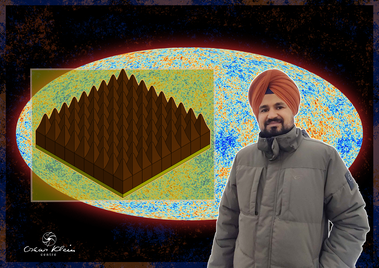
    A recent study led by postdoctoral researcher Gaganpreet Singh at the Oskar Klein Centre brings together numerical simulations, in-house material fabrication and laboratory measurements at a level of detail not previously reported for this class of microwave absorber. The work shows that the geometry of a millimetre-scale absorber, and not the material it is made of, governs how well it traps incoming microwaves. The study, selected as an Editors' Pick in Applied Optics, could simplify the design of future telescopes observing the afterglow of the Big Bang.

    Oskar Klein Centre
  • Social contact gives young fish larger brains

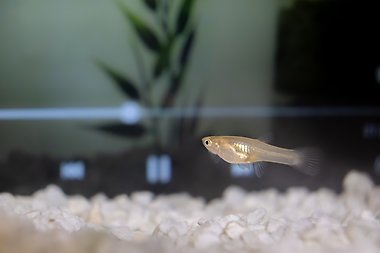
    Young guppies who were able to see and interact with live fish developed larger brains than guppies who only saw other fish on a screen. This is shown in a new study from Stockholm University, published in Biology Letters. The findings suggest that live social interaction in real time may be important for brain development.

  • Giorgio Basciu.

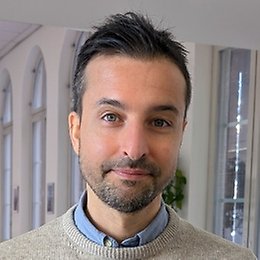
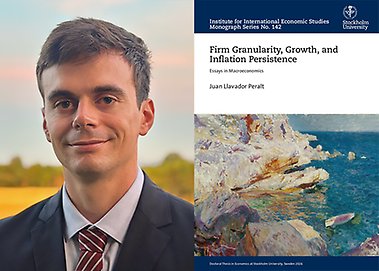
    The Scardigli award to Giorgio Basciu's for the Doctoral thesis Word Pairs and Other Syndetic Constructions in Old Norse Poetry (2025)

    Giorgio Basciu has been awarded the Scardigli Prize by the Italian Association of Germanic Philology (Associazione Italiana di Filologia Germanica – AIFG) for his doctoral thesis, Word Pairs and Other Syndetic Constructions in Old Norse Poetry (2025). The award is presented for outstanding research in Germanic philology.

    Department of Swedish Language and Multilingualism
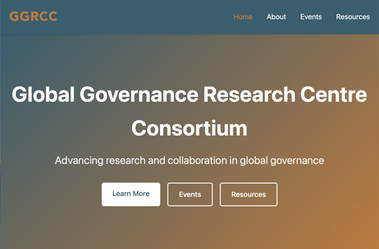
  • Screenshot of GGRCC website.

    A New Global Alliance for Global Governance Research

    The SCGG is a founding member of the new Global Governance Research Centre Consortium (GGRCC) – an international network of research centers on global governance. SCGG co-directors Lisa Dellmuth and Jonas Tallberg have been closely involved in developing this new initiative, which will be internally launched on June 8.

    Stockholm Center on Global Governance
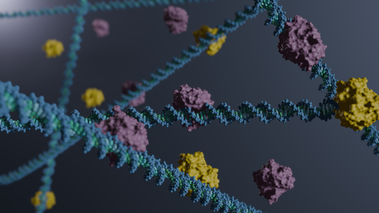
  • First human SMUG1 structures reveal how cells repair DNA

    Researchers have captured the first atomic structures of human SMUG1, an enzyme that helps cells repair damaged DNA. The findings provide new insight into how cells recognise and remove harmful DNA bases, and may support future efforts to develop drugs that target this DNA repair pathway.

    Department of Biochemistry and Biophysics
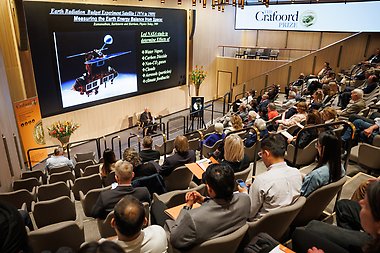
  • Understanding Earth’s energy balance: the science behind the 2026 Crafoord Prize

    Clouds above the Pacific, soot drifting from agricultural fires, polluted sea spray rising from warming oceans. At this year’s Crafoord Prize Symposium in Geosciences in Stockholm, leading climate researchers gathered to explore one of the defining scientific questions of our time: how aerosols, clouds and other climate pollutants are reshaping Earth’s energy balance, and what that means for societies around the world.

    Department of Environmental Science
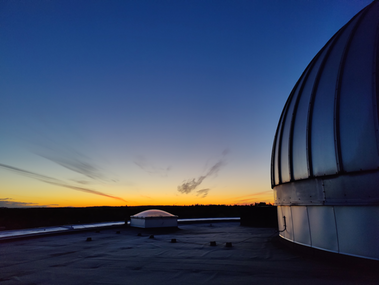
  • The AlbaNova Telescope in late evening.

    Practical astronomy – astronomy students learn to observe

    During the spring, PhD and master's students at the Department of Astronomy have observed astronomical objects with three different telescopes: Onsala Space Observatory, Nordic Optical Telescope, and the AlbaNova telescope. This observation exercise is an important part of their studies. The objects the students looked at are interstellar gas clouds in the Milky Way and exploding stars (supernovae).

    Department of Astronomy