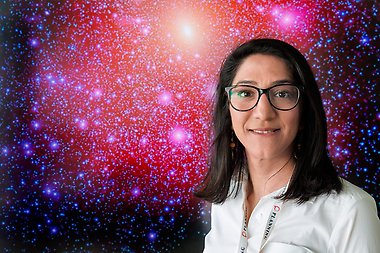
The smallest galaxies in the universe contain unusually large amounts of dark matter – the invisible and unknown matter believed to make up most of the universe. Azadeh Fattahi aims to gain a better understanding of dark matter by modelling how these dwarf galaxies form and evolve.
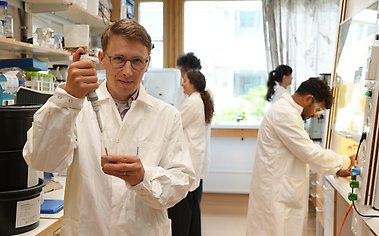
By-products from the forestry and agricultural sectors could help deliver more sustainable food production in times of climate change, environmental degradation and geopolitical instability. That is the idea of Mika Sipponen at Stockholm University, who is preparing a multidisciplinary collaboration involving industry partners and researchers from other Swedish universities.
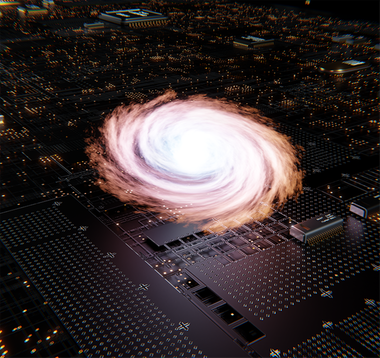
During the spring of 2026, researchers at the EDUCATE centre — the Oskar Klein Centre's new centre of excellence for the dark universe, run jointly by Stockholm University and KTH Royal Institute of Technology — began testing what a new generation of AI tools can and cannot do in everyday research. The work is part of the centre's agentic-AI initiative, and it drew in people from across the group: among them Renske Wierda, a PhD student in particle physics at KTH; Christian Ohm, an experimental particle physicist at KTH; Prerna Baranwal, a research engineer at KTH; and Arthur Loureiro, a researcher at the Oskar Klein Centre, Stockholm University amongst others.
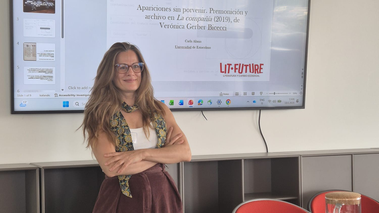
En el marco de las actividades de movilidad financiadas por el proyecto Erasmus+ Lit-Future, Carla Alanis, doctoranda del Departamento de Lenguas Romances y Clásicas de la Universidad de Estocolmo, participó en el congreso internacional REDES III.
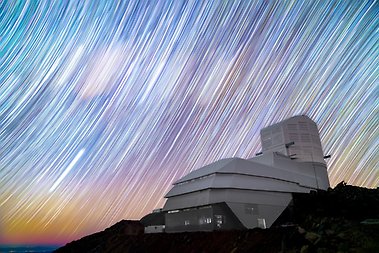
After more than two decades of construction and testing, the NSF–DOE Vera C. Rubin Observatory in Chile has formally begun the Legacy Survey of Space and Time (LSST), a ten-year record of the southern sky. At the Oskar Klein Centre (OKC) — which brings together researchers from the departments of physics and astronomy at Stockholm University and the department of physics at KTH Royal Institute of Technology — the milestone marks the point where a decade of preparation turns into data. We asked centre director Ariel Goobar, professor of physics, and several of his colleagues what they are now setting out to do.
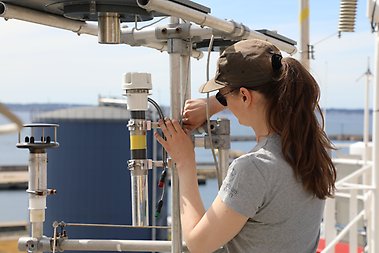
In September, the Icebreaker Oden will once more set out on a journey to the Arctic region. On board, a mix of PhD students and researchers will engage in research and education, and a mission to map the seafloor. Meet MISU researcher Matthew Shupe and two MISU students who are presently preparing for the journey ahead. “This is a great opportunity to build new research capacity by bolstering the next generation of polar scientists,” Matthew explains.
The Royal Academy of Sciences has awarded the Nagel price in physics to Ragnhild Lunnan, assistant professor at the Department of Astronomy. She is one of two scientists sharing the price for 2026.
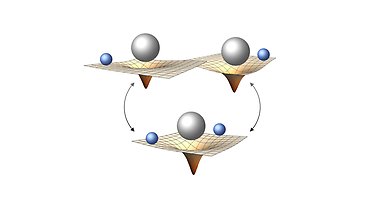
Quantum mechanics and gravity are two fundamental theories in physics that govern the natural world. However, uniting these two principles into the single theory of “quantum gravity” has yet to be done. Researchers at Stockholm University, Kyushu University and the University of Waterloo have now developed a theoretical framework that outlines what observations can distinguish between classical and quantum descriptions of gravity. This framework provides a roadmap for designing experiments to find answers to one of the most sought-after theories in modern science.
A rare Roman silver coin has been found at Vedby ringfort on Öland. The find is the first of its kind outside Gotland and provides new clues about how the ringfort was used during the Migration Period.
Over two days in June, the Center for Monetary Policy and Financial Stability (CeMoF) at Stockholm University and the Swedish National Debt Office jointly hosted an international conference focusing on financial crises and bank crisis management.
Laboratory tests revealed potential harmful health effects of the pesticide fluazinam, yet the results were withheld by industry and the substance was approved for use. Researchers at Stockholm University warn that systemic failures in the EU's chemical regulatory system are putting both the environment and human health at risk – and that the deregulation currently under discussion risks making the situation worse.
The Board of Science at Stockholm University has awarded Sophie ten Hietbrink the 2026 scholarship from the Sigrid Arrhenius Scholarship Fund. The prize is given for outstanding research that leads to a doctoral degree. This year's monetary award is 90 000 SEK.