News

  • On board Oden

    Stockholm researchers map the Arctic seabed

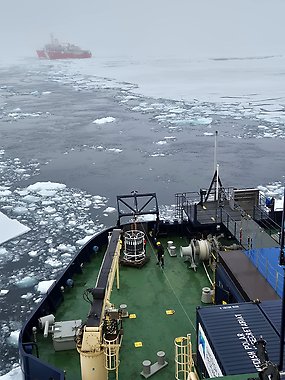
    This summer, the icebreaker Oden is once again on expeditions in the Arctic. The focus is on mapping the seabed for a fibre cable as well as research projects and a graduate school. Around ten researchers and doctoral students from Stockholm University are on board.
  • Launch of the WISE Research Technology Platfrom CircuLab

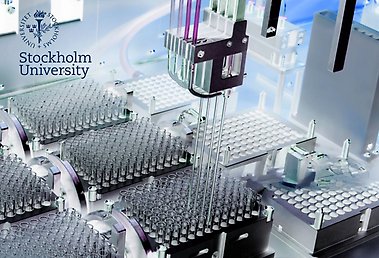
    CircuLab is a Research Technology Platform (RTP) funded by funded by WISE and Stockholm University for the synthesis, processing and application of sustainable materials, accelerated by integrated AI workflows. CircuLab is an open hub for academia, start-ups and industries.

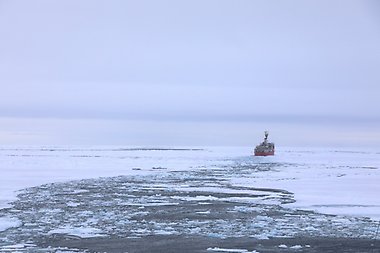
  • Image: The Icebreaker Louis S. St. Laurent can be seen from Oden as they move northward in the Arctic sea ice.

    Expedition Arctic Ocean 2026, blog post 3: Melt On Hold?

    Surely it must be melting? As we are moving northward in our journey I’m surprised to find almost no active melt ponds on the sea ice. Instead, in the middle of August, the ice floes are the bright white of fresh snow; The surface reflecting as many photons as it can to preserve the ice from its potential future demise.

    Department of Meteorology
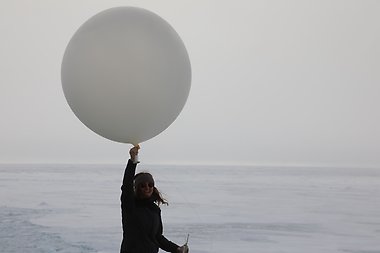
  • Woman holding a large gray-white balloon over her head, ready to release.

    Expedition Arctic Ocean 2026, blog post 2: Balloons!

    One of the things we in the met team do is launch radiosondes (weather balloons). A radiosonde is a small instrument that is attached to a helium-filled balloon. The balloon is released and allowed to rise through the atmosphere. As it rises, the instrument measures the temperature, wind speed and direction, and relative humidity. On Oden, we release radiosondes four times a day, every day, at 00:00, 06:00, 12:00, and 18:00.

    Department of Meteorology
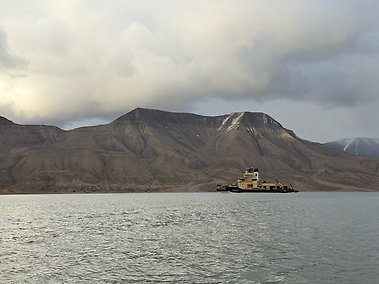
  • Image 1: I/B Oden, anchored outside Longyearbyen, Svalbard.

    Expedition Arctic Ocean 2026, blog post 1: Boarding Oden

    On Monday evening, we arrived in Longyearbyen and boarded I/B Oden to start our six-week journey into the Arctic. We got to the ship in the evening, around 21:00, tired after travelling all the way to Svalbard (some of us from Sweden, some all the way from Canada), but you probably couldn’t tell. The energy in the group was bubbling; I was giddy with excitement about finally getting to start the expedition!

    Department of Meteorology
  • Three happy girls with laurel wreaths.

    Celebrate your doctoral degree

    On 25 September, new doctoral graduates will be celebrated at Stockholm University’s annual inauguration of new professors and conferment of doctoral degrees ceremony in Stockholm City Hall.

  • Immune molecules play a limited role in ALS progression

    Immune-related molecules change in motor neurons affected by amyotrophic lateral sclerosis (ALS), but they do not appear to be major drivers of disease progression. The findings, published by researchers at Stockholm University, provide new mechanistic insights into disease pathology in ALS.

    Department of Biochemistry and Biophysics
  • Hands holding wine glasses, toasting

    Alcohol Can Both Support and Undermine Young People's Well-being

    Young people's use of alcohol — and other substances such as cannabis — is often discussed primarily in terms of risks and negative consequences. A new study from the Department of Public Health Sciences at Stockholm University suggests a more complex picture. While substance use can be linked to harm, it may also be associated with positive experiences. The researchers stress that their findings should not be interpreted as an endorsement of alcohol or drug use. Rather, they argue that a more nuanced understanding is needed to explain how substance use affects young people's well-being and changes over time.

    Department of Public Health Sciences
  • David Seim, Professor of Economics at Stockholm University.

    Research shows that the wealthiest pay less tax

    New research shows that the wealthiest 5,000 households in Sweden pay, on average, only 20–25 per cent in tax. David Seim, Professor of Economics at Stockholm University, writes about the findings in Dagens Nyheter together with Marius Ring and Gabriel Zucman.

    Department of Economics
  • Torsten Persson on the rise of new political parties

    In an interview with CorD Magazine, Professor Torsten Persson discusses why new political parties emerge and how they reshape political competition and representation.

    Institute for International Economic Studies
  • A taxi driver standing next to his car, lake in the bakground.

    Segregated labour market reinforces stereotypes about immigrants

    Employers in Sweden tend to prefer candidates with Swedish-sounding names in professions where individuals with foreign backgrounds are underrepresented, a new sociological study reveals. At the same time, the level of discrimination decreases in industries with a higher proportion of foreign-born workers. This dynamic contributes to reinforcing stereotypes about which jobs are deemed suitable for people with foreign backgrounds, according to Magnus Bygren, one of the researchers behind the study.

    Department of Sociology