


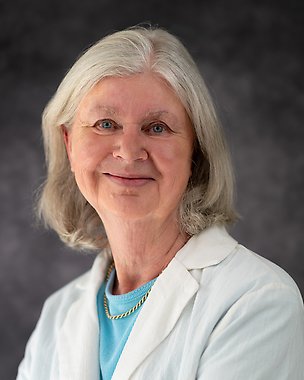
Honorary Doctor Karen Evans to give lecture on transitions into professional life
It is our pleasure to invite you to a lecture by our honorary doctor, Professor Karen Evans.
Department of Education
It is our pleasure to invite you to a lecture by our honorary doctor, Professor Karen Evans.
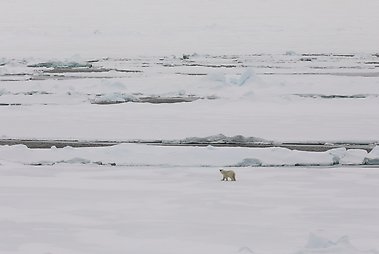
Yesterday we saw a polar bear! It is actually not the first one we have come across, we also saw one a couple of days ago, but that one was so far away that it was hard to see it even with binoculars. But last night I got a call on my ship phone as I had just gone to bed, and Faustine told me that there was a polar bear close to the ship. I called Melissa, in the met team phone chain we had established in case there was a bear sighting – no one wants to miss that!
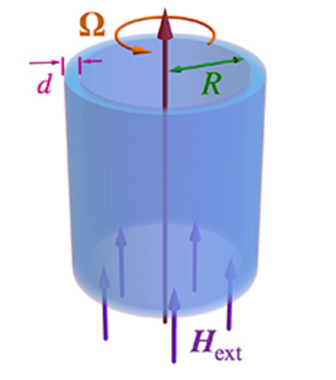
Superconductors are materials that can carry electric current without electrical resistance. But this remarkable state usually exists only below a certain temperature, known as the critical temperature. In a new theoretical study, Maxim Chernodub, senior scientist in the University of Tours, France, and Nobel Laureate Frank Wilczek, professor at the Department of Physics, Stockholm University, propose that this temperature could be increased simply by rotating a thin superconducting cylinder.
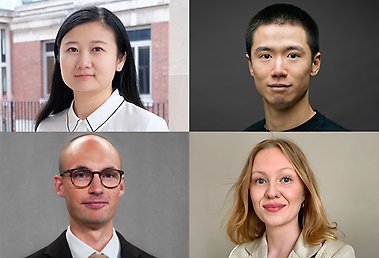
The department is delighted to welcome four new researchers to PROTECT — Protectionism in Place: Explaining How Subnational Change Affects Public Support for Protectionism.
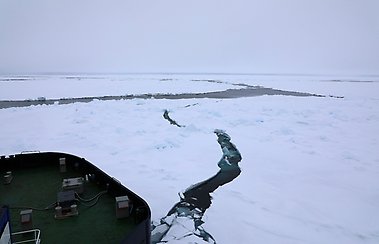
I’ve felt increasingly uneasy about the state of the Arctic system as we’ve travelled north, and then south after passing the North Pole. So much open water. Large stretches, and one after another. It made for smooth sailing, but it’s not a good sign for the ice. At the same time, apart from our first day in the ice, we’ve seen almost no open melt ponds (perhaps a better sign for the ice!).
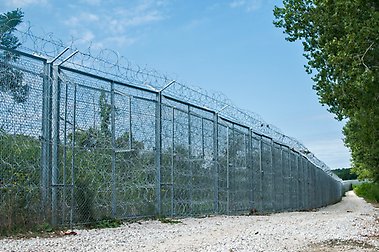
Beliefs about who belongs in the society and who can be excluded are well established in mainstream political ideas of liberal democracy, according to recent studies by Vanessa Barker, professor of sociology. Additionally, the results suggest that tools of repression within criminal justice to punish and deter migrants have destabilising effects on the society.

Stockholm University has updated and modernised the terms of use for university accounts and other IT resources. From 7 September, all students and staff must accept the new terms in order to continue using the University's digital services.
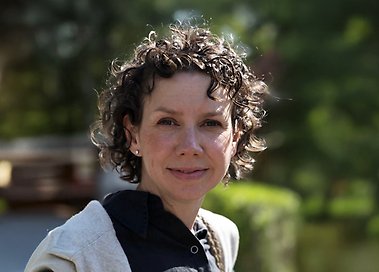
When Clare Levine discovered and applied to the Master’s Programme in Public Health Sciences at Stockholm University in 2016, her reaction was: “How did I not know about this field before?” With a background in sociology and psychology, she saw how the programme brought together her previous interests and skills while opening the door to something much bigger. Today, Clare Levine works as a statistician at the National Board of Health and Welfare.
The growing number of devices in manufacturing, health care and agriculture are helpful in many ways. But they also consume huge amounts of energy. Praveen Kumar Donta tries to solve this energy problem.
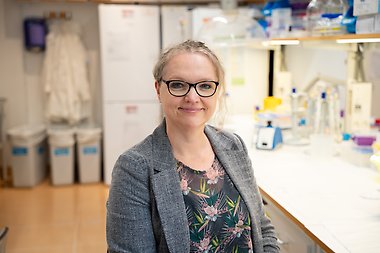
The liver may play an important role in explaining why people who carry the APOE4 gene have an increased risk of developing Alzheimer’s disease. This is the finding of groundbreaking research at Stockholm University. “Hopefully, in the long term, we will be able to offer preventive treatment to these individuals, in the same way that we currently prescribe medication for high cholesterol,” says Henrietta Nielsen, a researcher at Stockholm University.
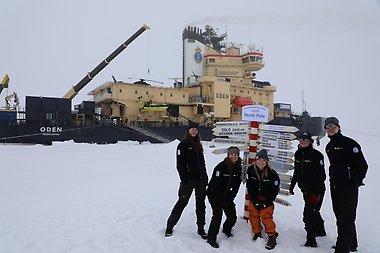
Today we arrived at the North Pole! When we started getting close to the pole we all gathered on the bridge as the crew guided Oden as close as possible to 90°N. As far as I was able to tell, we reached 89°59.9960’N, which is only a few meters from the true North Pole (measured from the center of the ship). We celebrated reaching the pole with (nonalcoholic) bubbles and a fanfare on cornet and clarinet.
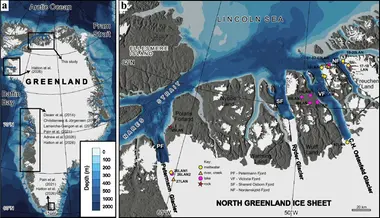
Researchers from Stockholm University are part of an international research team that has discovered a previously unknown source of methane beneath the northern Greenland Ice Sheet.