News

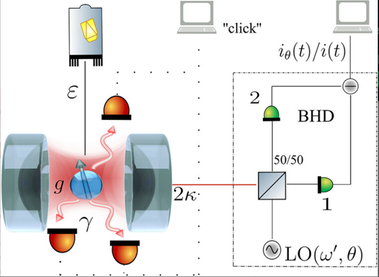
  • Exploring the Contextual Stern–Gerlach Experiment

    We have developed a new quantum version of the famous Stern–Gerlach experiment, using an artificial atom inside a cavity or superconducting circuit. Instead of a particle’s spin, the system has two possible quantum states. A resonant electromagnetic field takes the role of the magnetic field in the original experiment, explains Themistoklis Mavrogordatos, guest researcher at Fysikum, Stockholm University.

    Department of Physics
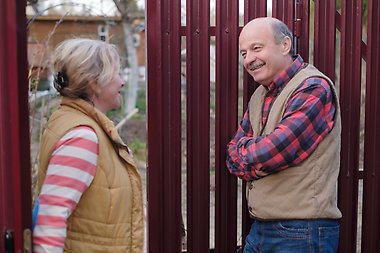
  • Two seniors talking to each others.

    Homogeneity fosters good neighbours

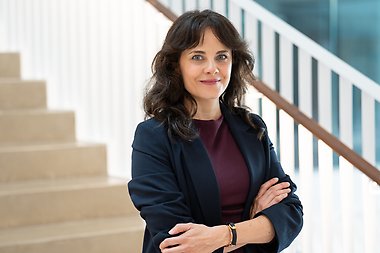
    Greeting neighbours is commonplace in Sweden, but higher levels of neighbour interaction are more unusual. This according to research by geography professor Karen Haandrikman, that also shows that homogeneity fosters the extent of neighbourly interaction.

  • Meet Lovisa Jansson, our new digital ambassador

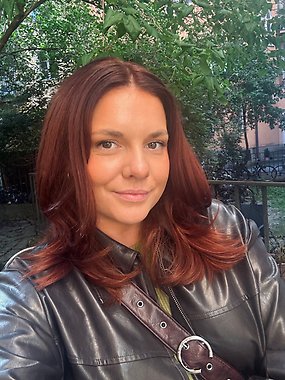
    Fysikum now has three digital ambassadors. Ignacio Verdugo is a doctoral student in the Medical Radiation Physics department. Medeea Husaru, is a bachelor's student in the Physics program and Lovisa Jansson is a doctoral student. Lovisa is 27 years old and comes from Degerfors in Värmland. She has studied in the bachelor's program in physics and the master's program in general physics. She is now a doctoral student in the Chemical Physics department at Fysikum. – The more I studied physics, the more it felt like the only right thing to do, says Lovisa.

    Department of Physics
  • Sol Juárez: Social inequalities cause immigrants' health to deteriorate

    Immigrants arriving in Sweden often have better health than the Swedish-born population – but that advantage fades over time, and their children face an even higher risk of premature death. Newly appointed professor of public health sciences Sol Juárez has spent her career at Stockholm University investigating why – and points to structural causes rather than culture or biology.

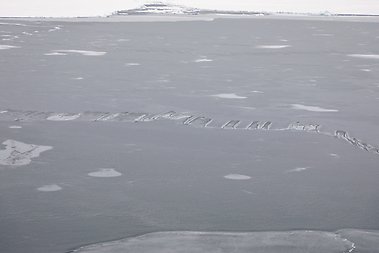
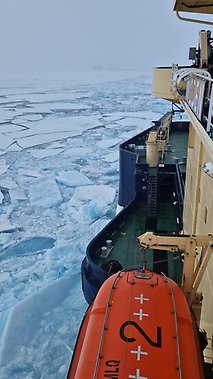
  • Caption: Grease ice forming on open water areas, pictured here with finger rafting.

    Expedition Arctic Ocean 2026, blog post 12: Greasy

    There has been a fascinating transition happening in the past two days. The open, ocean water in between ice floes has started to freeze. This process begins with the formation of grease ice. It is clearly some sort of “solid” interface sitting on top of the water, although it is still quite flexible allowing waves to propagate through.

    Department of Meteorology
  • A car in water

    A warmer climate is changing the water cycle, but not in the same way everywhere

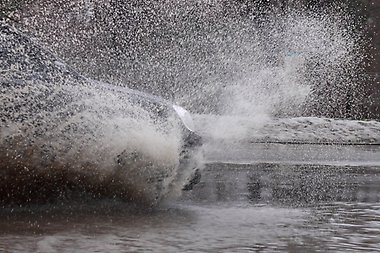
    The water cycle is changing in different ways across the world as the planet warms. A new study shows that the amount of water evaporating from land is increasing in the Northern Hemisphere but decreasing in the Southern Hemisphere. Looking only at the global average hides these differences, with implications for drought, flooding and water availability.

  • Jósef Sigurdsson, Associate Professor of Economics at Stockholm University

    Jósef Sigurdsson receives ERC Starting Grant

    Jósef Sigurdsson, Associate Professor of Economics at Stockholm University, has been awarded a European Research Council (ERC) Starting Grant of nearly 1,5 million euro, to develop his research on the origins of economic success.

    Department of Economics
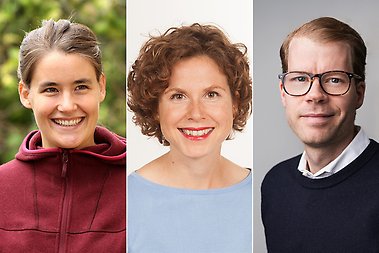
  • Collage with Maria Rugenstein, Rosa Weber and Jósef Sigurdsson

    6.5 million euros in Starting Grants awarded to Stockholm University

    Three research projects hosted by Stockholm University have been awarded ERC Starting Grants by the European Research Council (ERC). In total, the grants amount to approximately 6.5 million euros for research in fields including economics, sociology and meteorology.

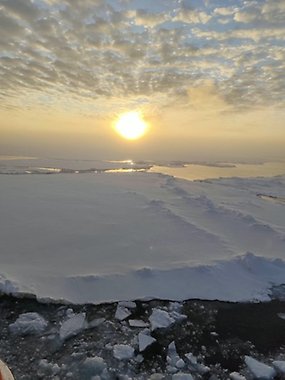
  • Caption: Sun at 10:45 am visible from Oden, somewhere in the Arctic Ocean.

    Expedition Arctic Ocean 2026, blog post 11: Sunset and sunrise

    It’s been a couple of weeks since we reached the North Pole and now we are moving around the other side of the Arctic Ocean. Since we left from Svalbard we have lived in constant daylight, but lately we have been experiencing almost a day-night cycle. In the morning when we wake up, it’s very bright outside.

    Department of Meteorology
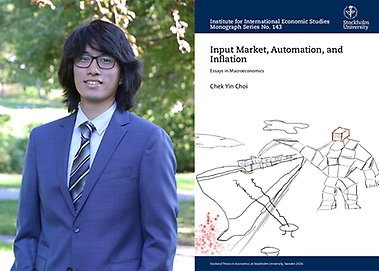
  • How firms’ choices shape the wider economy

    A new doctoral thesis by Chek Yin Choi at the IIES at Stockholm University, examines how firms' decisions shape productivity, labor markets and inflation.

    Institute for International Economic Studies