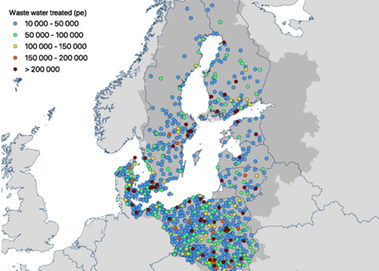
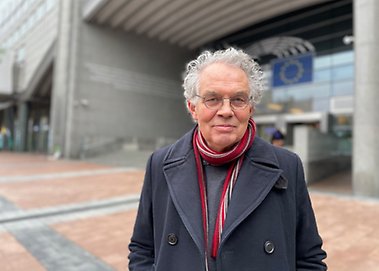
Both the European Parliament and the Council have now had their say on the Commission’s proposal for a new Urban Wastewater Treatment Directive. Researcher Bärbel Muller-Karulis and policy analyst Ellen Bruno have been following the process and analysed the outcome so far. Bärbel Muller-Karulis, regarding nutrient removal, what did the other EU bodies say about the Commission’s proposal? "The EU Parliament had its say on the proposal on 5 October and the EU Council on 16 October and both proposed a number of changes. Unfortunately, both Parliament and Council voted to soften the nutrient removal requirements proposed by the Commission. Both proposed that wastewater treatment plants should continue to be allowed to rely on natural nitrogen retention in rivers and lakes to reach removal requirements; permanently according to the Parliament and for a period of 15 years according to the Council. This is problematic since the level of retention is highly uncertain and differs immensely with waterbody characteristics, local climate etc. Both also opted to bypass nitrogen removal requirements altogether during the colder part of the year and suggest that days with wastewater temperatures below 12 degrees should simply be disregarded in removal calculations. Parliament and Council also did not follow the Commission’s strict (and ambitious) definition of 'urban' areas and both would like to apply the directive in areas with a higher population density than the Commission, leaving more effluent in rural areas to be treated in less efficient individual systems."
Anthropogenic greenhouse gas emissions not only lead to global warming but also cause ocean acidification. According to a new study, pH in parts of the Baltic Sea could decrease by 0.1 units by 2100 if carbon dioxide emissions continue at current levels. With increasing emissions, the reduction could be as large as 0.4 pH units, which could have a major impact on marine life. Ocean acidification has been called the 'evil twin of warming'. While greenhouse gas emissions are increasing carbon dioxide levels in the atmosphere, resulting in a warmer climate, levels of carbon dioxide are also increasing in the ocean, causing pH to drop and the ocean to become more acidic. Around a quarter of the carbon dioxide emitted has so far been absorbed by the oceans. “In the world's major oceans, pH has fallen by an average of 0.1 units since the start of industrialisation”, says Erik Gustafsson, oceanographer and researcher at Stockholm University's Baltic Sea Centre. “This may sound small, but it represents a change of more than 30 per cent.”
Within a new graduate school in marine, climate and environmental issues, 12 doctoral students at several of Stockholm University's departments will be hired. The graduate school is directed towards students who are interested in understanding their own research in a broad and interdisciplinary context. A particular focus is on deepening the understanding and provide new knowledge of the specific conditions and challenges of the Baltic Sea in a changing climate.
The man-made, and in many cases hazardous, chemicals called PFAS were previously believed to finally be transported to and diluted in the oceans. But at the last Baltic Breakfast, scientists at Stockholm University presented new research showing that these chemicals are enriched at the sea surface and return to land through sea spray aerosols, creating an almost never-ending transportation cycle. PFAS – Per- and Polyfluorinated Substances – is an extremely large group of man-made chemicals containing fluorine and carbon atoms that bind together multiple times. The substances are known for their water and grease resistant properties and are used in various industries and consumer products. They also have in common that they are extremely stable and don’t degrade in the environment. In many cases they are bioaccumulating, meaning they are stored and concentrated in living organisms. “They are essentially everywhere”, says Matt Salter, scientist at the Department of Environmental Science, Stockholm University. “They will be in this room in numerous forms.” Some PFAS have been proven harmful for both the environment and for humans, and most use of the substances PFOA and PFOS have already been banned, unfortunately to be replaced with other similar PFAS in many cases. Many different pathways PFAS reach the environment in many different ways; in form of air emissions from production, during use and disposal of consumer products such as waterproof textiles and stain-resistant coatings, and through landfill leachate and wastewater. Another major source is the use of PFAS in firefighting foam, which has caused contamination of land and drinking water.
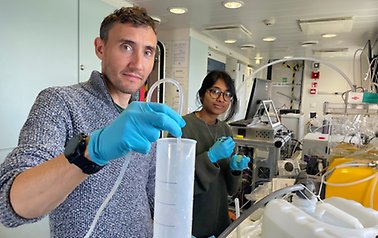
How does the smell of the sea impact the world’s climate? This question lies at the heart of the Cyano-VOC research project. Within this endeavour, aerosol chemists collaborate with microbiologists to investigate the volatile organic compounds emitted by cyanobacteria and other plankton residing along the coastlines of the Baltic Sea. In a warmer climate, cyanobacterial blooms in the Baltic Sea are anticipated to increase. However, these blooms could also impact the Earth’s climate by releasing gases into the atmosphere. "The familiar 'smell of the sea' is actually a mixture of volatile organic compounds, known as VOCs”, explains, Sneha Aggarwal , a PhD student in the Department of Environmental Science at Stockholm University. “We are investigating the specific components responsible for this scent."
The EU Commission's proposal to stop targeted herring fishing in the Baltic Sea is based on a scientifically based risk assessment. The historic fishing stops on North Sea herring and Norwegian spring spawning herring show that drastic measures can lead to both ecological and economic success. The EU Commission's latest proposal to stop all directed fishing for herring and sturgeon in the Gulf of Bothnia and the central Baltic Sea has been met with harsh criticism. "Sick” , thundered Anton Paulrud, CEO of the pelagic fishing industry organization Swedish Pelagic Federation PO. "Devastating" , said Wilhelm Liljeqvist, CEO of the fishmeal factory in Kasnäs, Finland. That the loudest criticism comes from the large-scale and more industrially oriented parts of the fishing industry is perhaps not so strange. Almost all of the catches in the Baltic large-scale pelagic fisheries are sold to fishmeal factories which requires access to large quantities of herring and sprat. "Who can you trust?" Part of the anger is probably also rooted in the fact that the International Council for the Exploration of the Sea's (ICES) latest advice sets herring quotas of a maximum of almost 49,000 tonnes in the Gulf of Bothnia and just over 41,0000 tonnes in the central Baltic Sea for next year, in accordance with the fishing mortality ranges found in the multiannual management plan for the Baltic Sea (MAP). How come the European Commission's wish to see less fishing than what is said in the ICES advice? Or as the Swedish Fisheries Industry's national organization put it: "Who can you trust?" . At first glance, it is easy to believe that the European Commission is going against science. But the Commission's proposal is actually based on ICES's analysis – but not on the quota intervals, but on the clear warnings that ICES also raises in its advice. The quotas follow the principle of MSY (maximum sustainable yield). But the MSY concept has several well-known shortcomings and is not sufficient to deal with the serious situation of herring stocks in the Baltic Sea. According to ICES, using the advised quotas to the maximum during next year would itself entail major risks for both herring stocks – risks that exceed the level that is acceptable according to the MAP. The EU Commission's proposal is thus not a denial of science but the result of a scientifically based risk assessment. Politically awkward Many details of the proposal are still unclear. The Commission has asked ICES for further information to be able to propose 1) bycatch quotas for herring, and 2) a reasonable quota for the sprat fishery, in which herring is also caught. In addition, the small-scale coastal fishermen are hoping for exemptions that will allow them to continue fishing for human consumption. In October, EU fisheries ministers meet to decide on next year's catch quotas. They are of course aware of the politically awkward situation that the Commission's proposal has created for them. If the ministers allow extensive targeted herring fishing next year, they show that they are prepared to take rather large ecological risks. Such a decision would also signal that the Baltic MAP does not carry much weight when it really matters. The plan was decided by the EU Parliament and the Council of Ministers, and is part of EU law. If they instead choose to follow the Commission's line and stop targeted herring fishing in the entire Baltic Sea next year (except in the Gulf of Riga), the fishing industry will likely be hit hard. It would undoubtedly be a painful decision. But in the history of European fisheries management, there are at least two examples that show that it can be worth it in the long run. North Sea herring recovered in five years The spawning stock biomass of herring in the North Sea dropped from over 5 million tonnes in the 1950s to less than 50,000 tonnes in the 1970s as a result of severe overfishing by vessels from at least 14 countries. In January 1977, the North Sea countries extended their economic fishing zones to 200 nautical miles from the coast. Shortly afterwards, Great Britain introduced a total ban on all directed fishing for North Sea herring in the British zone. During the summer, Dutch vessels made their way to British waters to fish for 'maatjes' (traditional cured herring), as they had always done. Two of the ships were stopped and boarded by the British Navy. Other North Sea countries soon realized that the once large and productive herring stock was disappearing for good, and in June 1977 all directed fishing on the North Sea herring was banned. The ban lasted six years, until June 1983, and had major economic and social consequences. Many ship-owners went bankrupt and both professional fishermen and processing industries disappeared. But seen in retrospective, the ban turned out to be an ecological and economic success. The North Sea herring responded very well to the reduced fishing pressure. The trend reversed and spawning stock biomass grew to nearly 2 million tons around 1990. Since then, spawning stock biomass has fluctuated between 1 and 2 million tons and is above both the precautionary level Bpa and the critical level (Blim) when the stock's ability to reproduce is seriously threatened. The important of spawning components Was it the fishing ban that saved the North Sea herring? The answer is undoubtedly: yes. The fairly quick stock recovery is considered to be partially due to successful recruitment with large year-classes during the recovery period. Another important factor was that the ban was enforced consistently and with full force. The North Sea herring consists of at least four spawning components or sub-populations. These components have different growth rates and migration patterns, and spawn in different places. This means that they are affected by fishing in different ways during different parts of the year – and that they recover at different rates. During the overfishing that led to the collapse in the 1970s, the various spawning components were depleted one by one, from south to north, and as the stock decreased, the herring retreated to its core spawning grounds. Since fishing was stopped in the entire distribution area, the stock was allowed to grow and could slowly recolonize even the more peripheral spawning areas. Diversity strengthens stock resilience Even if the spawning stock biomass of a collapsed fish stock grows above a certain limit, it does not necessarily mean that the stock has fully recovered. It may be at least as important to maintain the population's spatial and behavioral diversity and to make sure that the different spawning components are protected against over-exploitation. Especially since diversity generally makes fish stocks stronger and more resistant to both exploitation and environmental and climate change. This is a highly topical issue for the Baltic herring stocks. In both the Gulf of Bothnia and the central Baltic Sea, genetic research has been able to define several stock components with varying life histories and adaptation to different spawning periods and migration patterns. At present, the administration does not take this into account. Both in the Gulf of Bothnia and in the central Baltic Sea, herring stocks are managed as homogeneous stocks. The lack of large herring along the Swedish east coast suggests that several spawning components might have been decimated due to intensive large-scale fishing. There are also clear indications that there are different spawning components within the sub-populations, and that these components spawn in different places but are not necessarily genetically distinct from each other. This whole amazing mosaic of different sub-stocks and spawning components is what builds the productivity of different fish species. NVG herring took longer to recover The other good example concerns the Norwegian spring spawning herring, also called Atlanto-Scandinavian herring or NVG herring for short. During the first half of the 20th century, the NVG herring constituted Europe's largest population of vertebrates. But in just 20 years, from the 1950s to the 1970s, the stock was fished to the bottom. The spawning stock biomass dropped from just over 10 million tonnes to less than 10,000 tonnes. In 1971, a fishing moratorium was imposed and annual catches fell from 1-2 million tonnes to… zero. The recovery took significantly longer than for North Sea herring. The first strong year class in decades arrived in 1983. At the end of the 1980s, a small and strictly controlled fishery resumed and during the first half of the 1990s new strong year classes arrived, which further contributed to the recovery. Fishing gradually resumed, the spawning stock biomass continued to grow, and by the end of the 1990s the annual catches were again between 0.5 and 1 million tonnes. In other words, it took almost 30 years of restrictive quota setting for the stock to recover reasonably. New technology brought overfishing The reasons for the collapse of the NVG herring were above all a long-term and unsustainably large total take of fish and a long-term overfishing of small/young herring. The vigorous fishing was made possible by new technology; in this case the use of a new hydraulic winch (the power block). The issue of sub-populations and spawning components was key also for the NVG herring. The near-extinct stock remained in its core area in Norwegian waters and stopped migrating to the Atlantic. When the fishing pressure ceased the recovery began, and around 1990, the researchers saw how the NVG herring again began to migrate to areas outside Norway's economic zone. Today, the spawning stock biomass of the NVG herring is estimated at around 4 million tonnes and is above the biologically sustainable limit and ICES annually advice catch quotas of around 500,000 tonnes. Action must be taken in time Both the North Sea herring and the NVG herring were saved from an acute threat. Stock-wise, they are far from their former glory days. They still have the potential to grow larger. But the fates of both stocks show that it is actually possible to save fish stocks and make them recover, if only the measures are powerful enough and done in time. The big challenge is to identify when it is time - and act accordingly. Text: Henrik Hamrén Read more: Dickey-Collas, M. et al (2010): Lessons learned from stock collapse and recovery of North Sea herring: a review. ICES Journal of Marine Sceince, 67: 1875-1886. ICES Herring Assessment Working Group for the Area South of 62˚N (HAWG) 2023. ICES Scientific Reports 5:23. ICES HAWG Reports 2008. ICES Advisory Committee. ICES CM 2008/AOM:02 ICES: Advice on 2023 fishing opportunities for herring in subareas 1,2, and 5, and in divisions 4.a and 14.a, Norwegian spring-spawning herring (Northeast Atlantic and Arctic Ocean). ICES 30 September 2022. Rögnvaldur Hannesson (2022): Stock crash and recovery: The Norwegian spring spawning herring. Economic Analysis and Policy 74 (2022) 45-58.
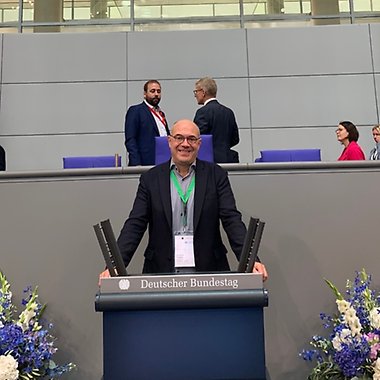
In a nine-page resolution with 65 bullet points, parliamentarians from all democratic countries around the Baltic Sea, set target measures for a safer, stronger and greener Baltic Sea region and agree to increase efforts to get this done. However, as always in a resolution, there are no details on how and when. The resolution is a result of this year's gathering of the Baltic Sea Parliamentary Conference (BSPC), a network of parliamentarians from the Baltic Sea countries, now excluding Russia. The BSPC has existed since 1991 and was established to promote dialogue and exchange between the countries. The network has a board and working groups, including one focusing on climate and biodiversity. The rotating presidency is now held by Germany, hence, this year's conference took place in Berlin, in the splendid plenary hall of the Bundestag, the German parliament. The conference addressed broad sustainability issues such as democracy, security and gender equality, but also focused on resilience in the marine ecosystem. It emphasised the importance of implementing the Paris Climate Agreement and that the role of coastal environments to function as carbon sinks is essential for climate mitigation. The discussion also covered the need to strengthen resilience of coastal areas and the open sea, protection of more marine areas and the reduction of fishing quotas to at least the level recommended by science.
Professors and colleagues Jacob Carstensen from Denmark and Daniel Conley from Lund University have together been awarded this year's Björn Carlson Östersjöpris. Their research collaboration has developed and broadened the understanding of how the Baltic Sea has been affected by eutrophication and other human activities, and has also been decisive for the measures implemented to improve the situation. Stockholm University has members on both the foundation's nomination committee and board, and therefore has a special interest in this award. In addition, the prize winners have collaborated with many researchers at Stockholm University. One of these researchers is Bo Gustafsson, who leads the work with the Baltic Nest Institute (BNI) decision support system at Stockholm University Baltic Sea Centre. - I started working with Jacob and Daniel already around the year 2000, when we all worked in an EU project on the importance of atmospheric deposition for algal blooms. We have become very good friends over the years, so I am very happy that they received the award this year! Jacob also became leader of Danish BNI at about the same time as me.
The European Commission proposes to stop all targeted fishing for herring in the central Baltic Sea and the Gulf of Bothnia next year. "The proposal to stop herring fisheries in almost the entire Baltic Sea is both historic and tragic – but unfortunately also necessary”, says Baltic Sea Centre's fisheries researcher Henrik Svedäng. On 23-24 October, EU fisheries ministers will meet to set the quotas for next year's fisheries in the Baltic Sea. This year, the negotiations are likely to be unusually gloomy. There is already a ban on targeted fishing on all Baltic cod stocks, and a ban on all fishing on the western spring spawning herring. On top of that, the European Commission recently announced its proposals to stop all targeted herring fishing in the central Baltic Sea and the Gulf of Bothnia next year.
The alarms about herring shortages along Sweden's east coast continue to come. In the absence of systematic environmental monitoring of herring in coastal areas, scientists do not know if and, if so, why herring is scarce. But a new study on the situation in the southern Stockholm Archipelago confirms the observations of coastal residents. The intense discussions in recent years about the situation of herring stocks in the Baltic Sea have their origins in coastal fishermen's alarms about a shortage of herring along the east coast, from the Bothnian Sea in the north to Hanö Bay in the south. For several hundred years, coastal fishing has generally had good catches in spring and autumn when herring seek out shallower waters to spawn. But that is no longer the case. Catches have fallen drastically, as has the presence of older and larger herring. In coastal municipalities, it is claimed that large-scale pelagic trawl fishing close to the coast is the main cause. However, due to a lack of environmental monitoring data and scientific evidence, it has been difficult to get the government and fisheries management to act. Should have better control – Herring has always been the dominant species for coastal fisheries along the east coast. Since it has been such an important species for Swedish fishing, it is quite strange that the authorities have not had better control of herring stocks in the coastal area, says Henrik Svedäng, fisheries researcher at Stockholm University Baltic Sea Centre. If there had been widespread and systematic environmental monitoring of herring stocks in the coastal area over the last 20-30 years, today's problems would probably have been detected earlier. – At best, the alarms about a herring shortage on the coast could have been checked fairly quickly, and then any measures could have been taken rather timely, says Henrik Svedäng. Study confirms herring shortage During a few summer weeks in August 2021, the Swedish University of Agricultural Sciences (SLU Aqua) conducted surveys in the southern Stockholm archipelago on behalf of the Stockholm County Administrative Board and Stockholm University. Using hydroacoustics and test trawling in Himmerfjärden Bay and around the islands of Askö and Nämdö, the researchers wanted to get a picture of the presence of herring juveniles, herring and other fish species. The aim was to find out whether the local coastal fishermen's observations could be substantiated. The results were recently published in the scientific journal Fisheries Research and showed that there seem to have been major changes in the fish community. In similar test trawls carried out in Himmerfjärden 20 years ago, during the years 2002-2004, catches were dominated by juvenile herring (55%), followed by sprat (29%) and one-year-old or older herring (14%). At that time, sticklebacks were close to non-existent. – We also got an indication that there were very few older herring compared to what it looked like almost 20 years ago. So, there is a risk that the herring stock have been severely decimated, says Henrik Svedäng.
This summer, the fisheries debate in Sweden has been hot again. The background is the perilous situation of the Baltic herring. There are fears that it may be following in the tragic footsteps of the Baltic cod. In particular, fishers are still not finding enough large herring in the Gulf of Bothnia to supply the industries producing the iconic regional delicacy, fermented herring (surströmming). The decline of the herring – a keystone species in the Baltic ecosystem, as well as a culturally and economically important catch – has led to a number of other interesting questions being raised. In particular, Sweden’s leading morning daily has had a series of articles delving deeper into marine fisheries issues. Examples include reports of rampant misreporting of species in the herring and sprat fisheries, highlighting the dominance of industrial herring fishing for fish meal, the impact of industrial fishing on small-scale or coastal fishers, the negative consequences of the introduction of individual transferable quotas (ITQ) for pelagic fisheries such as herring, the role of fisheries lobbyists and revolving doors and the amount of subsidies such as exemption from normal fuel taxes. Examples of media coverage (in Swedish) The fermented herring in danger - at risk of collapse Political demands after fisheries audit - stop industrial trawlers in the Baltic Sea Here, the Baltic Sea fish turns into fish meal "If grandfather had lived, he would have blown up their boats" The father of the ITQ system: "I have regrets" Fisheries lobbyists push towards trawling in protected areas in the Baltic Sea Half a billion in subsidies to fisheries - bad business for society Broad support for action There is broad public support for stronger measures to protect the Baltic herring, and in particular reducing or banning industrial trawling. A number of political parties inside and outside of the government have expressed interest in banning industrial trawling within the 12 nautical mile zone from the Swedish coast. But there are different opinions on whether the EU basic regulation on the Common Fisheries Policy (CFP) would allow such a ban could be enforced on vessels from Finland and Denmark. (More technically, if Article 20 would take precedence over Annex I point 12 or not.) In Sweden, an increasing number of voices have also spoken out in favour of a more general ban on industrial trawling in the Baltic. Here it is even more apparent that action on the EU level is needed. Initiatives and call for protection (in Swedish) Swedish Government - The industrial trawling in the Baltic Sea Several parties want to stop monster trawlers in Stockholm Stop the destructive industrial trawling fisheries The herring could soon remain a memory They demand action on the herring fisheries Stop the industrial trawlers before it is too late Rare opportunity to protect threatened fish stocks At the Stockholm University Baltic Sea Centre we have identified an opportunity for the Swedish government to act in a way that is completely compatible with the CFP . The government could simply state in a public way that Article 4.6 of the Multiannual Plan (MAP) for Baltic fisheries of herring, cod and sprat should be implemented as written: Fishing opportunities shall in any event be fixed in such a way as to ensure that there is less than a 5 % probability of the spawning stock biomass falling below B lim. The Baltic MAP was adopted in 2016, the first multiannual plan to be adopted after the CFP reform 2013 and a template for the other plans. Other EU multiannual management plans for fisheries include similar provisions. Article 4.6 can be seen as a safeguard. If there is too high of a probability that the stock will fall below the limit value of the spawning stock biomass (Blim) the fishery should be closed. In their latest assessment , scientists at the International Council for Exploration of the Sea (ICES) have estimated that even if there is no fishing at all for herring in the Gulf of Bothnia next year, there will be too high a probability of the stock falling below the limit value. If that happens, the stock may be permanently damaged or the fishery may even collapse. However, ICES has also advised that catches that correspond with the fisheries mortality ranges in the plan are between 48 824 and 63 049 tonnes. Contradictory messages from experts These two messages, on the surface contradictory, might be the result of a compromise between different approaches within ICES. It has happened before that ICES advice has contained contradictory messages . And a member of ICES Advisory Committee has explained on camera in a German television documentary that political aspects have been taken into consideration in preparation of a decision on advice, instead of purely scientific arguments. But, as we wrote in June , ICES places the responsibility for implementing the MAP in the European Commission and the Member States. When the Commission makes its proposal for Baltic total allowable catches for 2024, expected to be in late August, it will show its cards. Will it play the role of the Guardian of the Treaty, take on a role of a Maker of Deals – or kick the can to a later date? This is where signals from Member States, in particular those that actually fish for herring in the Baltic, in particular the Gulf of Bothnia, can be influential. At the fisheries council in October it will ultimately be up to the Member States ministers. They will have to decide if they will abide by the EU legislation in the MAP, adopted by both the Council and the Parliament, or not. What happens in the Baltic herring fisheries this autumn may be a precedent for following decisions in the CFP, both for herring and other fish stocks, both in the Baltic and in the EU waters of the Atlantic. Will the EU follow its own rules, and apply its own safeguards, or will it breach the rules to risk further depletion or collapses of European fisheries? As the end of a hot European summer is approaching, it is shaping up to be a hot autumn for the Baltic herring and European fisheries policy. Text: Charles Berkow