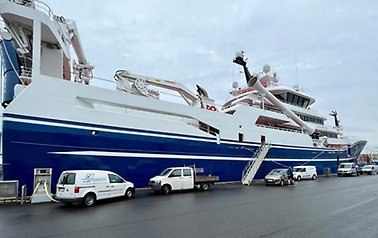
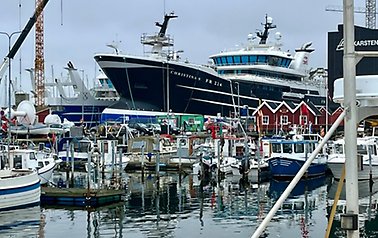
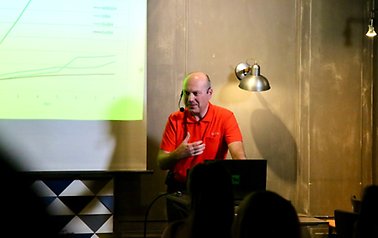
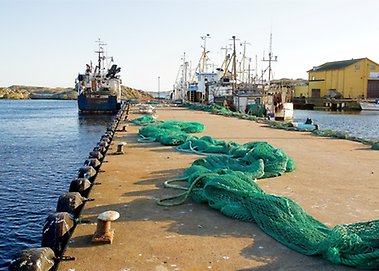
Measures to decarbonise the European fishing fleet will be less effective and more expensive unless the EU stops subsidizing fuel use and increases fish stocks. That was the main message in a presentation by Charles Berkow of the Baltic Sea Centre in a webinar on the energy transition of the fishing fleet, held in November.
Is it finally time for European fishing to pay a price for its carbon emissions? It may be, by 2027. That depends largely on Member States. They have been reluctant so far. But the clock is ticking. In reviewing the obligatory national action plans, the Commission should encourage Member States to include fisheries in the emissions trading system at the latest by 2027.
The so-called '5 % rule' in the multi-annual management plan for the Baltic Sea ensures that fishing pressure is reduced if the biomass of the fish stock is too low. The European Commission now wants to remove this safeguard from the management plan.
In October, the fisheries ministers in the Council decided to break a rule in European legislation. In December, the Commission proposed to delete the rule. The European Parliament and the Council had made the rules in the first place. Will the Parliament go along with the change? For years, European fisheries ministers agreed on fishing quotas that were unsustainably high. While perhaps popular with some in the fishing industry in the short run, in the longer term the result was depleted fish stocks and poor earnings for fishers. It was, of course, also harmful for the marine environment, though those effects are not as easily noticed in some circles. Probably due to the longer term social and economic impacts of the depleted stocks for coastal communities, the politicians realized that things needed to be done differently. An answer was long-term management plans, with rules for setting fishing quotas that would hopefully lead to more robust fish stocks. Sort of like Odysseus tying himself to the mast so he could listen to the sirens songs without being tempted to crash his vessel. These longer term multiannual plans were a keystone in the reform of the Common Fisheries Policy (CFP) in 2013. The first to be adopted, and the template for the others, was the Baltic Sea Multiannual Plan (MAP) , covering seven fish stocks of herring, cod and sprat. Adoption was delayed until 2016 due to a battle between the Council and the European Parliament over who gets to decide on the plan. The Parliament won in court, so the plan was adopted by both co-legislators. In practise it hasn't worked Despite being the result of a somewhat messy compromise between the two institutions, the plan has a certain logic to it. Article 4 contains the rules for setting fishing quotas, or total allowable catches (TACs). Article 5 has some extra safeguards (and some redundancies). Articles 4 and 5 in the multiannual plan A simplified version of Article 4 goes like this: 4.1 sets the overarching goal: TACs should be set within a range of values for the fishing pressure consistent with maximum sustainable yield (FMSY, the range being Fupper to Flower). 4.2 stipulates that these values should be estimated by scientists at the International Council for Exploration of the Sea (ICES) or some similar independent scientific body. 4.3 sets the basic rule: TACs should be set between the point value of FMSY and Flower. 4.4 has an optional exception from the basic rule: TACs may always be set lower than Flower. No conditions need to be met. 4.5 has another optional exception: TACs may be set between FMSY and Flower. But only if certain conditions are met. 4.6 has another exception, but this is obligatory: TACs “shall in any event” (in unusually sharp and clear language for EU legislation) be set so that the probability of the stocks falling below a limit level (Blim) is less than 5%. Article 4.6 can be seen as a seat belt: when stocks fluctuate, fishing pressure should be kept low enough so that they do not fall too close to a tipping point where they may collapse. At the time when the MAP was adopted, this seat belt was probably seen as superfluous. After all, the main objective of the CFP reform and the MAP was to restore and maintain stocks at target levels far higher than the limit value. Towards that end, the MAP has safeguards in Article 5. Again, in a simplified version, 5.1 says that when the stock falls below a trigger level (reasonably, below the target level) “all appropriate remedial measures shall be adopted to ensure rapid return of the stock” to levels above the target level. Then it states redundantly that a condition for applying the exception in 4.5 is not fulfilled, so that exception is not allowed. 5.2 says that when the stock falls below the limit level even more “remedial measures shall be taken to ensure rapid return of the stock” to levels above the target level. Then it states redundantly that this may include suspending the targeted fishery. On paper, it looks nice. In practise, it hasn’t worked. Since its adoption in 2016, three of the seven stocks managed by the Baltic Sea Multiannual Plan have crashed, in the sense that ICES has in essentially advised that the targeted fishery be closed. First out was the Western Baltic Spring Spawning herring. For 2018, (under the new MAP) the ICES advice was for a TAC below around 35 thousand tonnes or less. By 2019 the ICES advice was for a 0 catch. It has been there since. Next to crash was the Eastern Baltic cod, (albeit not due to overfishing). For 2018, the ICES advice was for a TAC of about 26 thousand tonnes or less. In the summer of 2019 the fishery was banned. It has been only a low by-catch ever since. Third in line was the Western Baltic cod. For 2018, the ICES advice was for a TAC of about 3.5 thousand tonnes or less. By 2022 the advice was for a TAC of less than 7 hundred tonnes, and that was only by-catch in the flatfish fishery. The advice has been only for by-catches since, dropping to a mere 24 tonnes or less for 2024. The optimist would be disappointed All the remedial measures taken under Article 5 have not prevented the crashes, nor, together with quota cuts (too little, too late) led to a return of the stock to even the limit level, much less the trigger level, not to mention the target level. Nor that the return was to be rapid. Needless to say, with a few short years’ perspective, these developments have not been good for coastal communities or from a socio-economic perspective. An optimist might hope that Baltic fisheries ministers and others involved in setting quotas would learn from these failures. The optimist would be disappointed. If anything, they have played a blame game. Some blame the seals or cormorants. Some blame deteriorating environmental conditions because of global heating or overfertilization of the sea. Some blame the Member States for not following EU environmental rules. Some blame the Russians. Even if there were some truth in all of these (which there might not be), it begs the question: what can you change in the short run, while trying to deal with the climate or eutrophication etc. in the longer term? Commission is removing the safety belt We at the Baltic Sea Centre have pointed out that the TAC decisions are based on forecasts over stock growth, and that they by nature are uncertain . That it is imprudent to base management decisions on the assumption that the growth forecasts will always be realised in full. There are plenty of examples of fish growth forecasts not being realised. It would make sense to apply a bigger precautionary buffer. Instead, the Commission is now proposing to remove the safety belt. This year, the scientists at ICES pointed out that the stocks of herring in the Central Baltic and the Gulf of Bothnia were so close to crashing that it was time to put on the seat belt. That is, the conditions for implementing Article 4.6 in the MAP were fulfilled. The Commission agreed, and duly proposed closing at least the targeted fisheries on the two herring stocks. Fisheries ministers balked: they opted for rather toothless remedial measures instead. Some have pointed out that this was a violation of the EU legislation . The ministers may have silently agreed this: they demanded a change of the rules. And now the Commission has obliged them. Less than a week before the next fisheries ministers meeting, the Commission is proposing to delete Article 4.6 in the Baltic MAP and its counterparts in MAPs covering two other regions. In contorted logic, the Commission now argues that the MAP is inconsistent. It claims that application of the seat belt may not be compatible with other provisions of the MAP, presumably the safeguard “remedial measures” that have failed to deliver. After all, Art. 5.2 only says that targeted fisheries MAY be closed, not that they MUST be closed. That is, its redundancy is not detailed enough. The Commission also says that applying the seat belt may “result in potentially severe socioeconomic implications”. Not reflecting on the socioeconomic implications of two more herring stocks potentially going down the tubes like the cod and Western Baltic herring. And by the way, the Commission asserts that the normal procedure of conducting impact assessments or public consultations is not necessary in this case. After all, it has consulted with the industry-dominated Baltic Sea Advisory Council and the Baltic coastal EU Member states in a presumably closed session of the government cooperation body “BaltFish”. Perhaps the Commission will come to its senses, depending on the reaction to the consultation it opened after presenting its proposal. Up to the Parliament Otherwise, that leaves the Parliament. Who, after all, went to court for the right to be co-legislator on the multiannual plan. Will it also defend its content? Or will it tell the ministers in the Council, in the spirit of Groucho Marx “those are our rules, and if you don’t like them, well, we’ll make others”? Text: Charles Berkow
The ocean has a major impact on the development of the climate, and the ongoing climate summit is the time to highlight this until now undervalued resource. So writes three professors at Stockholm University in a newly published Opinion piece addressed to the participants of COP28.
Gun Rudquist, Head of Policy at the Baltic Sea Centre was one of the presenters when a large conference on science for policy was held in October. Recordings from the conference is now available online.
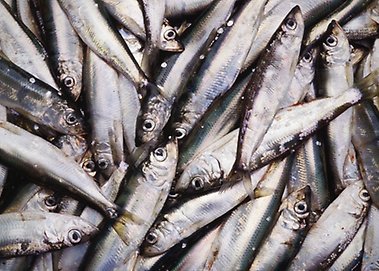
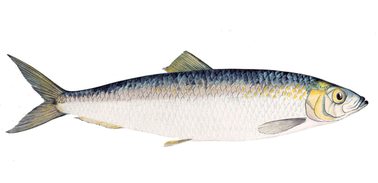
The Baltic herring stock in the Gulf of Bothnia has fallen to critical levels. It is said that the herring have become smaller and is not growing as it should. But above all, it is the number of herring that has decreased – by more than 50 percent over the past decade. The largest decrease is among older individuals.
Ahead of the UN-working meeting for setting up the science-policy panel for the sound management of chemicals and waste and to prevent pollution, researchers would like to address the risk of allowing chemical industry's to play a role in the panel. If biased industry is allowed to participate in the panel, there is a clear risk that it would render incompatible outcomes and undermine trust in the work of the panel. In March 2022 the United Nations Environment Assembly decided that a science-policy panel should be established to contribute further to the sound management of chemicals and waste and to prevent pollution. An ad hoc open-ended working group (OEWG) was created to prepare proposals for the science-policy panel, with the ambition of completing the panel by the end of 2024. The OEWG will meet in Nairobi on the on Dec 11-15 to discuss the outline of the Science-Policy Panel. In a new study “Conflicts of Interest in the Assessment of Chemicals, Waste, and Pollution” conducted by researchers from all around the world and with contribution from Stockholm University, the concept of conflict of interest is explored as well as the most common tactics for manufacturing doubt that the industry uses. The scientists who co-authored the paper issue the following key recommendations in order to ensure the effectiveness of the new Science Policy Panel for sound management of chemicals and waste and to prevent pollution: Define and strictly enforce rigorous Conflict of interest provisions. Experts with a Conflict of interest should not be allowed to participate in the decision-making process and the core work of the Science-Policy Panel, but may still contribute as observers. Implement independent audits to a) review compliance with the Conflict of interest provisions, and, if needed, recommend corrective measures to the governing body, and b) ensure that the Science-Policy Panel’s outputs are transparent, impartial, credible and scientifically robust, as mandated by the UNEA Resolution 5/8. Include as many elements of transparency as possible. The Science-Policy Panel should become a vigorous proponent of FAIR and CARE principles for scientific data management and stewardship. Do not confuse the undesirable conflicts of financial or political competing interests with legitimate interests or biases. What is Conflict of interest? Conflict of interest refers to professional, financial or other interest which could significantly impair an individual’s objectivity or create an unfair advantage for any person or organization. It is unavoidable that every expert holds a particular point of view or perspective that could be seen as biased, but a Conflict of interest only arises when an individual could have a direct and material gain in a certain outcome of an activity. Failure to manage Conflicts of interest in the Science-Policy Panel may result in: conflicting and/or incompatible outcomes, delayed implementation of solutions, eroding trust in science and scientists. What are the tactics for manufacturing doubt? More than two dozen strategies and tactics have been used to counter scientific evidence or to promote narratives favourable to specific industry sectors. Examples include: To criticize study designs and overemphasize the shortcomings of studies. To discredit, intimidate and threaten scientists. To publish misinformation using consulting companies that specialize in supporting private interests. To hide the sources of funding for research. Cherry-picking data, designing studies to fail or come to a desired conclusion, or conducting meta-analyses that dilute scientific evidence. Extensive lobbying towards regulators and policymakers so that the voice of the vested interest is often the main or even the only one heard in public consultations. Read more Policy brief: Conflicts of Interest in the Assessment of Chemicals, Waste and Pollution (137 Kb) Scientific article: Conflicts of Interest in the Assessment of Chemicals, Waste, and Pollution About the work The work was facilitated by IPCP, the International Panel on Chemical Pollution, www.ipcp.ch . The International Panel on Chemical Pollution (IPCP) was established in 2008 and is an independent assembly of academic scientists. It aims to provide an objective assessment of research on chemical pollution and waste and provides a platform for independent academic researchers across the globe to inform regional and global guidance for science policy. The IPCP contributes to shaping chemicals and waste management policies at regional to international scales.
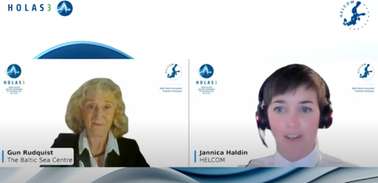
The state of the Baltic Sea is still not satisfactory and environmental toxins is a growing problem. This is one of the conclusions in the new HELCOM assessment HOLAS III. A report based on the assessment was recently launched at a webinar moderated by Gun Rudquist, Head of Policy at Stockholm University Baltic Sea Centre. HELCOM recently launched the third assessment on the state of the Baltic Sea, HOLAS III. It was presented at a webinar on 30 October, which is now available on line.
Limitation on vessel size, closed periods for fishing and beneficial environmental changes. Those are some possible factors behind the favourable development of the herring stock in the Gulf of Riga, according to the researchers participating in the last Baltic Breakfast.
There will be no closure for targeted herring fishing in the Baltic Sea next year. On October 24th, EU agriculture and fisheries ministers rejected the European Commission's proposal and decided to continue herring fishing, albeit with reduced quotas.
Fuel prices have tripled since 2019 and our previous cost model for R/V Electra af Askö needs to adjust accordingly. The board has therefore decided on a new model, where users pay their fuel costs. This is common procedure for other research vessels, and Electra will continue to be a low-cost option for research, courses and monitoring. The new principle for calculating the cost of vessel time is based on users bearing their share of the operating costs of the vessel and any extra crew, as well as the actual fuel costs. The new principle applies to all new applications for utilising the ships from October 1st 2023. Different rules apply to courses. “We encourage joint expeditions and try to help in co-planning to reduce costs, time and emissions. This is included Standard crew is included at no cost and no depreciation costs will be charged as the construction of the vessel was funded by the Erling-Persson Foundation. New prices for research with R/V Electra Hourly rental: 1 000 SEK (minimum charge of 4 hours) Daily rental: 16 000 SEK Extra crew: 11 000 SEK/day and person. Necessary number of crew members is determined by the commander and bases on the type of sampling and continuous time at sea (more than 12 hours at sea always means double manning). Actual fuel costs are charged separately. Fuel costs The price of diesel is currently (September 2023) 16.50 SEK/liter. It changes quite often. Our price is about 30% lower than the current price at a regular gas station. At the station/when sampling, Electra uses approximately 40 liters per hour. If the requirement for positional accuracy is low (50–100 meters drift is allowed), the fuel consumption can be reduced considerably. On transport routes at a speed of 10 knots, Electra uses approximately 80 liters of diesel per hour. Some examples of fuel consumption one way: • Landsort deep BY 31; 210 liters • Tvärminne; 1,600 liters • Simrishamn; 1,920 liters • Stockholm C; 560 liters A simple calculation tool for making own estimates of the costs before applications etc. can be obtained on request from the Commander of the Electra. Contact Thomas Strömsnäs , Commander, R/V Electra thomas.stromsnas@su.se Christoph Humborg , Scientific leader, Baltic Sea Centre christoph.humborg@su.se