Although scientific knowledge is more accessible than ever, bridging the gap between the research community and decision makers is still a challenge. During the international conference Open Science – From Policy to Practice, opportunities for scientists to increase dialogue and interaction with policy makers will be highlighted. In association with the Swedish Presidency of the Council of the European Union, the conference Open Science – From Policy to Practice , is held in Stockholm May 16-17. Together with the European Commission’s Joint Research Centre; Stockholm University Baltic Sea Centre will together with other university representatives and decision makers share views and experiences on best practices for science informed decision making.
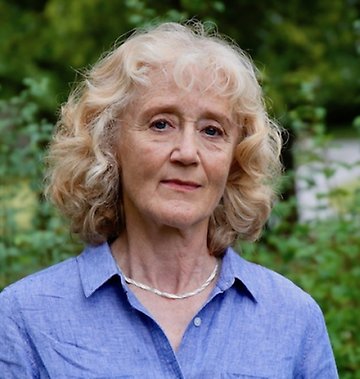
Since the EU's fisheries policy was reformed in the 2010s, three of the seven fish stocks in the Baltic Sea have collapsed, and there are worrying signs for two more. A team from Stockholm University Baltic Sea Centre recently attended a hearing at the European Parliament in Brussels to explain why politicians should be more restrictive on fishing quotas. In the 2010s, the EU Common Fisheries Policy was reformed and a multiannual plan (MAP) for Baltic Sea fisheries management was developed. The aim was to make the fisheries more sustainable, among other things by strengthening fish stocks by ensuring that fishing quotas did not exceed the estimated level of Maximum Sustainable Yield (MSY). “At the time, this was seen as an improvement, but it has turned out to not work so well in practice, partly because it is difficult to know where this level should be,” says researcher Henrik Svedäng from Stockholm University Baltic Sea Centre. Henrik Svedäng has worked on fisheries issues for 40 years and is a well-known name in the Swedish fisheries debate. He is frequently interviewed in various media and works actively to communicate his research to decision-makers by writing policy briefs and debate articles, responding to consultations and participating in political meetings. At the beginning of the year, he and policy analyst Charles Berkow travelled to Brussels to influence fisheries policy at EU level, where many of the most important decisions are made. Their main message is that fishing pressure must be significantly reduced on those stocks in the Baltic Sea that have not already collapsed. “I don't think everyone realises how damaged fish stocks can be if you fish too much – they can be completely wiped out. In an environment as sensitive and affected as the Baltic Sea, quotas must be set much lower than they are today. This is the only way to ensure long-term growth," says Henrik Svedäng during the train journey to Brussels.
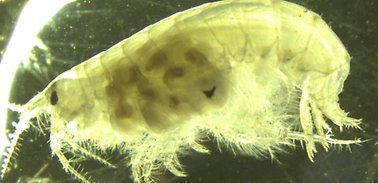
A recently published doctoral thesis shows Monoporeia affinis, a small, benthic amphipod and key marine species in the Baltic Sea, benefit from eating cyanobacteria. This is good news as cyanobacteria will both increase and spread northwards with the ongoing climate change. But the thesis also showed that amphipods living in the Bothnian Sea seem to be particularly sensitive to environmental toxins.
The seabed and the bedrock could play an important role for the green transition; for mining of minerals and storing of carbon dioxide. But the environmental consequences of such activities are not fully understood, showed the presentations at the last Baltic Breakfast.
Bacteria may play an important role in the development of eutrophication in the Baltic Sea, according to a new study on organically bound phosphorus in the sediments. Thriving bacterial communities in the seabed bind phosphorus that would otherwise leak back into the water, and the presence of the bacteria in turn depend on bottom-dwelling animals mixing the sediments. Bacteria in sediments have previously been seen primarily as catalysts, decomposing organic matter as it sinks to the bottom. But now scientists have discovered that these bacteria are also a storehouse for phosphorus; it is in the bacteria that much of the active organically-bound phosphorus in sediments is found.
Researchers at Stockholm University strongly support the EU Commission's ambition to strengthen the directive, they also stress the importance of including PFAS in the list of indicator substances. Finally, in October 2022 the EU Commission released the long awaited proposal for a new urban waste water directive. Many actors have been pushing for a revision of this old directive from 1991 for a long time and finally it happens. The Commission suggests sharper rules for phosphorous and nitrogen treatment as well as advanced waste water treatment for environmental pollutants. Researchers at Stockholm University Department of Environmental Science and the Baltic Sea Centre, have commented on the proposal. They strongly support the EU Commission's ambition to strengthen the directive, both regarding so called tertiary and quaternary treatments. They also stress the importance of including PFAS in the list of indicator substances. Read the Stockholm University Department of Environmental Science’s and Baltic Sea Centre’s response to the European Commission proposal for a recast Urban Waste Water Treatment Directive Read the EU Commission Proposal for a revised Urban Wastewater Treatment Directive Meeting in Brussels The proposal is now being discussed both at national and European level. The European Parliament has appointed Nils Torvalds, a Finnish MEP, as rapporteur. His report on the proposal will be released March 23rd. The Stockholm University Baltic Sea Centre will meet with Torvalds in Brussels this week.
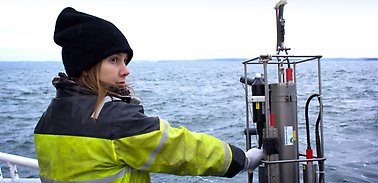
A van full of sampling equipment leaves Stockholm University at half past five in the morning. Twelve hours later it returns, carrying hundreds of bottles, jars and test tubes filled with water from different locations and depths in the Baltic Sea. Follow along on a day of environmental monitoring at sea!
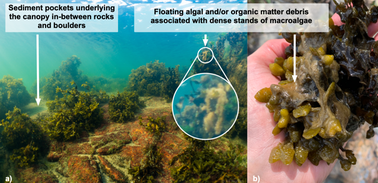
Bladderwrack in the Baltic Sea emits significant amounts of methane, which, to some extent, can offset the uptake of atmospheric carbon dioxide by these algae. This is shown by a new study from Askö Laboratory, where the fluxes of greenhouse gases between surface waters and the atmosphere were measured continuously over several seasons.
Hurray, we have a new global framework for biodiversity and if implemented, it can make a real difference for the global environment and the Baltic Sea! Although the agreement is not legally binding, over 190 countries have signed it and have agreed to monitor and evaluate progress. More money and the possibility to measure implementation and compare countries with each other have been pointed out as the success generator for this framework as compared to the old and failed 20 Aichi targets set in 2010. The new framework is divided into 4 goals (or visions) of what the world should look like in 2050, and 23 targets on how to achieve those goals by 2030. Among the most important targets that should have an immediate effect on EU and national marine policy are the ones covering marine protection, to halt extinction and maintain genetic diversity, to reduce pollution and eutrophication, sustainable fisheries and biodiversity friendly practices. Marine protection TARGET 3 Ensure and enable that by 2030 at least 30 per cent of terrestrial, inland water, and of coastal and marine areas, especially areas of particular importance for biodiversity and ecosystem functions and services, are effectively conserved and managed through ecologically representative, well-connected and equitably governed systems of protected areas and other effective area-based conservation measures, recognizing indigenous and traditional territories, where applicable, and integrated into wider landscapes, seascapes and the ocean, while ensuring that any sustainable use, where appropriate in such areas, is fully consistent with conservation outcomes, recognizing and respecting the rights of indigenous peoples and local communities, including over their traditional territories. Today Sweden has protected 14% of marine areas. Many of these still lack effective management to conserve the area’s biodiversity. For the new targets to be reached for the Baltic Sea, more areas need to be protected and also restored. Priorities for such areas are already clearly set out in a new report from The Swedish Agency for Marine and Water Management , on how to develop a network of 30% of Sweden’s waters being covered by marine protected areas, MPAs. Reaching the target of protected areas will benefit from a swift adoption of the European Commission’s proposal for a Nature Restoration Law. It aims at filling the gap between the Birds Directive, The Marine Strategy Framework Directive and the Species and Habitats Directive by restoring at least 20 % of the EU's land and sea areas by 2030, and all ecosystems in need of restoration by 2050. Check out our scientists’ policy brief on how to raise the quality of marine protected areas Halt extinction and maintain genetic diversity TARGET 4 Ensure urgent management actions to halt human induced extinction of known threatened species and for the recovery and conservation of species, in particular threatened species, to significantly reduce extinction risk, as well as to maintain and restore the genetic diversity within and between populations of native, wild and domesticated species to maintain their adaptive potential, including through in situ and ex situ conservation and sustainable management practices, and effectively manage human-wildlife interactions to minimize human-wildlife conflict for coexistence. The halting of genetic diversity loss in wild populations was a new target and something that researchers from Stockholm University among others have fought for during many years. Linda Laikre, professor in population genetics, explains why this target is so important at one of our latest Baltic Breakfast seminars: Baltic Breakfast: Scientists ahead of COP15 The European eel is a well-known threatened species in the Baltic Sea which should be protected through implementation of this target. Both the immediate halt of fishing and stocking, and measures in dams and hydropower plants to reduce mortality and increase connectivity to important fresh water habitats are necessary actions. The Baltic Sea also contains many genetically distinctive populations of salmon, herring and sea trout, that are in need of measures to improve their status. Once lost, a genetically distinct population can never be restored. Reduce pollution and eutrophication TARGET 7 Reduce pollution risks and the negative impact of pollution from all sources, by 2030, to levels that are not harmful to biodiversity and ecosystem functions and services, considering cumulative effects, including: reducing excess nutrients lost to the environment by at least half including through more efficient nutrient cycling and use; reducing the overall risk from pesticides and highly hazardous chemicals by at least half including through integrated pest management, based on science, taking into account food security and livelihoods; and also preventing, reducing, and working towards eliminating plastic pollution. In comparison to the Aichi target on pollution, this target is much more elaborate and mentions, aside from nutrients, also pesticides, plastics and highly hazardous chemicals. For the Baltic Sea this is great news as this is one of the most polluted seas in the world. This inclusion is also something that professor Marlene Ågerstrand at the Department of Environmental Science has worked for. Read more here: Researchers: Additional chemicals need to be considered in the new Global Biodiversity Framework For the successful implementation of this target, we hope for a very ambitious EU agenda including the welcomed PFAS ban proposal that Sweden has been pushing, an adoption of the Commission proposal of 50% reduced pesticide use and an agreement of a fourth cleaning step of waste water in the Urban Waste Water Treatment Directive to reduce micropollutants. Also, the 50% excess nutrient reduction target can prove to be important when implemented into EU and national law. Again, the revamp of the Urban Waste Water Treatment Directive will be important, as well as the implementation of the new Common Agricultural Policy . For more information, we have both Baltic Breakfasts and policy briefs on the topic. Watch comments from our scientists at the Baltic Breakfast on how to combat eutrophication for a cleaner Baltic Sea Read our policy brief on land-based measures that are needed to reach eutrophication targets Sustainable fisheries and biodiversity friendly practices TARGET 10 Ensure that areas under agriculture, aquaculture, fisheries and forestry are managed sustainably, in particular through the sustainable use of biodiversity, including through a substantial increase of the application of biodiversity friendly practices, such as sustainable intensification, agroecological and other innovative approaches contributing to the resilience and long-term efficiency and productivity of these production systems and to food security, conserving and restoring biodiversity and maintaining nature’s contributions to people, including ecosystem functions and services. The implementation of sustainable fisheries and biodiversity friendly fishing practices, would be possible in the Baltic Sea. Most Baltic countries are part of the EU and should abide to the Marine Strategy Framework Directive (implemented through the Common Fisheries Policy) when setting fisheries quotas and fisheries rules. Hence, the impacts on both the age and size structures of the populations should guide fishing quota decisions and together with the ecosystem approach – ensure that fishing takes into account the need of other species in the whole ecosystem. A policy brief and an analysis explaining why it is important to reduce bottom trawling and why politicians must be precautious when setting quotas: Bottom trawling threatens European marine ecosystems Analys: Stort risktagande med strömmingen och Östersjön (in Swedish) TARGET 21 in the agreement reads ”Ensure that the best available data, information and knowledge, are accessible to decision makers, practitioners and the public to guide effective and equitable governance, integrated and participatory management of biodiversity, and to strengthen communication, awareness-raising, education, monitoring, research and knowledge management …” As a scientific body with a special task to aid the improvement of the Baltic Sea environment, we at the Baltic Sea Center will try our best to live up to this part. So all hands on deck, let’s get to work! Text: Ellen Bruno Further reading Report from The Swedish Agency for Marine and Water Management: Nätverk av marina skyddade områden i Sverige: Ramverk och metod för utformning och förvaltning, Rapport 2021:12, Havs- och vattenmyndigheten The European Commission Proposal for a Nature Restoration Law Policy Brief: Stop all fishing and restocking of European eel PFAS restriction proposal The European Commission: Sustainable use of pesticides Proposal for a revised Urban Wastewater Treatment Directive The common agricultural policy
To slow and reverse the fastest loss of Earth’s living things since the dinosaurs, almost 200 countries have signed an agreement in Montreal, Canada, promising to live in harmony with nature by 2050. The Kunming-Montreal agreement is not legally binding but it will require signatories to report their progress towards meeting targets such as the protection of 30% of Earth’s surface by 2030 and the restoration of degraded habitats.
Few dishes on the table for a traditional Swedish Christmas dinner are as soaked in cultural meaning as the herring, and in the southern parts of the country also the eel. At the same time, few things are as clear examples of state-supported businesses that, like the magician in Lennart Hellsing's nursery rhyme, devour themselves like the fisheries for these species, write experts Henrik Svedäng and Charles Berkow at Stockholm University Baltic Sea Centre. At the same time as the biodiversity conference COP15 is underway, with the goal of protecting species and habitats, Swedish politics has not succeeded in reaching agreement on protecting either the eel or the ecologically significant herring stocks along the east coast. For many people, it is incomprehensible that the fishing industry, which is insignificant for the national economy, has been given such a strong priority over other interests. Fisheries can be seen as a classic example of market failure. It is often said that "not even the most hardened Chicago economist can deny the need for regulation". The discussion goes back at least to the 17th century when, on the one hand, the jurist Hugo Grotius claimed the freedom of the seas, not least regarding the Netherlands' fishing in the waters that the British King James I regarded as his. To the contrary was the philosopher Thomas Hobbes, who with experience of the English Civil War pointed to the need for a Sovereign, i.e. the state, to avoid Bellum omnium contra omnes - the war of all against all. If this Sovereign did not appear, life would be "solitary, poor, nasty, brutish, and short". Fisheries economist Gordon Scott preceded Garrett Hardin's thesis on the "tragedy of the commons" and showed that without regulation, all stocks will eventually be overexploited. A regulation that is over-optimistic or short-sighted can produce the same result. This has been proven in Swedish waters. You could even say that the fishing took place with the tacit approval of the bureaucrats, fishing industry and politicians, to the extent that they played high and took big risks. Stocks of predatory fish, and especially cod, have been declining in the Skagerrak-Kattegat and the southern Baltic Sea for a long time. In between is Öresund, where the cod stock has not yet completely collapsed, mainly due to the fact that maritime traffic in the Strait does not allow fishing vessels towing various gear. Eel abundance has been declining for a long time, which is part of a pan-European problem complex. Lately, even the base of the coastal sea, the herring, has declined to alarmingly low levels in all areas. Gordon Scott also pointed out that fish stocks cannot be developed. This means that technological development is not necessarily good. Since the primary conflict is between fishermen – not between fishermen and managers, or between fishermen and scientists, as one might sometimes get the impression – technological progress leads to increased competition between fishermen, but not to catches beyond what the ecosystem is able to produce. Fishing is simply hunting on nature’s conditions, not industry or agriculture. Fisheries are managed for this very reason; the consequences of the constantly ongoing technological development cannot be handled by the actors themselves. Administration then comes under the domain of politics. Management has sometimes been successful. The most important fish stock in Europe, the Norwegian spring spawning herring, crashed at the end of the 1960s. The fishery was simply closed down for over twenty years, and the stock has recovered fairly well. The North Sea herring was depleted during the 1970s and fishing was closed between 1978 and 1983. The consequences were felt, not least on the Swedish west coast, but the stock recovered completely. One would think that since then we have become wiser or more resource-conscious – that it would no longer take the complete collapse of fish stocks for the Sovereign (politicians) to react – but that does not seem to be the case. We still live with the 17th century mercantilist view of fishing, where governments care about their own nation's success in EU negotiations on fishing quotas without taking into account the overarching goals of common productive stocks. The bickering over the herring stocks in the Baltic Sea shows that prudence has not increased as fishing's contribution to the economy declines. The economic consequences for society lie most immediately in lost ecosystem services such as food security and ecosystem regulation mechanisms such as carbon sinks. Since the real economic importance of fish lies in being inhabitants of the sea and providing, for example, dishes for the Christmas table, rather than maintaining a capital intensive fishing industry, the question should be asked of the Sovereign, what should It have done? Because instead of regulating fishing so that stocks can increase to robust levels, bloated annual quotas and subsidies to the industry have been seen as a solution to hard-working fishermen's increasing problems of making ends meet. Subsidies have been paid out in the form of tax exemptions on fuel, port facilities and direct grants. At the end of the 2000s, shares in the so-called pelagic fishery (fishing for schooling fish such as herring, sprat and mackerel) were also privatized without any requirement for compensation. The reason was said to be partly a desire for structural transformation, partly a hope that the ownership would lead to an incentive to take greater responsibility for the stocks. This in turn led to an increased capitalization of the fishing industry, where especially the larger fishing companies with a home port near Gothenburg, were able to convert their assets into new purchases of fishing quotas and investments in modern, capital-intensive fishing technology. The introduction of individual, transferable quotas thus contributed to a concentration of the fleet into fewer but larger vessels and to greater profitability for the larger fishing companies. The inherently anarchic state of the industry was more difficult to remedy – it is still difficult to know what is happening at sea. So now we are left with a fleet consisting of very large units, ill-suited for the small enclosed Baltic Sea. The larger companies have also begun to protect themselves by purchasing rights in other parts of the North East Atlantic from, for example, Denmark. In the increasingly over-exploited Swedish coastal waters there are few signs of recovery. The lack of fish leads to fishers being locked into fishing stocks that have already been depleted, such as eel, and to loud cries for further state action, now to step in as the sea's gardener and oversee the shooting of seals and cormorants, as well as other forms of manipulation. It is becoming increasingly clear that not all fishing stories have happy endings. Because who is the "Sovereign" today anyway? The EU's reform of fisheries policy almost 10 years ago had only temporary success and then especially in the North Sea, not in Swedish coastal waters. This limited success is likely to disappear as nations race to make up for the lost quotas resulting from Britain's exit from the Union. Attempts to achieve more long-term management through a multi-annual management plan for herring, cod and sprat in the Baltic Sea have been unsuccessful. This is partly due to general degradation of the marine environment, that has management has not taken into account because having to deal with lower ecosystem productivity is not even on the radar. By setting the total fishing quotas at a level that is at the upper range, or even exceeds, the levels estimated to be sustainable, based on the highly uncertain estimates of the size of the stocks, the fisheries ministers have time and again tried to conjure like Hellsing’s nursery rhyme magician, so that eight becomes nineteen and nineteen becomes two. But nature cannot be conned, at least not time and time again. Politicians' concerns about the short-term interests of fishing have thus depleted both the sea and the fishermen's long-term profitability. In the long run, politics cannot avoid shouldering the responsibility for our common environment and jointly owned fish resources. Leviathan, the biblical sea monster that Thomas Hobbes took as an illustration of the need for a common state, represents our inability to retain the fruits of our ingenuity within nature’s boundaries. If a hundred years ago it was said that "Crayfish require these drinks", today we can say "Herring require these regulations". Henrik Svedäng, associate professor in marine ecology, researcher at Stockholm University Baltic Sea Centre and scientific coordinator at the Swedish Institute for Marine Environment Charles Berkow, policy analyst, Stockholm University Baltic Sea Centre This text was first published in Swedish in Dagens Industri
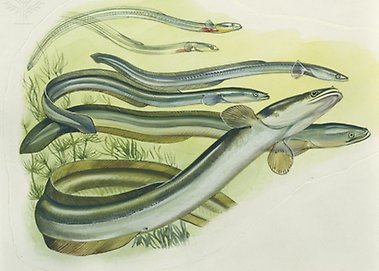
Sweden opposes the European Commission's proposal for further restrictions on fishing for the endangered eel, arguing that Swedish eel fishing is a cultural heritage. "The endangered eel is being reduced to a prop in a sentimental tableau about a soon-to-be-defunct eel fishery," says fish researcher Henrik Svedäng at Stockholm University Baltic Sea Centre.