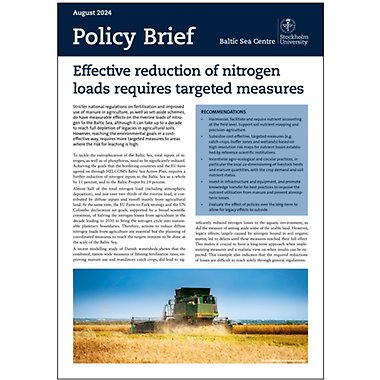
Reducing nitrogen losses from agriculture is important both to meet environmental targets for the Baltic Sea and to bring the nitrogen cycle within sustainable planetary boundaries. But achieving these goals through general regulations alone is difficult, according to a new policy brief. More targeted measures are needed in areas where the risk of nitrogen leaching is high.
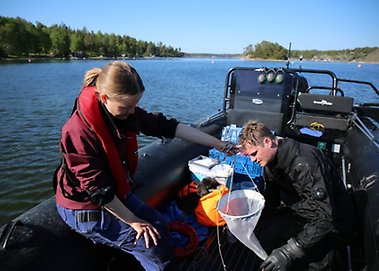
Large predatory fish have become harder to find in the coastal bays of the Baltic Sea, which are now dominated by sticklebacks. Many of these bays have also become more turbid and show signs of severe eutrophication. Scientists have seen this shift spread from the open sea to coastal environments and are now looking for explanations as to why this has happened and whether it could contribute to unforeseen climate impacts. In one of the largest field sampling programmes of the year, the FORCE project map changes and how best to restore coastal predatory fish stocks and biodiversity. From Västervik to Östhammar, the composition of fish species, plants and algae living in 32 different bays will be analysed. In addition, samples of nutrient levels and plankton will reveal the water quality in these areas. The sampling station at Krysshamnsviken in the Stockholm archipelago is a hive of activity, with several fishing nets being thoroughly sorted and rinsed on the adjacent boat jetty and beach, while samples are collected by divers and assistants in a rib boat out in the bay. Krysshamnsviken is one of 32 sites that FORCE researchers surveyed in 2014 to investigate the relationship between fish species, vegetation and water quality. Now, 10 years later, they are back to see how these have developed. " These bays are very different. They have different amounts of predatory fish and sticklebacks, as well as different levels of protection from fishing. The number of seals and cormorants in these areas also vary. In total, this gives us a better picture of the causes and possible measures, such as fishing closures, to improve the environmental status," says Johan Eklöf, Professor in Marine Ecology at the Department of Ecology, Environment and Plant Sciences at Stockholm University and project leader for FORCE. Link between sticklebacks and climate change The decline in predatory fish such as pike and perch and the increase in sticklebacks is affecting many natural values. The situation has contributed to turbid bays with more filamentous algae and severe symptoms of eutrophication. More predatory fish help to keep water areas clean and clear, and could counteract these symptoms. The researchers are now trying to find out whether stronger populations also could be linked to climate effects. " We will investigate whether areas with a lot of predatory fish are better at storing carbon than areas dominated by sticklebacks, where carbon turnover is higher," says Johan Eklöf.
Europe - the elections for the new European Parliament are over and we have a result! Headlines like ‘right-wingers won’ and ‘liberals and greens lose at EU level’ are being circulated. But it's more complicated than that because there are big differences between the EU countries. And once again, Sweden seems to be out of tune with many other EU-countries - here the Green and the Left parties made a strong election. In Sweden the situation of the Baltic Sea environment also got surprisingly much attention in the election campaign, with nearly all Swedish parties expressing concern and presenting proposals for the Baltic Sea. In the Swedish election all the current Swedish parliamentary parties passed the threshold of 4% support, but the distribution of seats changed. At the time of writing (Wednesday), not all votes have been counted, so small changes may occur and only later will it be known which individual candidates that made it. In short, at the moment the situation is as follows; the left, the social democrats, the greens and the conservatives (V, S, MP, M and L) increased while the right wing and the middle parties decreased (SD, C and KD). The three largest parties are the social democrats (S), the conservatives (M) and the greens (MP). Swedish result could bring good news for the Baltic Sea If you put this result in relation to our previous analysis (in Swedish) of the Swedish election manifestos, this is good news for the Baltic Sea. All the three largest parties included marine issues in their election manifestos - to different extents – which provides a basis for further joint work on marine issues in the EP. During the reform of the Common Fisheries Policy in the period 2009-2014, concerned MEPs in different political groups cooperated to raise awareness and garner support for improvements within their respective groups. Swedish MEPs were prominent in that cooperation. The distribution of seats in the European Parliament is not entirely clear either, but the broad patterns are there. The winners are the conservatives (EPP) and the right-wing forces (ECR and ID), while the socialists (S&D), the liberals (Renew), the Greens (Greens/EFA) and the left (GUE/NGL) lost seats. However, the largest groups remain the conservative and liberal centre, consisting of the EPP and Renew parties, as well as the Socialists and Democrats (S&D). Already, the leader of the EPP, Manfred Weber, has reached out to both groups to form a common alliance. Reforms of chemicals, agriculture and fisheries policy awaits The final distribution of seats and which candidates take their place in which committees, will play a major role in whether the EP will pursue progressive maritime policy. Even before the elections, developments were going in the wrong direction. In the name of the dreadful war in Ukraine, several political processes to improve the environment were watered down or stopped. During the next parliamentary term, 2024-2029, several policy areas that are important for the sea will be reformed, such as agriculture, fisheries and chemicals policy. Only time will tell how this will work out. But we as scientists and knowledge brokers are happy to help and support the new parliament and the incoming Commission about the problems and solutions for the Baltic Sea environment. Considering the attention given to the Baltic Sea environment in Sweden in this campaign, there may be a potential for more cross-party cooperation for the benefit of the Baltic in the coming term. Text: Charles Berkow, Ellen Bruno and Gun Rudquist, policy analysts, Stockholms University Baltic Sea Centre.
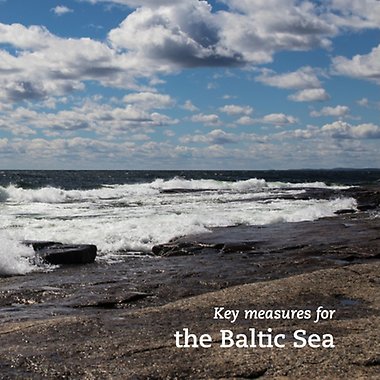
What is needed to regain a healthy environmental state in the Baltic Sea? In a new leaflet, researchers and experts at Stockholm University point out some key measures that the new European Parliament and politicians around the Baltic Sea should focus on in order to get the full benefit from the sea.
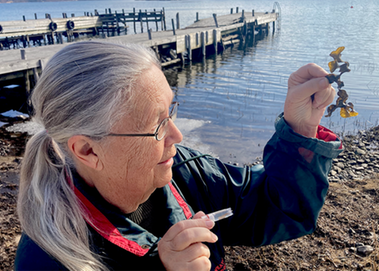
How does bladderwrack in the Baltic Sea "know" when it is time to reproduce? To answer that question, researchers at Stockholm University will send the seaweed into space.
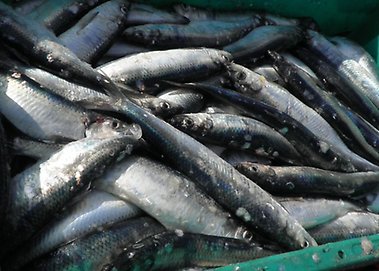
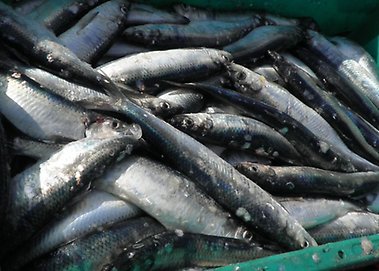
The latest advice from the International Council for the Exploration of the Sea (ICES) to the EU fisheries management opens the way for a significant increase in fishing pressure on the herring stock in the central Baltic Sea next year. According to the Baltic Sea Centre's researchers, EU fisheries ministers should decide on much more cautious quotas - to allow the herring stock to recover. Published 2024-06-05
Sweden and Finland have agreed to introduce a temporary ban on industrial herring fishing in the Bothnian Sea this summer. The Baltic Sea Centre is critical and argues that the fishing ban must be both extended and prolonged to have any effect.
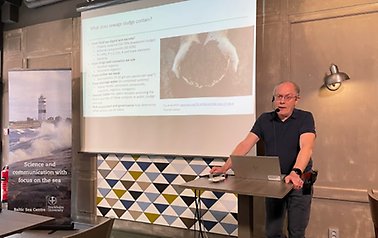
Sewage sludge contains high levels of phosphorus - a finite resource in demand by agriculture. Can sewage sludge be reused in a safe way, and does spreading it on fields increase the amount of microplastics? These questions were discussed at a recent Baltic Breakfast seminar attended by researchers Arno Rosemarin and Geert Cornelis. Phosphorus fertilisation is an essential part of today's agriculture, but phosphorus resources are finite and the substance is on the EU's list of critical raw materials. 90 per cent of the phosphorus used in the union today is imported (most of it from a single country - Morocco), but there is an EU policy aimed at recycling more of the substance from different resources, including sewage sludge, says Arno Rosemarin, who is a senior research fellow at the Stockholm Environment Institute. Sewage treatment plants were designed primarily to clean water and not optimised for recycling. Originally, phosphorus was removed from wastewater using aluminium or iron compounds. This resulted in phosphorus compounds in the sludge that were unavailable to plants, making it difficult to reuse in agriculture. In recent decades, biological methods or calcium or magnesium have been used instead, resulting in a plant-available product. “So there has been some improvement in the treatment plants in terms of producing a recyclable product", says Arno Rosemarin. Sewage sludge contains not only phosphorus, but also a wide range of chemicals and microplastics from the use of medicines and cosmetics or from washing clothes, for example. In combined sewer systems, rainwater from urban runoff also contributes with other compounds and heavy metals. "We should be aware of and proud of Svenskt vatten, which has spent decades assessing the levels and fate of all these substances in water, sludge and soil," says Arno Rosemarin. "The whole thing is a discussion about risk assessment".
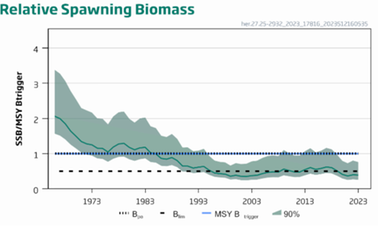
Keeping catches at yield levels advised by scientists at the International Council for Exploration of the Sea (ICES) is not enough to give sustainable fishing in the Baltic Sea. When ICES presented its advice for the central Baltic herring last year, there was a lot of confusion. Many asked how the scientists could say that herring fishing needed to be stopped at the same time as they recommend catch quotas of up to 52 000 tonnes. In fact, ICES did neither. The confusion was due to a misunderstanding of what the scientists actually wrote. At the top of the first page of its advice for fishing herring in the Central Baltic in 2024 ICES wrote: ‘ICES advises that when the EU multiannual plan (MAP) for the Baltic Sea is applied, catches in 2024 that correspond to the F ranges in the plan are between 41 706 (corresponding to FMSY lower × SSB2024/MSY Btrigger) and 52 459 tonnes (corresponding to FMSY × SSB2024/MSY Btrigger).’ This is known as the headline advice. To be properly understood, ICES advice needs to be seen in the context of the MAP, and the basic agreement between the European Commission and ICES. Article 4 in the MAP regulation sets out objectives and the rules that the Commission and Council of fisheries ministers are to follow when deciding on fishing opportunities, sometimes referred to as TACs (Total Allowable Catch), catch limits or quotas. Read in full, the MAP-regulation has a clear structure, with a hierarchy of rules, depending in part on how robust the stock is assessed to be. The MAP-regulation and ICES advice For the purposes of the MAP, a stock may be seen as classified in one of three categories: healthy, in a risk zone and in a danger zone. Compared to traffic lights, these could be seen as green, yellow and red and zones, respectively. The healthy (green) zone can be described as productive, or above long-run sustainable levels (or more technically, the spawning stock biomass – SSB – is estimated to be above a reference value called MSYBtrigger). In the risk (yellow) zone, the stock is between that level and a lower level that can be described as below safe biological limits (more technically, the SSB is below MSYBtrigger and a limit level called Blim). In the danger (red) zone the stock can be described as below safe biological limits and could potentially collapse (more technically, where the SSB is estimated to be below the reference value Blim, below which reproduction may be impaired). Article 3 states that the plan shall aim to ensure that the exploitation of living marine biological resources restores and maintains populations of harvested species above levels with can produce the maximum sustainable yield. That is, TACs or catch limits should be set in such a way as to strengthen the stocks of commercially fished herring, sprat and cod in the Baltic at least enough to stay in the green zone. Article 4 regulates more concretely how the catch limits should be set. Article 4.1 states in effect that quotas shall be set within ranges of fishing levels that, in the long run and under certasin assumptions, will result in the maximum sustainable yielad (MSY, without significantly affecting the reproduction process for the stock). The lower bound of the range is normally referred to as Flower, the upper bound Fupper. Article 4.2 states that these ranges will normally be requested from ICES. Article 4.3 states that fishing quotas shall normally be set in the lower range, that is, between Flower and Fmsy. Article 4.4 is a discretionary exception: it provides that the fishing quotas may be set below Flower, and does not require that any conditions are fulfilled. Article 4.5 is another discretionary exception. It provides that fishing quotas may be set in the upper range of Fmsy, that is, between Fmsy and FMSYupper, but only if certain conditions are fulfilled. Primary is that the stock is in the green zone (or more technically that the spawning stock biomass, calculated in tonnes, is assessed as being above a reference level calculated by ICES called MSYBtrigger). Article 4.6 contains an obligatory exception. It states that ' Fishing opportunities shall in any event be fixed in such a way as to ensure that there is less than a 5 % probability of the spawning stock biomass falling below Blim' . Or, following the traffic light metaphor, the probability of the stock ending up in the red zone should be less than 5%. Article 4a, finally, states that ICES (or some similar organisation) shall be requested to provide values for the biomass reference points MSYBtrigger and Blim (following the traffic light analogy, the lower boundaries of the green and yellow zones, respectively) for the seven stocks covered by the MAP: four herring stocks, two cod stocks and sprat. The precise definition of the F-ranges in the MAP-regulation is: “ ‘range of FMSY ’ means a range of values provided in the best available scientific advice, in particular from ICES or a similar independent scientific body recognised at Union or international level, where all levels of fishing mortality within that range result in maximum sustainable yield (MSY) in the long term with a given fishing pattern and under current average environmental conditions without significantly affecting the reproduction process for the stock in question. It is derived to deliver no more than a 5 % reduction in long-term yield compared to the MSY. It is capped so that the probability of the stock falling below the limit spawning stock biomass reference point (Blim ) is no more than 5 %”. This 5% cap should not be confused with the 5% probability referred to in Article 4.6. In ICES description of its advice on catch limits from April, 2024, ICES writes: “The FMSY ranges [FMSY lower , FMSY upper] are derived to deliver no more than a 5% reduction in long-term yield, compared with the MSY obtained by fishing at FMSY in the long term. To be consistent with ICES precautionary approach, FMSY or FMSY upper is capped so that the probability of SSB < Blim is no more than 5% in any single year (based on long-term simulations when the stock is in equilibrium).” In some advice sheets, ICES provides information on predicted probabilities of the biomass of the stock falling below Blim or B MSY trigger in year 2 under different levels of fishing pressure under year 1. These short-term probabilities, calculated on the basis of the latest available estimates of various parameters, can be significantly higher than 5% for catches within the F-ranges provided by ICES (that is, covered by the cap based on long-term simulations). ICES describes some of the relationships between its advice on catch limits and stock levels in more detail as follows: “MSY Btrigger is considered the lower bound of SSB fluctuation (fifth percentile of BMSY) when fished at FMSY and is used in ICES advice rule to trigger a cautious response. The cautious response, in cases where the spawning stock falls below MSY Btrigger, is to reduce fishing mortality in order to allow a stock to rebuild to levels capable of producing MSY. The reduction in fishing mortality is proportional to the ratio between the size of the spawning stock and MSY Btrigger (SSB is estimated at spawning time in the first year of the forecast). The advice rule leads to catch advice corresponding to a fishing mortality of: 1) F = FMSY when SSB is at or above MSY Btrigger 2) F = FMSY × SSB/MSY Btrigger when the stock is below MSY Btrigger and above Blim 3) If the F following from applying rule 2 is insufficient to bring the stock above Blim in the short term, ICES advice will be based on bringing the stock above Blim at the end of the projection year with a 50% probability. If there is no F that will bring the stock above Blim at the end of the projection year or when the forecast is highly sensitive to assumptions (e.g. incoming recruitment), ICES will advise zero catch based on precautionary considerations until the SSB is above Blim with high probability.” “Information” commonly misunderstood as “a recommendation” Under an agreement between the European Commission and ICES from 2023, for the target stocks covered by the Baltic MAP (cod, herring and sprat), ICES is, as in previous years, to present the catches corresponding to the point value of FMSY and the F-ranges around that value in the headline advice. That is, ICES is to inform the Commission and others who read the advice what the estimated catches would be, given the forecasts of stock growth and yield, for an interval provided for in the management plan under Articles 4.1 and 4.3. A condition for this, however, is that there is adequate data and assessments to provide this information. This information is commonly misunderstood (or perhaps misrepresented) as a recommendation. A factor contributing to the confusion is the use of the phrase “ICES advises….” As frequent viewers of American television programmes about police will have seen, those about to question a suspect may sometimes ask if he “has been advised of his rights”. This is a reference to the requirement to inform suspects of their so-called “Miranda rights” , not asking if the suspect has been given recommendation. That is, the word “advises” can mean “recommends” or “informs”, depending on the context. An example of the difference between an ICES recommendation as opposed to ICES information in the headline advice can be found in the 2023 advice for the western Baltic cod . There ICES say that 'habitat restoration efforts, focusing on the reduction of eutrophication to improve bottom oxygen content, are recommended' . Another illustration of the nature of the headline advice as information rather than a recommendation can be seen in the 2018 advice for the same stock . There, ICES advised in the headline advice that the commercial catches corresponding to the F-ranges in the MAP were between 5867 and 22 238 tonnes. Further, that the entire range is considered precautionary when applying the ICES rule. On page 4, a discussion of the significant role of the 2016 year class concluded by stating that 'ICES suggests to use the FMSY lower value in the MAP when setting the TAC' , that is, a commercial catch of 5867 tonnes. In the event, the Council of Ministers ignored what clearly was a recommendation and approved a catch of 9 515 tonnes. It also turned out that the dominant 2016 year class was overestimated. The fishery collapsed a few years later. No ICES position on TAC for central Baltic herring Despite that experience, as noted above, the agreement between ICES and the European Commission from 2023 does not mandate or suggest (nor, for that matter, prohibit) an executive summary, it merely requires that ICES present the interval of the forecast maximum sustainable yield according to the multiannual plan. One might perhaps understand if some biologists were discouraged by such an experience. In the example of the central Baltic herring, in the headline advice ICES informed the Commission and others what the catch would be under provisions of Article 4.3 in the MAP. On page 3 of its central herring advice report ICES also informed the Commission and other stakeholders that the mandatory condition for Article 4.6 would not be fulfilled even with no fishing. But the biologists did not take a position on how much fishing should be allowed. Or if Art. 4.6 in the MAP should take priority over Art. 4.3 or not. (The MAP itself is relatively clear on that: the language of Art. 4.6 – '…shall in any event…' is unusually sharp.) Neither did the biologists take a position on how to weigh the short-term economic interests of some large-scale fish meal fishers against those fishing for human consumption, or coastal fishers, or the medium- or long-term economic interests, or the environment. They left those considerations to others and merely provided information. But more information than that found in the headline advice. Not a newspaper article In a newspaper article, a reader might expect to find the important information in the headline and the lead sentence. In reading a contract, or an insurance policy, professional readers understand that crucial information may be found in the fine print or even the footnotes. Many tend to read the ICES advice as they would read a newspaper article, rather than an insurance policy. For example, a highly placed official from the European Commission said at a session of the fisheries committee of the European Parliament on December 7, 2023 that ‘The only thing you need to read is the headline advice…read the first four lines’ of the ICES advice, that is, the catches corresponding to the F-ranges in the MAP in the headline advice. In the example of the 2023 advice for the central Baltic herring , though, the information that even with no fishing the provision the fishing stock would be below Blim (in the red zone) the coming year was on page 3. Although it is not mentioned in the text, a diagram in Figure 1 on page 1 showed that the spawning stock biomass had very likely been below Blim (in the red zone) for some years.
Fishing for herring is prohibited in various parts of the Baltic Sea during April and May. The aim is to protect the endangered herring spawning. But the decision goes against the advice of Swedish experts. The closures occur when there is little large-scale trawling going on, and will mainly affect small-scale coastal fisheries. It is not only scientists and small-scale coastal fishermen who are concerned about the herring crisis in the Baltic Sea. Last autumn, the European Commission proposed to stop all directed herring fishing in the central Baltic Sea and the Gulf of Bothnia in 2024. The proposal was rejected by the Council of Ministers, which set the toal allowable catches (TACS) to 40,300 tonnes and 55,000 tonnes respectively for the two herring stocks. The decision was strongly criticised by scientists, environmental organisations, coastal fishermen and politicians. Ministers also agreed on new spawning closures, which include stopping herring fishing in the Baltic Sea proper in various sea areas during April and May. According to the Swedish Minister for Rural Affairs ,Peter Kullgren (KD), the closures were introduced as "a consequence of Sweden's negotiating efforts" , with the aim of "better protecting herring spawning." The closures will be ineffective The spawning closures fall in different periods between 1 April and 31 May. This makes them ineffective, according to Stockholm University’s Baltic Sea Centre's analysis of commercial fishing logbook data from the last decade (2011-2022). Between 2011 and 2022, only ten per cent of the Swedish herring catches in the Baltic Proper were fished during April-May. More than half (58%) of the catches were taken in the first quarter, January-March, while a quarter (23%) were fished in the last quarter, October-December.
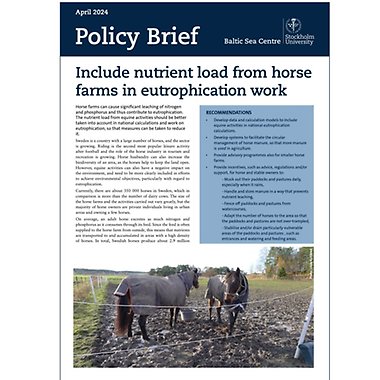
Research shows that horse farms can be a significant source of nutrient leaching, contributing to the eutrophication of water bodies and coastal areas. This nutrient leakage should be better taken into account in the calculations that form the basis of eutrophication work, so that the right measures can be taken, write researchers from the Baltic Sea Centre, the Swedish University of Agricultural Sciences and Södertörn University in a new policy brief.
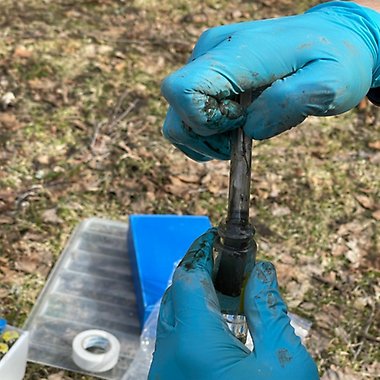
Is there a difference between healthy and degraded coastal bays in terms of greenhouse gas emissions and uptake? To answer this question, researchers from different disciplines are working together carrying out various measurements along the Swedish coast. Come with us to Sandviken Bay, where the first of several days of a new sampling campaign took place.