


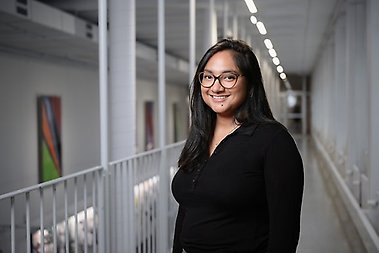
New PhD thesis: Lifestyle choices reflected in political orientation
Our lifestyle choices form a bundle reflecting our political orientations, according to a new PhD thesis in sociology by Elida Ibrahim.
Department of Sociology
Our lifestyle choices form a bundle reflecting our political orientations, according to a new PhD thesis in sociology by Elida Ibrahim.

Since Sweden introduced gender-neutral parental leave in 1974, the system has undergone numerous reforms, making it both generous and complex. A new research dataset from the Centre for Health Equity Studies (CHESS) and the Department of Public Health Sciences at Stockholm University brings together information on the system’s current rules and historical development. The Swedish Parental Leave (SweParLe) Dataset provides researchers with a tool to investigate, for example, how family policy may affect health and health inequalities.

Fertility rates are on the decline in Sweden. At the same time, intensive parenting attitudes have become a norm. However, these two developments are not related in a way that we would expect, according to a new study by Sunnee Billingsley, Stefanie Möllborn and Gerda Neyer from Stockholm University.
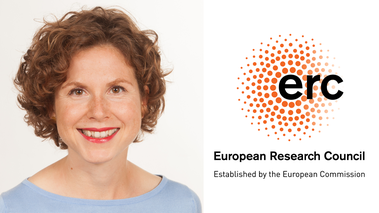
Do people fall or rise in social status after migrating to another country? A new five year project led by sociologist Rosa Weber will explore the dynamics of long-term social mobility of immigrant families. The project is funded by the prestigious ERC starting grant.
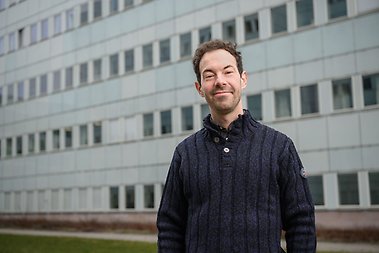
We congratulate Kieron Barclay, who has been appointed editor-in-chief of the journal Population Studies , alongside Alyson van Raalte, researcher at Max Planck Institute for Demographic Research.

Sociology at Stockholm University has climbed in the Shanghai Ranking. According to the 2026 edition, we are ranked 41st. This is an improvement compared to 51-75, which was our ranking last year.
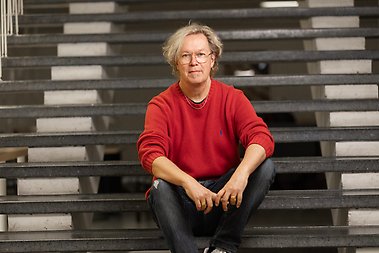
Sweden’s fertility decline raises new questions for policy, calling for a clearer understanding of what is driving the change and how policy can adapt to a changing demographic reality.

Beliefs about who belongs in the society and who can be excluded are well established in mainstream political ideas of liberal democracy, according to recent studies by Vanessa Barker, professor of sociology. Additionally, the results suggest that tools of repression within criminal justice to punish and deter migrants have destabilising effects on the society.

Employers in Sweden tend to prefer candidates with Swedish-sounding names in professions where individuals with foreign backgrounds are underrepresented, a new sociological study reveals. At the same time, the level of discrimination decreases in industries with a higher proportion of foreign-born workers. This dynamic contributes to reinforcing stereotypes about which jobs are deemed suitable for people with foreign backgrounds, according to Magnus Bygren, one of the researchers behind the study.
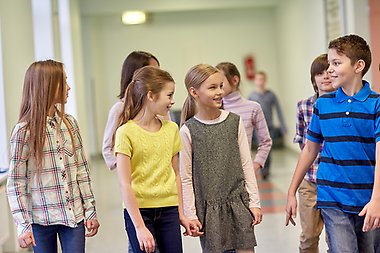
Schools play a key role in promoting the mental health of children and young people. However, approaches to the school's role in this work appear to vary across municipalities. In addition, schools' contribution to mental health promotion and prevention is often treated as separate from their core educational mission. This is the conclusion of a new public health study from Stockholm University.
Short-term contracts and insecurity in the job market drive many to postpone having children. But for non-Western migrants, the opposite is the case, according to a new study in Demography by Mimmi Lounela, PhD at Stockholm University. The correlation is especially strong among men.

Why do people who hold a specific view on the climate issue also tend to hold similar views on taxes or vaccinations, even though the topics are unrelated? A new study a mathematical model showing how the mechanism of "source filtering" quickly divides a population into two opposing camps that disagree on almost everything.