


Studying four generations: New ERC project sheds light on social mobility
Do people fall or rise in social status after migrating to another country? A new five year project led by sociologist Rosa Weber will explore the dynamics of long-term social mobility of immigrant families. The project is funded by the prestigious ERC starting grant.
Social mobility among immigrants in Europe has been immensely studied, but most of the research in the subject focuses on their occupation and education levels after migration. Rosa Weber’s project is the first to take the parents of immigrants at origin into account.
Using this novel approach, the project will study four generations, and make comparisons between immigrants and their relatives who have remained in the country of origin. Moreover, Rosa Weber will examine how social mobility is influenced by an immigrant’s religion, visible minority status and whether they are undocumented. Combined, the results will shed light on the durability of inequalities affecting immigrants.
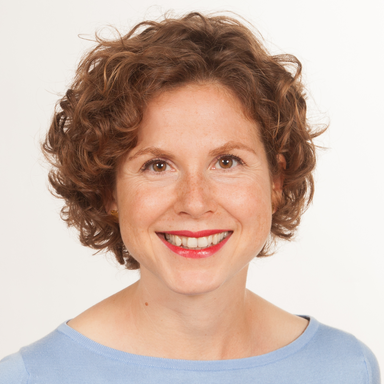
Rosa Weber. Photo: Astrid Raubek-Lujic
What are you feeling now that the news about receiving the grant has settled a bit?
”I'm really excited about doing this research. I wanted to write about something that fascinates me and where I see my research agenda going”, says Rosa Weber.
This project merges Rosa Weber’s research interests. During her PhD at Stockholm University, she studied migration patterns between Sweden and Finland. Later, working on a project funded by FORTE at the French Institute for Demographic Studies, her research pivoted towards social mobility. And now, she hopes to bring together her knowledge from both subjects to break new ground.
”My ambition is to impact how we study migration. Also, more broadly, rather than thinking of migration as some small subfield, I would like to incorporate it more centrally within the main streams of sociology.”
Rosa Weber points out that learning about social mobility of immigrants is crucial for understanding our society, considering that immigrants and their descendants constitute one third of the population in many European countries.
Though the project will start in September next year, Rosa Weber is already fully immersed in preparations. Besides reading up on the material needed for her research proposal, which she found inspiring, she is now in the process of applying for ethical approval and access to linked registry data from Sweden and Finland.
”The first thing I need to do is to send the applications for data to the Swedish and Finnish ethical review boards. And then I'm going to start thinking about recruiting PhD students and postdocs.”
What are your hopes for the future?
”I hope that the data that I'm trying to link will methodologically advance how we assess social mobility in immigrant families, and that we incorporate parents at origin and information from before the move more centrally in migration studies, as well as in social mobility”, says Rosa Weber.
Text: Alma Kirlic
Last updated: 2026-10-02
Source: Department of Sociology