



Convite à Conferência NOLAN 2026
Encontros em Transição: Lutas, Horizontes e Conexões Globais na América Latina
Nordic Institute of Latin American Studies
Encontros em Transição: Lutas, Horizontes e Conexões Globais na América Latina
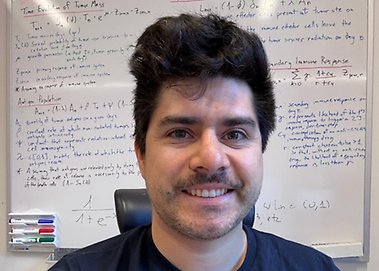
Fysikum has two student ambassador's, Erik Elfwing who's a Bachelor student and Ignacio Verdugo. He is 34 years old and comes from Concepción in Chile. "I'm in my first year of PhD and have 4 years to go. My mission will be to show the life of a PhD Student in Stockholm and different possibilities of work and research.
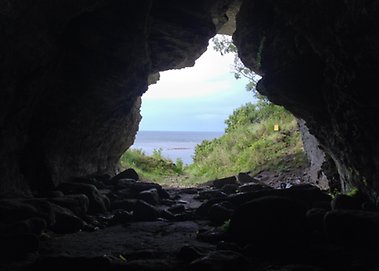
Scientists have found wolf remains, thousands of years old, on a small, isolated island in the Baltic Sea – a place where the animals could only have been brought by humans. The study, published in Proceedings of the National Academy of Sciences by researchers at the Francis Crick Institute, Stockholm University, the University of Aberdeen and the University of East Anglia, suggests that grey wolves may have been managed or controlled by prehistoric societies.
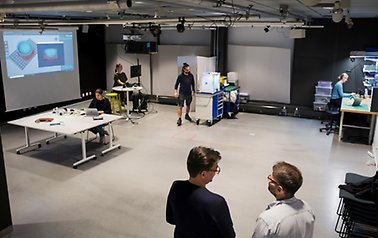
A new master’s programme at DSV explores how to design and interact with emerging digital and physical environments.
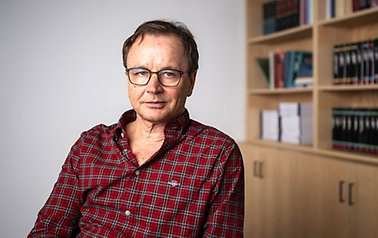
The government wants to introduce a so-called gas mechanism in the pension system. ”The term gas creates a misleading rhetorical illusion that it can only be designed in one specific way,” write Mårten Palme and John Hassler, both professors of economics at Stockholm University, in DN Debatt.
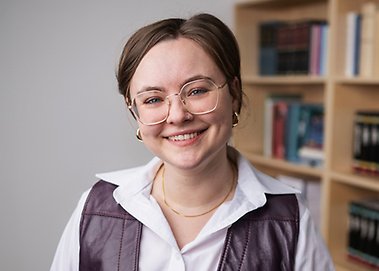
Marie Kaul, a PhD student in economics at Stockholm University, has been awarded a total of SEK 240,000 from the Royal Swedish Academy of Sciences to support two different projects.
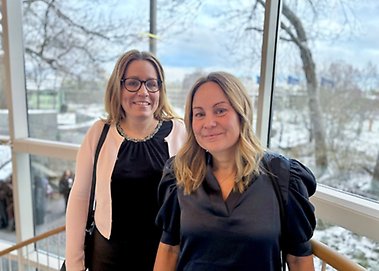
Around 750 students celebrated their master’s degrees in a packed Aula Magna. The evening featured speeches, music, and a clear message to the graduates: bring your knowledge out into the world.
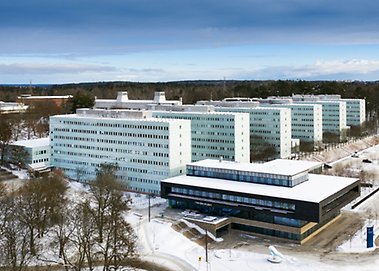
The Swedish Research Council has announced three significant research grants supporting political science projects at Stockholm University, backing new work on democratic participation, resilience and European security.
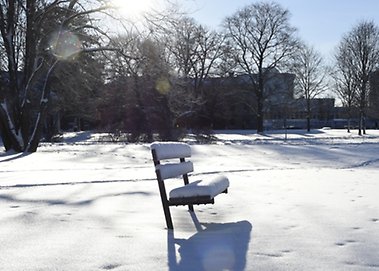
The short days and lack of daylight in winter make it difficult for many people to stay alert. A cover of snow, which reflects light and makes it brighter, can help us.
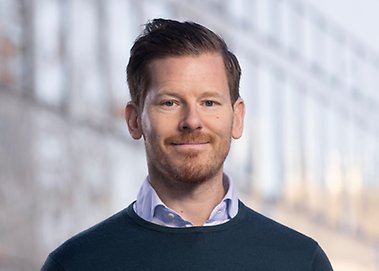
David Seim, Professor of Economics at Stockholm University, has been awarded just over five million SEK from Riksbankens Jubileumsfond for a research project on tax non-compliance – and how audits affect rule compliance.
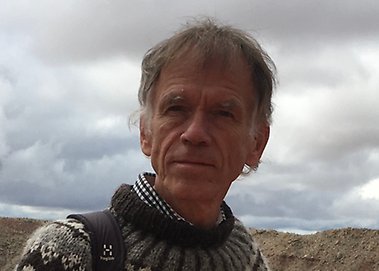
Axel Brandenburg, professor at Nordita and the Department of Astronomy, has been awarded both a prestigious ERC Synergy Grant and a Swedish Research Council (VR) grant to advance his research on the very first microseconds of the universe. The ERC-funded project, COSMOMAG, brings together an international team of leading scientists to probe the origins of the cosmos using magnetic fields.
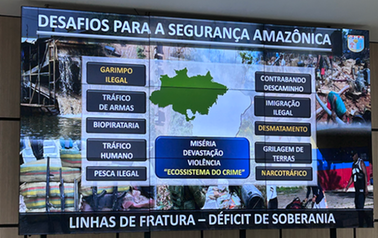
Adam Nordström gained a unique insight into Brazil's security challenges during his internship at the country's Army War College. He is helping to research various issues linked to organized crime in the Brazilian part of the Amazon
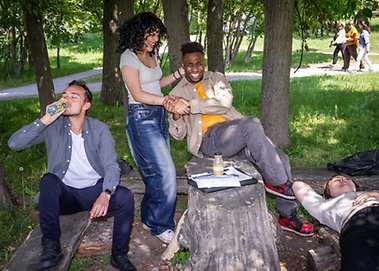
Stockholm University is looking for students to take part in a photo shoot to help showcase university life. The shoot will include both still images and short video clips. Are you outgoing, positive, and patient ? Then you might be just who we’re looking for! The material will be used in printed publications, on our website, and on social media to communicate a range of messages. The images will depict study environments and student life at SU. The photo shoot will take place at SU and in Stockhom centre at different sessions. When? We’re planning two photo shoot sessions — let us know all your availability, but you’ll only need to attend one. Tuesday 2 Dec, at 10:00 AM – 4:30 PM (SU) Friday 12 Dec, at 10:00 AM – 4:30 PM (in central Stockholm) A thank-you fee All participants will receive a fee of SEK 999 for taking part. Interested? Send us the following Email kommunikation@su.se with: First name and surname Age Mobile number Programme you are currently studying at SU A 20 second video where you are filmed in full figure where you briefly explain who you are and why you chose your programme Which of the days you are able to attend Selections are made on a rolling basis, so don’t wait too long to get in touch! We hope to see you there!
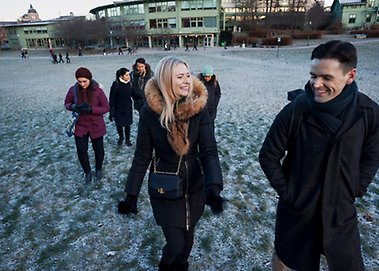
The Academic Ranking of World Universities (ARWU) by Subject 2025 places Stockholm University in the global top 50 in four subjects, and number one in Sweden in four subjects. The highest ranked subject is Environmental Science & engineering where Stockholm University is ranked 18 in the world.
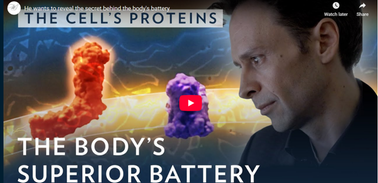
How can the cells in our bodies be charged with energy, so that we have the power to move? No one knows exactly how it works, but professor Ville Kaila and his team at Stockholm University, is investigating special proteins within our cells which capture and convert energy from the food we eat, turning it into an electrical charge, so that our cells become like charged batteries that power us.
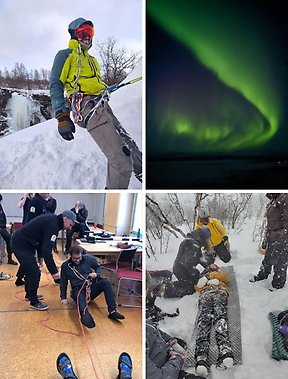
Now it is only one month left before our researchers leave for field work in Antartica. Before venturing into such extreme environments, rigorous field training is essential. We caught up with several participants from the recent iQ2300 field training to hear about their motivations, experiences, and what they're looking forward to as they prepare for their mission to the ice.
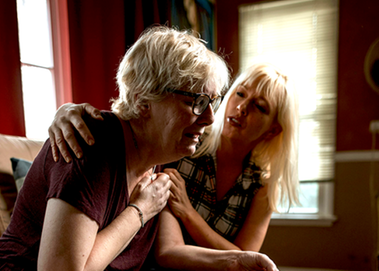
Empathy is one of the most fundamental human abilities. But what exactly happens in our brains when we put ourselves in someone else’s emotional state? And how is empathy triggered? These questions fascinates linguist Gláucia Laís Salomão.
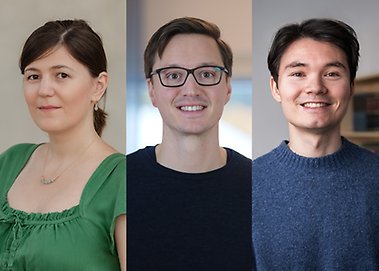
Each year, the Department of Economics at Stockholm University presents a new cohort of job market candidates – doctoral students who are ready to take the next step in their academic careers. For 2025/26 we highlight Sonia Giurumescu, Nils Landén Mammos, and Jens Oehlen.
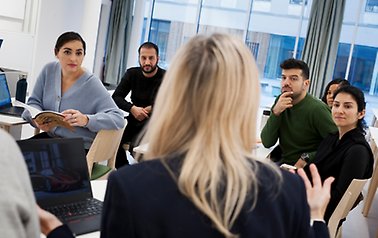
British-American analytics firm Clarivate annually publishes a list of the world’s most cited researchers. For 2025, nine names from Stockholm University are among the 6 868 on the list.
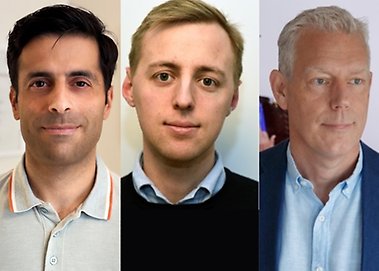
Three Stockholm University political scientists have been awarded research grants to examine how organized crime erodes public trust, how transnational actors shape global institutions, and support for radical right parties, the university announced in early November.
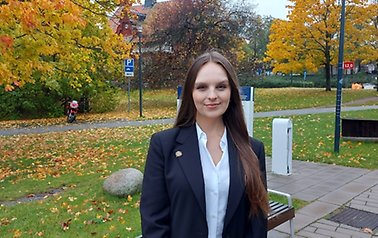
“When I moved to Sweden from Poland as a 16-year-old, I could never have imagined that, one day, I would be holding a speech in that room. In fluent Swedish. I believe in doing your best in life and taking every chance that comes along.” Kamila Marzynska, a law student at Stockholm University, smiles happily as she reflects on her role as toastmaster at the Nobel Prize banquet. For the third year in a row, she will be welcoming guests to dinner at the City Hall, leading the toast to the Chairman of the Nobel Foundation and the Swedish King. Once the main course has been enjoyed and it's time for dessert, she gets back up on the podium. At that point, the Nobel Laureates giving speeches will be introduced – in Swedish, in their mother tongue and in English. It's a big moment in their lives, so I want to introduce them in a supportive way.
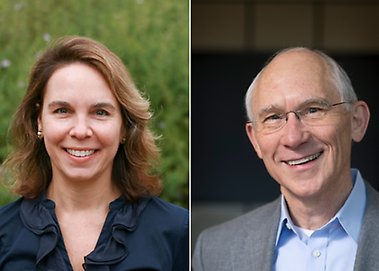
The winners of The Stockholm Prize in Criminology 2026 are Charis E. Kubrin and Mark W. Lipsey. They are awarded for their myth-busting research on crime rates and measures against crimes.
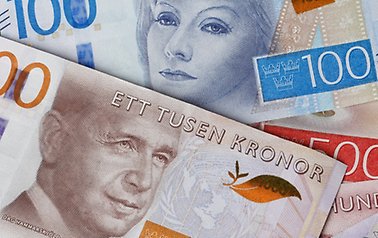
If the e-krona becomes a reality, it could shift the balance of power in Sweden’s monetary system. In an opinion piece in Dagens Nyheter, Lennart Erixon, professor emeritus of economics at Stockholm University, discusses why the move toward digital money has been so slow in Sweden.
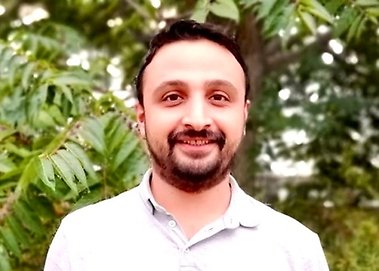
Dr. Haci Cevik is on a short-term visit from the Berlin Institute for Empirical Integration and Migration Research (BIM) at Humboldt University
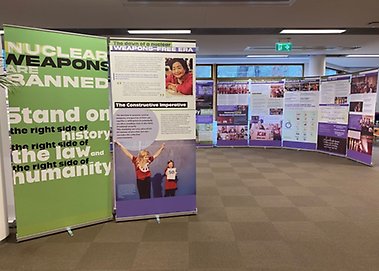
During November the End Nuclear Weapons exhibition will be displayed at Stockholm University Library. In connection with the exhibition, a panel discussion will be held on November 19, featuring researchers, educators, and civil society voices.
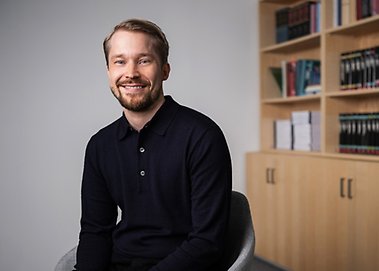
Joonas Tuhkuri, Assistant Professor of Economics at Stockholm University, was recently interviewed in the German daily newspaper Tagesspiegel. ”Economic growth in Finland has practically stagnated for two decades,” Tuhkuri says.
The SciLifeLab Planetary Biology strategic area has selected five new high-impact research projects for further development, two of them with researchers from Stockholm University. The chosen projects will be based on the SciLifeLab infrastructure, and aim to drive significant environmental life sciences advancements, which could have high societal impact. "ARCTIMES – Arctic Reference Catalogue for Taxonomic Identification of Modern and Extinct Species" is lead by Peter Heintzman, Centre for Palaeogenetics and Department of Geological Sciences, Stockholm University. The project builds on a comprehensive genome catalogue of ancient and modern Arctic species to improve eDNA studies, revealing biodiversity dynamics and ecosystem resilience to climate change across time. "Forecasting adaptation in a changing planet: evolutionary insights from 16 million museum specimens" is lead by Mafalda Ferreira and Lisandro Milocco, Department of Zoology, Stockholm University, together with Jennifer James and Gabriela Montejo-Kovacevich, Uppsala University. They will use museum collections and cutting-edge genomics and phenomics to integrate genotype, phenotype, and environment into predictive models of evolution under anthropogenic change. Five high-impact planetary biology projects selected for further development
A new international report argues Artificial intelligence (AI) can help accelerate science and research about climate change, biodiversity loss, and other urgent crises related to planetary boundaries. Responsible use of AI for sustainability research and governance is an opportunity the world cannot afford to miss, the report concludes.
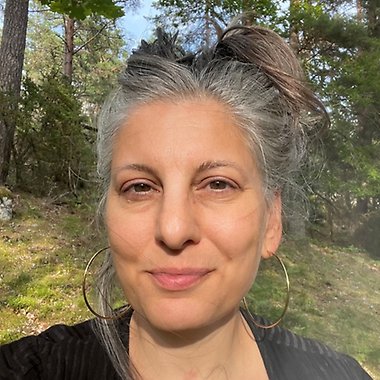
When lawyer Sara Varda St Vincent enrolled in a course called Deep Time, she didn’t expect it to completely reshape how she viewed the world. “I was looking for courses about time,” she recalls. “When I found Deep Time, my brain exploded at every lecture. It was the first time I encountered Environmental Humanities – and it shifted my perspective on many things.” What is Environmental Humanities? “Environmental Humanities is an interdisciplinary field that combines the humanities with environmental and social sciences to understand the relationship between humans and nature,” Sara explains. Rather than seeing nature as
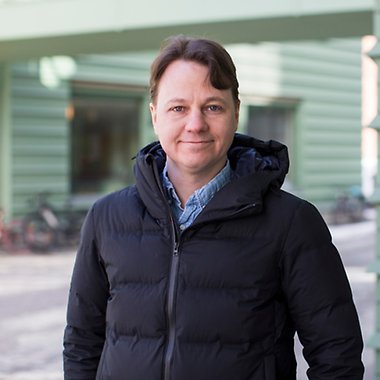
Two researchers at Stockholm University have been awarded the European Research Council's most prestigious grant, the ERC Synergy Grant 2025. Gustaf Hugelius, professor of Physical Geography at Stockholm University, is coordinating a project that has been awarded just over €12.5 million over six years. Axel Brandenburg, professor at Nordita, is part of a project that has been awarded almost €10 million, also over six years. Gustaf Hugelius is the first researcher at Stockholm University to be the administrative coordinator for an ERC Synergy Grant project. Peatlands in the face of climate change Gustaf Hugelius, together with Christina Biasi, University of Innsbruck, Pierre Friedlingstein, University of Exeter, and Philippe Ciais, Laboratoire des Sciences du Climat – CEA, leads a project to investigate how peatlands in the northern hemisphere responds to climate change and future warming. These peatlands contain huge amounts of carbon and nitrogen, which, if released, could amplify global warming making climate stabilisation targets significantly harder to meet than current models predict.