


Preparing for the Ice: Insights from Antarctic Field Training
Now it is only one month left before our researchers leave for field work in Antartica. Before venturing into such extreme environments, rigorous field training is essential. We caught up with several participants from the recent iQ2300 field training to hear about their motivations, experiences, and what they're looking forward to as they prepare for their mission to the ice.
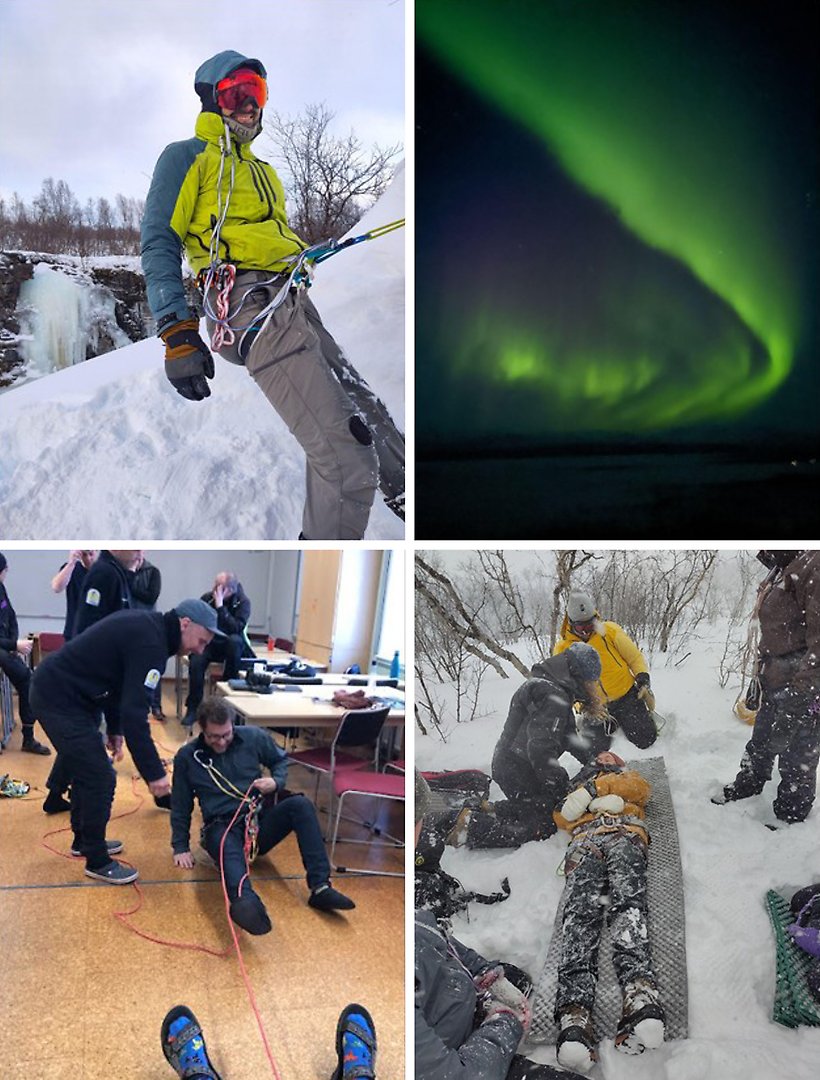
Training camp in Abisko in preparation for the the field work in Antartica. Photo: Private
Antarctica, a land of unparalleled beauty and immense scientific importance, holds the keys to understanding our planet's future climate. The East Antarctic Ice Sheet, in particular, plays a critical role in global sea levels. To better predict future sea-level rise, a groundbreaking research initiative called iQ2300 is underway. This project aims to fill crucial knowledge gaps by collecting data from field expeditions and remote sensing on the Queen Maud Land margin. It will also investigate the Riiser-Larsen Ice Shelf, identifying mechanisms that could lead to its destabilization—a potential tipping point for the entire East Antarctic Ice Sheet.
Before venturing into such extreme environments, rigorous field training is essential. We caught up with several participants from the recent iQ2300 field training to hear about their motivations, experiences, and what they're looking forward to as they prepare for their mission to the ice.
Driven by Curiosity and a Shared Purpose
For many, the allure of Antarctica is both profoundly personal and scientifically driven. Marit Törnqvist is motivated by the desire to help people understand the consequences of climate change for Antarctica and the world. Katrin Lindbäck, a glaciologist, grew up loving nature and finds comfort in vast, raw landscapes such as glaciers. Her interest in glaciology stemmed from climbing and hiking. Thomas Frank, Ian Brown, and Clement Cherblanc all expressed a profound fascination for these remote, unique places and a drive to understand critical aspects of Earth and climate sciences including human-induced climate change and the physics of ice balance in Antarctica. Ola Fredin is motivated by the exciting science and curiosity about nearly everything in Antarctica, calling it an "incredible opportunity to experience remote travel and nature at its most extreme".
Beyond the scientific goals a common thread among participants during field training was the desire to connect with their fellow team members. "Getting to know the other team members" was a top priority for Thomas Frank and Ian Brown, as was refreshing safety skills and learning about the overall operation. Clement Cherblanc noted that a "good atmosphere in the group is a catalyst of the sustainability and the efficiency of field work". Katrin Lindbäck emphasized the importance of building trust and shared experience for smoother and more enjoyable fieldwork.
Training Highlights and Lessons Learned
The field training provided a mix of classroom learning and hands-on experience. A standout moment for Marit Törnqvist was the outdoor session practicing crevasse fall and hauling techniques, a critical skill for glacier travel. She also found the lessons on first aid, navigation, communication, and research content "very interesting and well done," and praised the logistics staff as "incredibly helpful, kind, and thorough". Ola Fredin highlighted the medical and first aid training as "always important," noting that there's "always something new to learn or skills that need refreshing".
However, there were also areas where participants wished for more. Marit Törnqvist would have liked more time for conversations with scientists. Katrin Lindbäck would have liked more hands-on time with “things like sleeping in a tent, cooking on the outdoor stove, checking the safety gear, and getting more practice with first aid and snowmobiles," as she learns best by doing. Ian Brown also wished for more time in planning fieldwork and coordinating between teams.
The logistical support provided was widely appreciated. Ola Fredin praised the Swedish Polar Secretariat for their "outstanding range of resources" and dedication to supporting scientific research in such a remote environment. Clement Cherblanc found learning about the station and its logistics "most interesting".
Anticipation for the Antarctic Expedition
With training complete, excitement and a few practical concerns are on the minds of the researchers. Marit Törnqvist is primarily concerned about the schedule and locations, as this could impact the "effectiveness of our mission". Katrin Lindbäck, looking forward to being part of a small team, is focused on ensuring all equipment is "ready and tested ahead of time".
Despite potential challenges, a strong sense of confidence and privilege permeates their outlook. Thomas Frank views the expedition as a "real privilege" and, despite the "tremendous logistical effort" involved, is "very confident that everything will work out smoothly in the end". Ola Fredin is eager to conduct fieldwork in Dronning Maud Land with his team. While being away from family and friends can be challenging, having good satellite internet helps maintain connections. Ian Brown believes they are "set up for a good expedition," acknowledging potential challenges but confident in overcoming them. Clement Cherblanc is "incredibly excited" and "not too worried," ready to make the best of the conditions they encounter.
The iQ2300 field team, which also includes Coen Hofstede, Ninis Rosqvist, Ruth Mottram, Kadir van Lohuizen, Celia Baumhoer, and Andrew Mercer, is now poised to translate their training and passion into action on the Antarctic ice later this year, and ready to contribute vital research to our understanding of a changing world.
Last updated: 2026-02-05
Source: Department of Physical Geography