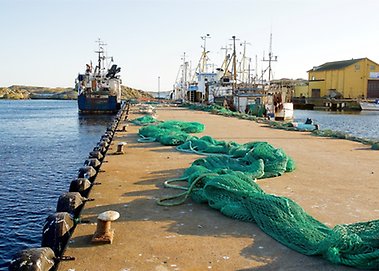
EU fisheries ministers decided on higher catch quotas (TACs) than the Commission had proposed in the Baltic Sea next year. The TAC for Gulf of Bothnia herring was reduced, but not enough to comply with EU regulations. ‘It is remarkable that the Council is not complying with its own legislation,’ says Sara Söderström, fisheries researcher at the Baltic Sea Centre.
Erik Elfwing is 23 years old and lives in Tyresö outside Stockholm. He is studying for a bachelor's degree in physics, year 3, specialising in physics. ‘Considering that I didn't study science in secondary school and also had great difficulty with mathematics, sometimes even to the point of failing, I want to show that you don't have to be a natural genius to study physics. All it takes is interest, curiosity and hard work.’ Starting next week, Erik will be writing about his studies on Fysikum's Facebook and Instagram pages.
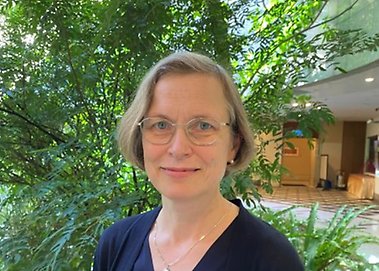
Lisa Laun, adjunct professor of economics at Stockholm University and researcher at IFAU, is one of the recipients of the Swedish Unemployment Insurance Funds’ 2025 Research Award. ”We look forward to continuing our research,” says Lisa Laun about the award.
Fake studies produced with the help of AI risk damaging the credibility of research while academia must regain control over scientific publishing. This is according to the initiators of the Stockholm Declaration that receives support from leading persons at Stockholm University. At the beginning of the summer in 2025, the Royal Swedish Academy of Sciences (KVA) organised a workshop with Swedish and international researchers on how the system for scientific publishing works and how it can be reformed. As a result of this workshop, Dan Larhammar, Uppsala University and former chairman of KVA, and Bernhard Sabel, Otto von Guericke University of Magdeburg, have now, in November 2025, published an article with proposed measures according to the Stockholm Declaration. Hundreds of thousands of fraudulent articles, more or less generated by AI, have in recent years begun to erode the scientific system. This risks undermining the fundamental credibility of science. It becomes difficult to build further on research that in its entirety, or in parts, is not accurate. It becomes impossible to replicate studies that may not even have been conducted in the first place, according to the authors of the Stockholm Declaration. “Our entire societal development is based on having a factual foundation. This is evident when it comes to medical treatments where patients can be harmed or even die. But one can also imagine bridges and buildings collapsing if the calculations they are based on are incorrect. And if macroeconomic models are inaccurate, decision-makers may receive wrong information. Ultimately, our democracies rely on us being able to make informed choices, which is why it is so important that the basic information is correct,” says Dan Larhammar. Need to prioritise quality He argues that it is time for the researchers themselves to tackle the problem and find countermeasures. There is something in the structure of the entire scientific system that can tempt people to cheat. To merit themselves, researchers have been required to publish as much as possible. Steering towards quality instead of quantity when researchers apply for positions could be a way to move away from this. Dan Larhammar also points out that the rapid implementation of open access – which he fundamentally considers good – has created a market for unscrupulous opportunists. According to the article’s authors, so-called article mills produce false articles and offer researchers the opportunity to buy co-authorship. It also happens that editors of scientific journals are bribed to accept articles. The article’s authors are also critical of established large publishers who make large profits from research conducted with the help of grants from the state or foundations. Instead, they would like to see the academy itself take greater responsibility for scientific publishing without a profit motive. Another problem with the large number of false studies is that the peer review system risks collapsing. SU professor urges signing the declaration
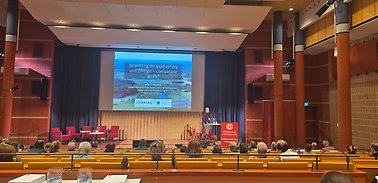
The first Swedish Biodiversity Symposium was held at the Conference Centre Wallenberg in Gothenburg 21–23 October. The Bolin Centre and RT4 were co-organizers of the symposium, which was fully booked with over 400 participants. The Symposium was focused on Transformative change- from knowledge to action and was oriented to a science-policy interface to improve communication and discussion of knowledge on biodiversity. Besides Bolin Centre members, other participants were from many different biodiversity stakeholders, such as other universities, authorities such as the Swedish Board of Agriculture and the Swedish Environmental Protection Agency, municipalities including the City of Stockholm, companies such as those involved in agriculture and steel, NGOs like WWF, and other research- and museum entities. It was the largest gathering of biodiversity scientists and other biodiversity stakeholders in Sweden. Each day had a theme and started with a thought-provoking discussion panel around topics like “Is Swedish biodiversity governance transformative?”, “Societal transformation – how do we make it happen?” and “Future Directions? Unlocking a sustainable future”. For many attendees, these discussions were a highlight of the meeting. Each topic brought together people with different approaches and viewpoints about how Sweden can apply scientific knowledge about biodiversity concerns to actionable change.
The Stockholm Center for Global Asia invites applications for its 2025–2026 round of small research grants. The primary aim of these grants is to strengthen Asia-related research within the social sciences at Stockholm University. A further purpose is to enhance collaborations between teachers and researchers at the Faculty of Social Sciences, Stockholm University, and their counterparts in Asia, as well as with other higher education institutions and research environments focused on Asian studies. These are small grants, typically intended to support shorter fieldwork trips or research visits to universities and research institutions. The grants are designed to encourage the exchange of ideas, foster new collaborations, and contribute to the development of research related to Asia. They do not normally cover salary costs. Funding may be used to support the travel of scholars and teachers employed at a social science department at Stockholm University to institutions abroad or to host incoming guest researchers at Stockholm University. Grants may also be used for fieldwork or archival research. In addition, the Center provides planning grants for individual researchers or research groups preparing applications for external research funding. Planning grants constitute an exception to the rule regarding salary coverage. In these cases, the grant may include support equivalent to up to one month of salary (including LKP and OH) to enable researchers to develop and write research proposals. While planning grants give priority to junior researchers, they are not exclusively limited to them. Applicants must have completed a doctoral degree to be eligible for a planning grant. Grants are open to staff members and doctoral students at the Faculty of Social Sciences, Stockholm University. Applications from foreign scholars must be submitted through their host department or unit at Stockholm University. The funding period runs from Monday, 5 January 2026, to 5 January 2027. Applications must be submitted no later than 12 December 2025. All applications should be sent both by e-mail to asianstudies@su.se and in two printed copies (including one signed original) to: Stockholm Center for Global Asia Attn: Eva Hansson Stockholm University 106 91 Stockholm, SWEDEN Each application must include a signed application form (download PDF below) a curriculum vitae of no more than two pages (including recent publications) a short description of the project’s background, purpose, and expected outcomes; a budget specifying travel costs, housing, and daily allowance. For planning grants, the budget should also include any requested salary component, a concise project description, projected sources of future external funding, and a list of collaborating institutions abroad. There is no fixed amount for travel grants, but the maximum allocation for individual planning grants is 100,000 SEK. Applications should not exceed three pages for travel grants and five pages for planning grants (double-spaced, 12-point font). Priority will be given to applications that are expected to result in publications authored by researchers at Stockholm University, or that include Stockholm University researchers in forthcoming external funding applications. Acceptance will be announced on 5 January 2026. A brief final report (1–2 pages) summarizing the outcomes of the funded activity must be submitted to the Forum for Asian Studies no later than 31 January 2027. Download the Application Form The application form can be downloaded here: Application Form – Research Support and Grants SCGA (207 Kb)
Young people with ADHD often find it difficult to deal with strong or difficult emotions. A recently published study investigated a new psychological treatment designed to help them improve their emotional regulation.
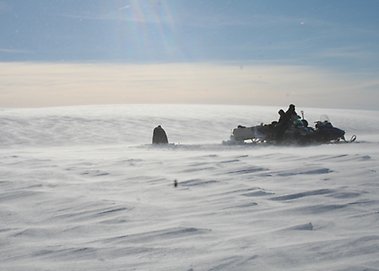
The United Nations declared 2025 as the International Year of Glaciers' Preservation, accompanied by the proclamation of the 21st March of each year as the World Day for Glaciers starting in 2025. We would like to share pictures and our knowledge about glaciers around the world and present the project “Glacier of the month” starting in March 2025. Background The aim of the International Year of Glaciers’ Preservationis is to raise global awareness about the critical role of glaciers, snow and ice in the climate system and the hydrological cycle, and the economic, social and environmental impacts of the impending changes in the Earth’s cryosphere. At the Department of Physical Geography, Stockholm University we have a long history of research focusing on glaciers. Many researchers have field experience from a wide range of icy environments such as for example; Antarctica, Greenland, Canadian Rockies, Norway and of course northern Sweden where we have a long tradition of glacier research and Tarfala monitor glacier change. We would like to share pictures and our knowledge about glaciers around the world and present the project “Glacier of the month” starting in March 2025. Glacier of the month 2025 March Blåmannsisen, Norway: 67° 15’ N, 16° 05´E
Stockholm University has been awarded another grant by the Swedish Research Council to recruit an international guest researcher, this time an atmospheric scientist. At the end of October 2025, The Swedish Research Council announced additional funding to higher education institutions in the call for Proposals to recruit international guest researchers to Sweden. Funding is provided to recruit distinguished researchers whose research activities are outside Europe.
Stephen Pierzchajlo defended his doctoral thesis “Smelling Without A Smell: How olfactory-perceptual representations are activated by words” on October 17 at Stockholm University.
When Ida Rahu was 14, she sat in a chemistry classroom and made a declaration that would shape her life. “I literally said to the person next to me, ‘See, I will become a chemist.’”
On November 12–13, Stockholm University will host the HumInfra Conference 2025. At the conference, nearly 100 researchers from different parts of Sweden and other countries will gather to discuss and showcase various resources within digital human science.
Learn about other events related to global governance that our partners, such as The Hans Blix Centre or the Stockholm Centre for International Law and Justice (SCILJ), are hosting.
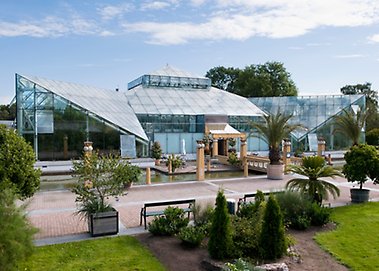
Bergius Botanic Garden, Stockholm’s only botanical garden, is located at Brunnsviken, just a few kilometres from Stockholm’s city centre. “In one day, you can go from the tropics to the mountains,” says Lars Gunnar Reinhammar, curator at Bergius Botanic Garden. Visiting the Bergius Botanic Garden is like stepping into another world. From the pine tree on the Italian terrace, which has stood for centuries, to the charming pavilion with its unique tree formations. At the intersection of history, science, and nature, there is something for everyone here. A botanical garden is a living museum In the Bergius Botanic Garden, living plants from all over the world coexist with a common purpose: to spread knowledge and contribute to scientific studies, education, and conservation. Unlike ordinary parks, where plants are mainly planted for their aesthetic value, a botanical garden has a scientific basis. The plant collections must be managed for the long term, carefully documented, and accessible for research, teaching, and the general public. “A botanical garden is more than just a beautiful park, it must meet specific criteria,” says Gunvor Larsson, director of the Bergius Botanic Garden. The plants are arranged thematically, for example, according to family or geographical origin, and each species is labelled with its scientific name, often also its Swedish name, as well as information about its natural origin. Many of the plants are of wild origin, with collection data - information about where and when they were collected, which is valuable to researchers and students. The garden participates in a global network of botanical gardens – BGCI, Botanical Gardens Conservation International – which exchanges knowledge and plant material through, for example, seed exchanges. The organization also manages a database where many botanical gardens register their plant material, which makes it easier for researchers to access plants. Like many other botanical gardens, Bergius Botanic Garden also has sections displaying ornamental and useful plants, such as dahlias, fruits, and berries. “Researchers use Bergius Botanic Garden to access plant material, conduct cultivation experiments, and collect insects,” says Lars Gunnar Reinhammar. The garden also conducts teaching at different levels. Pupils from primary and secondary school classes via Naturens hus to university students come here, and Bergius Botanic Garden is also a resource for various horticultural courses. For the general public, the garden offers guided tours, theme days, and exhibitions, and the staff answer questions about plants on a daily basis. “A botanical garden is never static! We are constantly being used and developed,” says Gunvor Larsson. From a kitchen garden to a botanical knowledge bank The history of the Bergius Botanic Garden dates back to the 18th century, when the two brothers Bengt and Peter Jonas Bergius founded a garden on Karlbergsvägen in what is now Vasastaden. There, on the Bergielund estate, they created an extensive garden filled with fruit trees, berry bushes, and medicinal plants – no fewer than 700 apple trees and 1,000 gooseberry bushes were cultivated. “You could say that Bergielund was like a private scientific institution, with a well-stocked library and a large herbarium. Peter Jonas Bergius, who was a doctor and disciple of Carl von Linné, wanted to combine practice and science,” says Gunvor Larsson. The Bergius brothers donated their entire estate to the Royal Swedish Academy of Sciences, which formed the Bergius Foundation in 1791. Since 2025, Stockholm University runs the garden. As Stockholm grew the Bergius Foundation moved to its current location at Brunnsviken in Frescati in the late 1880s. The director at the time, Professor Veit Wittrock, had a strong influence on the new area and created the botanical garden as we know it today. “Much of the garden is based on Wittrock’s great commitment and ideas. He had walkways and caves blasted out, ponds built, buildings erected, and impressive rockeries created to represent a number of mountain ranges. North American, Scandinavian, and Asian,” says Gunvor Larsson. Today, the university manages this cultural heritage, which has continued to develop throughout the 20th and 21st centuries. Important additions have been the orangery (1926), the department building (1936), the modern Edvard Anderson Conservatory, which was completed in 1995, and the wetland in 2009. The historical collections include the Bergius brothers’ book collection, which today is integrated into the University library’s rarity collection.
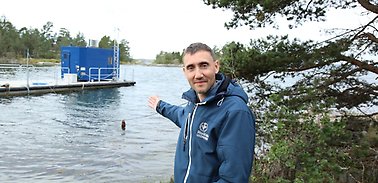
A unique floating laboratory is giving researchers an unprecedented window into the hidden exchanges between air, sea, and coast and their role in the climate system. One of its most important features is the ability to make continuous, long-term measurements in different coastal environments. This makes it a valuable new addition to Stockholm University's marine research infrastructure.
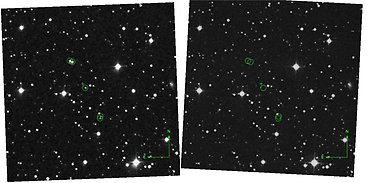
Researchers at Nordita at Stockholm University have analyzed flashes of light on astronomical plates from the early 1950s and found statistical connections between the times of these flashes, nuclear weapons tests and reports of unidentified anomalous phenomena (UAP). The results are presented in two studies published in Scientific Reports and Publications of the Astronomical Society of the Pacific.
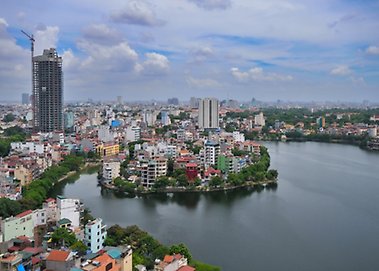
Researchers in the social sciences from Vietnam, Laos, and Cambodia are invited to apply for the Vietnam, Laos, and Cambodia Research Stipend 2026. The stipend supports a one- to three-month research stay at the Stockholm Center for Global Asia, Stockholm University, during April–June or September–November 2026.
At Stockholm University, studying languages at the Master’s level is about more than mastering words — it’s about understanding how language shapes society, identity, and communication across cultures. Maria Kuteeva, Professor of English Linguistics at the Department of English, shares her insights on what makes advanced language studies both inspiring and valuable for international students. Connecting theory, research, and real-world issues
Are you passionate about languages, cultures, and communication? A Master’s in Languages at Stockholm University offers an inspiring journey into advanced studies in linguistics, culture, and global perspectives — in one of Europe’s most innovative and international academic environments.
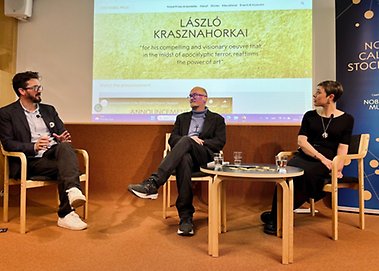
Adnam Mahmutovic, Bo G. Ekelund and Maria Trejling discussed what role the Nobel Prize play in the uncertain global times we face today and several other questions, minutes before the announcement of the Nobel Prize in Literature on 9 October.
ForskarFredag, the Swedish edition of the European Researchers’ Night, took place this year under the theme “The Earth beneath our feet” and our students were right at the heart of it!
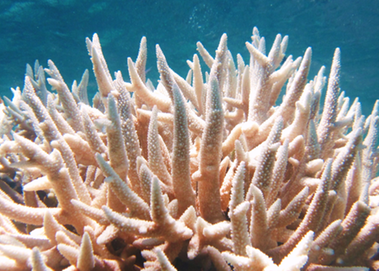
Widespread mortality of warm-water coral reefs is now underway as the world reaches its first climate tipping point. The Global Tipping Points Report 2025, released by the University of Exeter and international partners including the Stockholm Resilience Centre, underlines that the only way to avert catastrophe is to act urgently, triggering so-called “positive tipping points.”
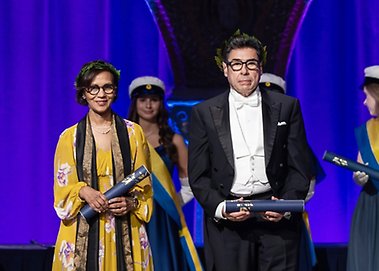
The Sveriges Riksbank Prize in Economic Sciences in Memory of Alfred Nobel (the Prize in Economic Sciences) 2025 is shared by three researchers. One of them is professor Philippe Aghion, who was recently awarded an honorary doctorate at Stockholm University and who has also been a visiting professor at the university.
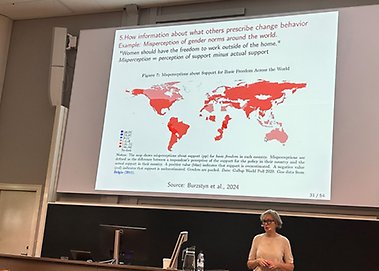
Marianne Bertrand, Professor of Economics at the University of Chicago Booth School of Business, held a lecture at Stockholm University last week, in front of an audience of around 200 people including researchers and students, among others.
Summer's much-maligned cyanobacterial blooms may not be all bad after all. New research shows that these summer blooms can be crucial for juvenile herring – without the blooms, they would have less opportunity to grow.
Imagine a foggy evening in the docklands of Victorian London, illuminated by the then-modern gas lighting. Apart from the shady pubs and brothels, most of the town’s opium dens could be found here. Naturally, this and other aspects of the Victorian era decadence caught the attention of Charles Dickens.
How can the Nordic countries meet the challenge of future elder care as populations age and the workforce shrinks? That is the central question in a new research project, with David Seim, Professor of Economics at Stockholm University, leading the Swedish part of the study.