News

  • Postdoc fellowship (2 years) in bioinformatics of plant-microbe interactions – deadline 25 January

    A postdoctoral stipend is available with an actinorhizal nitrogen-fixing root nodule symbioses. The position is sponsored by the Carl Trygger Foundation to the laboratory of Professor Katharina Pawlowski at Stockholm University in the Department of Ecology, Environment and Plant Sciences. The department has approximately 100 employees, including 25 research groups, 10 postdocs and approximately 35 PhD students; research and teaching are conducted in an international environment. Project description The successful applicant will be part of a team aiming to understand the evolution of root nodule symbioses in general. All root nodule symbioses go back to a common ancestor on the plant side, while on the bacterial side, they involve either rhizobia (Gram-negative unicellular soil bacteria) or Frankia strains (Gram-positive soil actinobacteria that grow as a mycelium). Due to their agricultural importance and comparative user-friendliness, research has mostly focused on legumes and rhizobia. However, actinorhizal symbioses have a wider phylogenetic range and Frankia strains are presumed to have been the first microsymbionts. Therefore, we are working on the actinorhizal symbioses of Cucurbitales (Datisca spp., Coriaria spp.), including comparisons with Fagales (Alnus glutinosa, Casuarina glauca). The overarching goal of the proposed work is to identify the genomic features required for the symbioses of Cucurbitales, since this order contains agriculturally important species. Job duties The successful applicant will mainly work with the analysis of plant transcriptomes as well as plant and bacterial genomes (assembly, annotation, comparative genomics). This would include the set-up of pipelines and workflows. Phylogenetic studies have to be done as well. Eligibility requirements Applicants are expected to have a doctoral degree – either a PhD in Bioinformatics or a PhD in Biology with strong experience in bioinformatics. Good communication skills in English are required. Basis of assessment The doctoral degree should have been completed no more than six years before the application date. The selection is based on documented experience, analysis methods included in the application, and publication history. Terms of the stipend The position is a full-time stipend and costs for the second year are only available after submission and approval from the funding Foundation based on a brief statement (1-2 pages) of the first year’s activities. Note that this is a tax-free stipend, with guest insurance from Kammarkollegiet. The starting date of the position is planned to be March 1, 2025 or by agreement.  Stockholm University strives to be a workplace that is free from discrimination and provides equal opportunities for everyone. Application You apply for employment by sending your application as one compiled pdf direct to Katharina Pawlowski (contact details below) before 25 Jan 2025. When you apply, we ask you to specify the following information attached as a single document or pdf: personal cover letter which describes briefly your motivation to apply for the position and what makes you suitable for the project. CV – degrees and other educations, work experience and list of publications, awards, and details on: contact, language skills, and contact information for 2–3 reference persons  project plan/research plan (should not exceed 3 pages) describing: why and how you want to carry out the described project above. copy of proof of doctoral degree own publications that you wish to refer to (max. 3 files). Incomplete applications will not be considered. Please feel free to contact Katharina Pawlowski if you have any questions regarding the application materials.  Welcome with your application! Contact Professor Katharina Pawlowski katharina.pawlowski@su.se    
  • Postdoc Fellowship in Marine Microbiology

    A postdoctoral stipend is available with an emphasis on planktonic N2 fixing symbioses. The position is sponsored by the Carl Trygger Foundation to the laboratory of Professor Rachel A Foster at Stockholm University in the Department of Ecology, Environment and Plant Sciences. At the Department of Ecology, Environment and Plant Sciences, research and teaching are conducted in an international environment. The department has approximately 100 employees, including 25 research groups, 10 postdocs and approximately 35 are PhD students.

    Department of Ecology, Environment and Plant Sciences
  • Faculty of Science is recruiting Assistant Professors in Biodiversity

    The Faculty of Science at Stockholm University is recruiting up to three Assistant Professors in Biodiversity to tackle the critical global issue of biodiversity loss caused by human-driven factors such as climate change, habitat alteration and pollution. These positions come with a generous package, providing successful candidates with the opportunity to recruit personnel and develop a strong, independent research programme. The successful candidates will be linked to SciLifeLab, and each position will be formally placed within one of five departments at Stockholm University — one of them being the Department for Ecology, Environment and Plant Sciences.  The topic deals with biodiversity in a wide sense, including variation and evolution within species, between species and among communities across space and time. It includes the study of molecules, genes, individuals, species and their life conditions, evolution and interactions in the environment. The focus should be on patterns and processes that previously have been difficult to study, but now are possible, due to recent advances in areas such as sequencing, AI, imaging, mass spectrometry, tomography and exposomics. The application is now open. You can read more about these positions at the Faculty of Science website . We look forward to hopefully welcome one of you to the department in the near future! To apply in Swedish, please click here. To apply in English, please click here.

    Department of Ecology, Environment and Plant Sciences
  • Tanja Slotte receives funding from the Knut and Alice Wallenberg Foundation

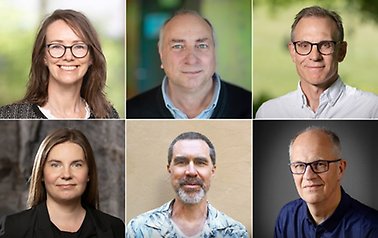
    Each year, the Knut and Alice Wallenberg Foundation awards research grants in the fields of medicine, science, and technology to research projects that are judged to have such high scientific potential that they are likely to lead to future scientific breakthroughs. Each project is evaluated by a group of international experts in the respective field. Six research projects at Stockholm University got funded this year, one of which is Tanja Slotte’s project entitled “Harnessing evolutionary transitions, machine learning, and genomics to decode pollen evolution and unravel sexual selection mechanisms shared across kingdoms” . Co-applicants on the project are Prof John Fitzpatrick, Dr Allison Hsiang, and Prof Catarina Rydin, all at Stockholm University.

  • DEEP alumnus Leonard Blaschek receives international scientific prize

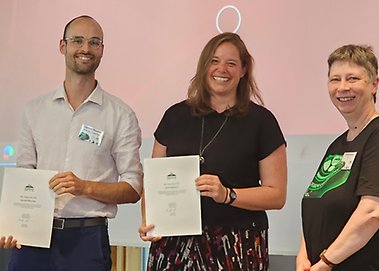
    Leonard Blaschek, who defended his PhD in May 2022 at DEEP, recently got awarded a prestigious international scientific prize for best PhD thesis. The prize for best PhD thesis defended within the last two years is awarded by the Scandinavian Plant Physiology Society (SPPS), the joint scientific society in Plant Physiology of all Nordic countries. During the 30th SPPS Conference held in Copenhagen between 27-29th of August 2024, DEEP alumnus Leonard Blaschek was awarded for his entire PhD thesis study, which looked at the role of lignin chemical composition for plant biomechanics and plant resilience to drought. His study is published in six articles, with two in the high profile journal The Plant Cell. This prize highlights both the breakthroughs in sustainable plant biomass composition and its properties as materials, and the climate resilience of plants from the Pesquet Group. This well-deserved achievement also underlines the excellence of PhD education in Plant Physiology at Stockholm University. Congratulations Leonard!  

    Department of Ecology, Environment and Plant Sciences
  • Six researchers share SEK 175 million from the Wallenberg Foundation

    The importance of Arctic methane emissions for the climate, how matter is formed and broken down, evolutionary shifts in the plant kingdom, and new effective methods for producing bioactive substances that will meet future needs for medicines and advanced electronics. These are just a few examples of basic research at Stockholm University that has received funding from the Knut and Alice Wallenberg Foundation.

  • FORCE investigates how sticklebacks affect coasts and climate

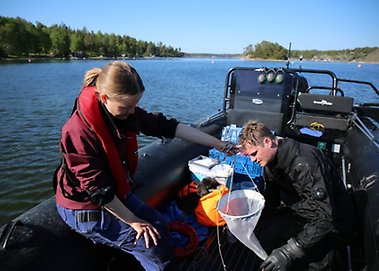
    Large predatory fish have become harder to find in the coastal bays of the Baltic Sea, which are now dominated by sticklebacks. Many of these bays have also become more turbid and show signs of severe eutrophication. Scientists have seen this shift spread from the open sea to coastal environments and are now looking for explanations as to why this has happened and whether it could contribute to unforeseen climate impacts. In one of the largest field sampling programmes of the year, the FORCE project map changes and how best to restore coastal predatory fish stocks and biodiversity. From Västervik to Östhammar, the composition of fish species, plants and algae living in 32 different bays will be analysed. In addition, samples of nutrient levels and plankton will reveal the water quality in these areas.  The sampling station at Krysshamnsviken in the Stockholm archipelago is a hive of activity, with several fishing nets being thoroughly sorted and rinsed on the adjacent boat jetty and beach, while samples are collected by divers and assistants in a rib boat out in the bay. Krysshamnsviken is one of 32 sites that FORCE researchers surveyed in 2014 to investigate the relationship between fish species, vegetation and water quality. Now, 10 years later, they are back to see how these have developed. " These bays are very different. They have different amounts of predatory fish and sticklebacks, as well as different levels of protection from fishing. The number of seals and cormorants in these areas also vary. In total, this gives us a better picture of the causes and possible measures, such as fishing closures, to improve the environmental status," says Johan Eklöf, Professor in Marine Ecology at the Department of Ecology, Environment and Plant Sciences at Stockholm University and project leader for FORCE.   Link between sticklebacks and climate change The decline in predatory fish such as pike and perch and the increase in sticklebacks is affecting many natural values. The situation has contributed to turbid bays with more filamentous algae and severe symptoms of eutrophication. More predatory fish help to keep water areas clean and clear, and could counteract these symptoms. The researchers are now trying to find out whether stronger populations also could be linked to climate effects. " We will investigate whether areas with a lot of predatory fish are better at storing carbon than areas dominated by sticklebacks, where carbon turnover is higher," says Johan Eklöf.

    Stockholm University Baltic Sea Centre
  • Deciphering coastal climate impact: Sandviken Bay exploration

    Is there a difference between healthy and degraded coastal bays in terms of greenhouse gas emissions and uptake? To answer this question, researchers from different disciplines are working together carrying out various measurements along the Swedish coast. Come with us to Sandviken Bay, where the first of several days of a new sampling campaign took place.

    Stockholm University Baltic Sea Centre
  • PhD students connect coast and society in a changing climate

    Solving complex questions about interactions between the sea and climate change, and how they relate to society, requires a broad set of skills. In a new research school, PhD students from diverse scientific disciplines at Stockholm University get a unique opportunity to learn how transdisciplinary approaches and research communication can lead to sustainable management of coastal environments. What unites students in from widely varied subjects like marine geology, business accounting, and ecotoxicology? They all provide important perspectives necessary to answer questions on societal challenges and solutions to climate change in coastal seas. During a kick-off meeting for the research school Perspectives on climate change in coastal seas in March, 14 new PhD students were introduced to this framework that will be their research focus for the coming years. "I feel proud to be part of this program, and though this transdisciplinary context is new to me, I think I have a lot to bring to the table," says Emma Flévaud, PhD student in environmental law.   Adding new pieces to the puzzle The oceans face multiple climate-related pressures such as acidification, oxygen deficiency and rising temperatures. These, among others, cause feedbacks that release potent greenhouse gases into the atmosphere, reinforcing the climate effects. However, under healthy conditions with prospering ecosystems, the coastal zones have effective carbon storage capacities and can be important carbon sinks. "If we manage the coastal zones right, they could globally contribute to 20 percent of the greenhouse gas emission reductions we need to fulfill the Paris Agreement," says Christoph Humborg, Scientific Director at Stockholm University Baltic Sea Centre and one of the initiators of the research school. This intricate puzzle is partly understood and described in science, and questions remain about the links between climate change, biodiversity and the full potential of the coastal zones to serve as climate mitigators. In research initiatives like CoastClim experts in ecology, modeling, marine physics, and atmospheric sciences explore these links. For the next couple of years, the students from Stockholm University will be involved in research questions that add important information in this context.

    Stockholm University Baltic Sea Centre
  • New funding for research on herring adaptation and bottom trawling

    The foundation BalticWaters annually fund research on the Baltic Sea environment. For 2024, two projects at the department of Ecology, Environment and Plant Sciences are awarded grants. BalticWaters is an independent foundation engaged in efforts to improve the Baltic Sea environment. In their Program for research projects and pre-studies, they awards grants to projects that "have the potential to contribute to a healthier Baltic Sea environment and can form the basis for knowledge-based decisions for better management of our inland sea". Two researchers at the the Department for Ecology, Environment and Plantsciences has been awarded funding for their projects:   Understanding and protecting the diversity of Baltic Sea herring populations Monika Winder, Stockholm University The Baltic Sea herring stock consists of a diversity of populations with different adaptations and migration strategies. The aim of the project is to investigate adaptations of herring in coastal ecosystems in the Stockholm archipelago. The results will provide information on which subpopulations of herring thrive best in this important part of the Baltic Sea – information that is important to guide management measures to secure coastal ecosystem health and protect the integrity and productivity of herring stocks.   Does bottom trawling affect blue carbon storage in the Baltic Sea? Clare Bradshaw, Stockholms University Baltic Sea sediments can play an important role as carbon sinks. At the same time, trawling is carried out on these bottoms. Recent global studies estimate that bottom disturbance caused by trawling can impair carbon storage as it suspends the sediment. Clare will investigate the effects of bottom trawling on carbon turnover in the Baltic Sea. The results will provide important new data to support climate, environment, and fisheries management in the region.   Read more about the BalticWaters foundation and the other projects on their website

    Department of Ecology, Environment and Plant Sciences
  • Underestimated risks of pesticides in food production 

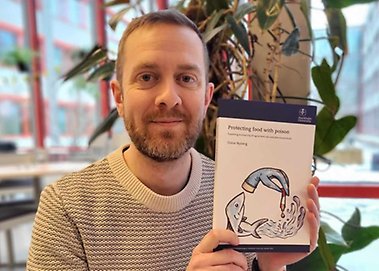
    Food production in agriculture and fish farms uses large amounts of chemicals such as pesticides and antibiotics to secure harvests, but we currently know very little about the environmental effects of this use. This is according to a new thesis from Stockholm University, which suggests ways to improve this information. Environmental impact of a food product can be evaluated, from its production to its disposal, through what is known as life cycle analysis. This includes climate effects, utilisation of natural resources and impact on biodiversity, but the method is associated with major uncertainties when assessing potential damage from environmental pollutants. “There are about 3000-6000 chemicals that we have good information on today. At the same time, global daily operations have a turnover of around 80 000-100 000 substances. Many are not toxic in the volumes they are used, but it is problematic that we do not know more about them," says Oskar Nyberg , PhD in ecotoxicology at the Department of Ecology, Environment and Plant Sciences. The introduction of new substances to the market is faster than our ability to examine their individual effects. Existing studies and results are based on a few organisms tested in closed environments, making it difficult to determine their broader effects in nature. “70 to 80 percent of the available ecotoxicological data are based on a handful of standard organisms. 'When evaluating environmental pollutants in a life cycle assessment, the models used describe how individual species are affected, in order to extrapolate the effect is in an ecosystem,” says Oskar Nyberg.   New methods for better damage assessment In cases where chemical releases have been evaluated, complete information on the substances is often missing, which underestimates the environmental damage. In his thesis, Oskar Nyberg investigated how to make better and more reliable forecasts in damage assessments, without having to conduct new animal tests. A new method is to use machine learning to estimate the uncertainties in previous studies and to predict the impact of unknown chemicals by comparing them with the properties of known chemicals. “Such analyses can identify statistical relationships between the physical structure of chemicals and various toxicological properties. It becomes a screening that can indicate whether a substance is potentially toxic and which chemicals should be prioritised for further investigation," he says.

    Department of Ecology, Environment and Plant Sciences
  • Wetland plants can clean water from PFAS

    Many lakes and rivers are contaminated with the environmental contaminant PFAS. Researchers at Stockholm University show in a new study that floating wetlands with wetland plants can purify water from PFAS by up to 40 percent in one day. The study is published in the scientific journal “Journal of Environmental Management”. “This is the first time we have shown which floating wetland plants that can purify water from PFAS,” says Maria Greger, associate professor in plant physiology at Stockholm University. For thirty years, she has led research on the subject of phytoremediation, in which plants are used to clean soil, water and air from pollution. PFAS is a collective name for persistent highly fluorinated substances e.g. used in fire foam, as impregnation agents and in Teflon pans. To purify water from PFAS, a method with active carbon is currently used. But this purification method is expensive and is therefore only used in water treatment plants for drinking water. Floating wetland plants, where cultivation methodology and choice of plants are crucial, make purification of PFAS possible even in natural water. The study was conducted on fresh water from the lake Sänksjön in Kallinge in Blekinge, Sweden. Adjacent to this lake is the F17 air wing, where the armed forces have used fire foam containing PFAS in their fire drills. PFAS levels are remarkably high in this water, as well as in several watercourses connected to fire training sites and airfields. “We observed that all PFAS substances decreased significantly over time by up to 40 percent over a 24-hour period. The size of the plant biomass was found to be more important for effective purification than a specific plant species,” says Maria Greger.   Sedges are among the species that most rapidly reduced the concentration of heavy metals. The plants take up PFAS and accumulate it in the shoots, which can be harvested, making it easy to remove the contamination from the site. The researchers have also shown that the plant degrade PFAS in the water with the help of the plant enzymes and the degradation products are also taken up by the plant. Reducing the levels of PFAS in the water of water sources with floating wetland plants can eventually also reduce PFAS levels in drinking water. “A floating wetland with wetland plants is an inexpensive method that could be used in watercourses where the water is contaminated with PFAS. The method could also be developed for use on one's own property if the water there has been contaminated with PFAS,” says Maria Greger. Read the article in Journal of Environmental Management: Removal of PFAS from water by aquatic plants Read more about the research of Maria Greger .

    Department of Ecology, Environment and Plant Sciences