


Dance and movement
Research subjectThe focus of the discipline’s research is on dance presented onstage, but it cannot be studied without also capturing the interest in physical movement from a broader socio-political and media perspective.

Discover the research at Stockholm University through our pages for research subjects, projects and research groups!
They also lead you to our researchers profile pages, our departments and courses and programmes.
Showing 501-520 of 2793 results
The focus of the discipline’s research is on dance presented onstage, but it cannot be studied without also capturing the interest in physical movement from a broader socio-political and media perspective.
Research in the Daley laboratory explores how proteins are trafficked, folded and assembled in bacterial cell factories. The research provides molecular insight into fundamental processes, such as protein secretion and cell division. The knowledge gained in these studies is used to engineer more efficient bacterial cell factories.

From the 12th to the 14th centuries, a considerable number of provincial laws were codified in the Nordic countries. These constitute a very rich source material, which in many ways is unique for the time period, and can give us valuable knowledge about the legal system, the society at large, and ideology in the Middle Ages.

Dosimetric approaches for protection of people in large-scale nuclear emergencies
Within the area of astroparticle physics, our group focuses on searchers for particle dark matter with laboratory experiments, in particular employing low-background rare event detectors (XENON and XLZD) and searches for axion dark matter using resonant cavities (ALPHA).
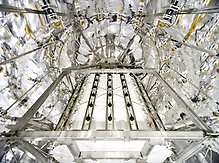
According to our best cosmological model ‘dark matter’ makes up ≈80% of the total mass of the universe. But what is dark matter, and in what sense are we justified in positing its existence?
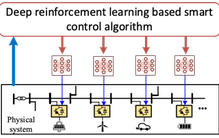
The shift towards renewable energy comes with technical challenges. We investigate how AI-algorithms can be used in the electric networks of our cities for smart coordination and control of the more volatile, renewable energy resources.
Healthcare-associated infections and unnecessary antibiotic treatment are serious problems in healthcare. The project aims to develop AI models, including large language models, to help improve infection control and antibiotic stewardship.

New data-driven solutions have the potential to improve the situation for co-morbid elderly people. In this project we identify, analyze and pilot test such innovative data-driven solutions for elderly by supporting collaboration between care providers.

With massive amounts of personal data being generated, privacy has become a great challenge. This project studies how machine learning can be used for sharing language models without risking to share information that may identify individuals.

The Data Science Research Group focuses on core data science research, as well as on applications where data science can provide insights for decision making. We formulate novel data science problems and develop algorithmic methods and methodological workflows.

In 2022, the Swedish Gender Equality Agency received a government assignment to translate and adapt an American evidence-based violence prevention programme, Dating Matters, for the Swedish context. The assignment includes allowing external researchers to carry out a process evaluation of the adapted programme.
The Drew group investigates the alternating-access mechanism of solute transporters for sugars and ions. These transporters are critical to cell homeostasis and their dysfunction is associated with human diseases, such as cancer and diabetes.

This project aims to study the representations of death in a selection of contemporary Iraqi novels, and in relation to different thematic contexts and problematics.

The project 'Debt and Desistance in the Welface State - Women's Experiences of Coping with Debt when Desisting from Crime' is a longitudinal, qualitative interview study. It is a continuation and extension of Robin Gålnander's dissertation project 'Maintaining Desistance', which was formally finished in 2020.
In astronomy, astrophysics, and cosmology, new instruments often require enormous financial, labor, and material resources. That means that only a few will be funded. DECIDE investigates collective decision-making in science about future large-scale experiments.
Are you interested in breaking historical ciphers? Check out our project aiming at the automatic analysis and decipherment of historical secret writings.

Interdisciplinary project that has received funding from the Swedish Research Council for research on the regulation concerning decision-making for children in health care.
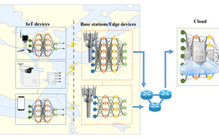
AI and data-driven autonomous decision-making will play a leading role in the digitalization of critical infrastructures for electricity, water, and transportation. This project explores our future smart societies.
Both decision theory and game theory concern the reasoning process underlying people’s choices, that is, how their desires, beliefs, and other attitudes combine in a way that make people choose one option over another.
