


Cultural Colonialism
Research projectProject that have been awarded funding from the Area Committee for Humanities, Stockholm University, call for proposals to promote new research and education collaborations in profile areas.
Discover the research at Stockholm University through our pages for research subjects, projects and research groups!
They also lead you to our researchers profile pages, our departments and courses and programmes.
Showing 481-500 of 2793 results
Project that have been awarded funding from the Area Committee for Humanities, Stockholm University, call for proposals to promote new research and education collaborations in profile areas.
Ethnologists study how economic activities are culturally shaped.

This project adopts the novel approach of applying evolutionary analyses to the study of the consequences of Digital Information Technologies (DITs) for individuals and society.
Cultural Heritage Studies is a growing interdisciplinary research field studying how the past is used, valued, and institutionalized in contemporary society. Heritage is also a profile area for research at Stockholm University.
This project aims to understand how military conflict and a deteriorating security environment influence the production of collective memories and historical narratives of war and conflict.

Cultural history deals with broad themes and long chronologies. Researchers in this field are united by an interest in meaning-making, symbols, materiality and cultural practices. There is also an interest in memory cultures and critical heritage studies.

Ethnology has a wide interest in cultural history. The past can be approached either in its own right, for the study of historical processes and phenomena, or used as a resource in studies focused also on the present.

What is the cultural significance of memory? How and why do we remember the past, not only as individuals but across generations, as social and cultural communities? And how do these memory practices relate to politically and emotionally charged questions of national or ethnic identity, historical traumas, and experiences of dislocation, loss and forgetting?

The focus of research on cultural politics is the role of the performing arts in politics with a special focus on audience research.

The research area focuses on the cultural dimensions of social life with diverse points of departure: both cultural perspectives on the social in general and sociological perspectives on cultural objects and institutions. Studying different lifestyles is often of particular interest.

How is the concept culture understood and theorized, and how is it used in ethnological research? How is the concept understood and used in everyday life, work life and in public debate? These questions have been the focus of my writing on and off for several years.
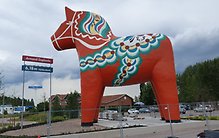
"Form" = how something is said or done. "Expressive" = expressive, something that attracts attention.

Culture, Politics and Society studies are conducted at the Department of German.
How people and culture influence and are influenced by what we perceive as nature is a common theme in ethnological research.

The me-too petition #TystnadTagning received media- and political attention in Sweden and the performing arts became a case illustrating a larger problem on the Swedish labor market: health effects of sexual harassment and sexual violence and the culture of silence that surrounds them.

The cumulative effects of various human activities on coastal and marine ecosystems are a pressing problem. The seafloor is subject to physical pressures from e.g. construction, dredging, marine traffic and bottom trawling, which may co-occur with each other and with climate change and eutrophication.
As more and more aspects of our lives move online, information flows freely and knowledge can be accessed easily. This also means an increased vulnerability, for individuals, organisations and societies.

Uncertainty and urgency around the green transition have manifested around skills and labour shortages: who will work in jobs that require skills for the green transition and how will they be prepared?
At the Slavic department, research is conducted in both Czech linguistics and Czech literature.
