Decoding motor neuron resilience, vulnerability, regeneration and communication in amyotrophic later
Research project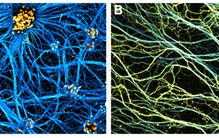
Discover the research at Stockholm University through our pages for research subjects, projects and research groups!
They also lead you to our researchers profile pages, our departments and courses and programmes.
Showing 521-540 of 2793 results
This project aims to support the creation, organization, and implementation of an interdisciplinary research school that brings together Burkinabe, Malian, Swedish, and Tanzanian researchers and research projects in a common collaborative framework.
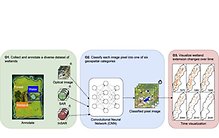
The DeepWetland project aims to develop a machine learning (ML) platform to monitor water extent changes in wetlands by integrating multiple data sources from satellite images, radars, and other space sensors.
The project fills the knowledge gap concerning opportunities and challenges for strengthening social dialogue in the exceptional COVID-19 pandemic governance related to social rights and working conditions of vulnerable groups.

A project in mathematical physics to understand equilibrium and non-equilibrium properties of deformed or disordered quantum many-body systems.
This project tests whether internet-based CBT for social anxiety gives better and longer-lasting results with a RIF audio diary, targeted memory training in which participants describe aloud only what went well after each exposure, to suppress fear memories.
Delinquency among former clients in social child care: Continuity and change from adolescence to middle age
Democracy, Autocracy, and International Cooperation is a research project exploring why, how, and under what conditions countries’ political regimes affect how they behave in international cooperation. The project is funded by the European Research Council, the Swedish Research Council and Knut and Alice Wallenberg Foundation.
Since the onset of the so-called Third Wave of Democracy, research on democracy in Latin America has shifted focus from the transition and consolidation of democracy to the quality of present democratic regimes.

DEMOCLIM explores new democratic governance methods in the design and implementation of effective and socially just climate policies that emerge in the face of climate protests in four Scandinavian cities; Oslo, Bergen, Stockholm and Gothenburg.
In our project we examine how changing economic circumstances may influence different demographic outcomes, using Longitudinal micro-level data for 1800-2007 for Sweden and Taiwan. A central question in demography is the degree to which marriage, fertility and mortality is influenced by economic cycles.
Demography is an interdisciplinary science that focuses on the study of the population, its size, composition and change.
Demscore (acronym for research infrastructure for Democracy, Environment, Migration, Social policy, Conflict, and Representation) brings together some of the world’s leading contextual research infrastructures and databases located at various Swedish universities.
The research group focuses on questions concerning democracy and citizenship in relation to the social studies subjects – social science/civics, religious education, history, and partly geography – within and beyond school and higher education.

The main purpose of this project is to examine Artificial Intelligence (AI) literacy in the context of Teacher education (TE), through three workshops that brings together leading experts in the field

DEPICT investigates how depiction supports and enhances multilingual communication involving Norwegian sign language. It includes six unique projects that touch on the many different language environments where Norwegian sign language is used. DEPICT received 12 million NKR in funding from the Norwegian Research council.

This project follows a Swedish cohort of young people from age 15, with the aim of studying depression and anxiety at ages 20-23 years, and to examine treatment gaps for these conditions.

This project explores innovative methods for analyzing historical texts written in rare, non-standard, or undeciphered writing systems.

The way that technology is designed affects both people and the planet. Therefore, we need to prioritize the ethical dimensions of technology and develop practices for ethical design. This project explores ethical design practices together with design practitioners.