


Research group Dark Matter and Astroparticle Physics
Within the area of astroparticle physics, our group focuses on searchers for particle dark matter with laboratory experiments, in particular employing low-background rare event detectors (XENON and XLZD) and searches for axion dark
matter using resonant cavities (ALPHA).
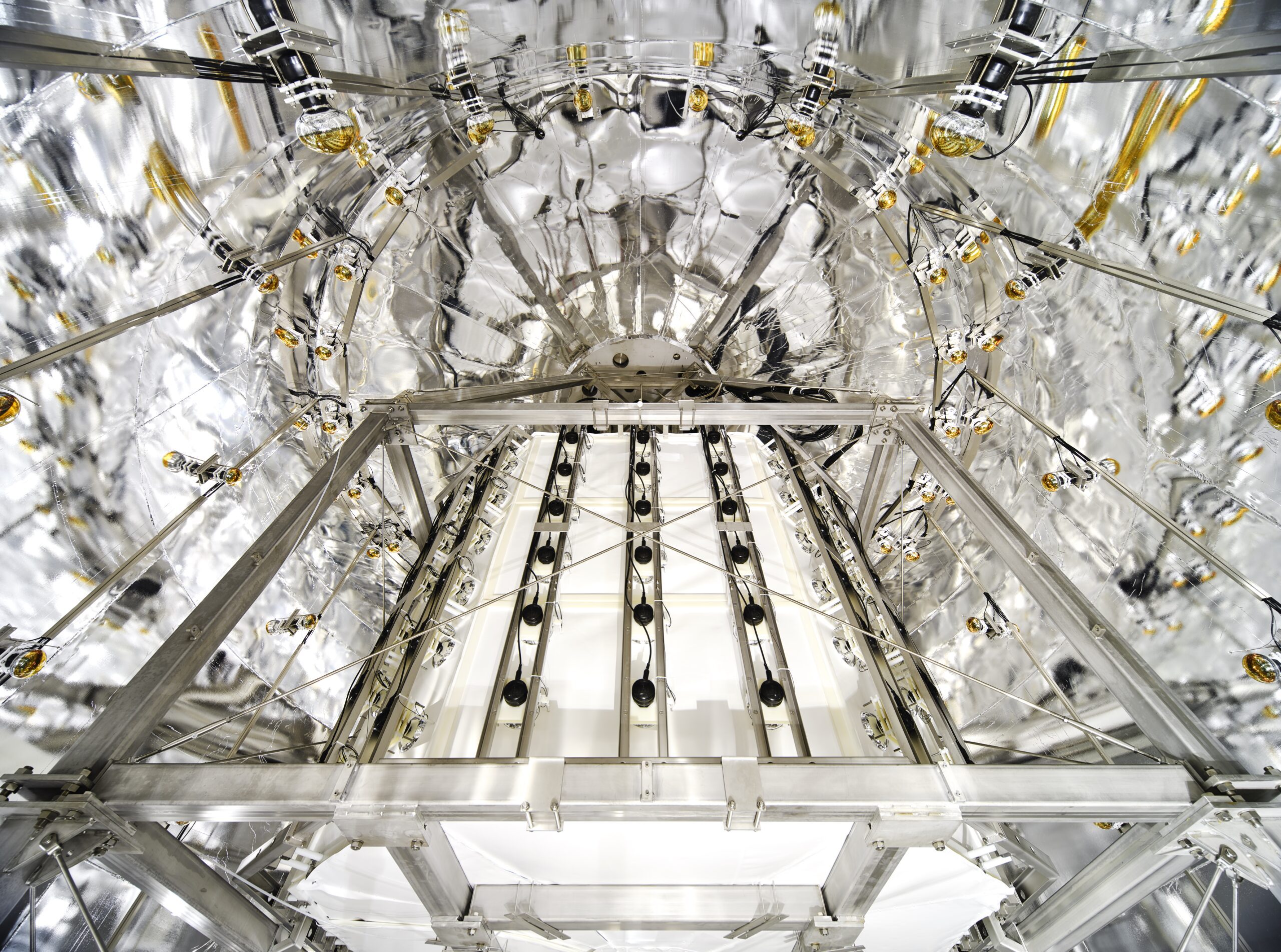
Dark Matter provides more than 80% of the matter density in the Universe, but its nature is unknown. Our group searches after dark matter particles from space, currently with the XENON experiment and the ALPHA resonance cavity.
We work mainly on astrophysical searches for particle dark matter, previosuly with gamma-ray telescopes on satellites (like the Fermi Large Area Telescope) and on ground (like H.E.S.S.) and since about 10 years in deep underground xenon-based
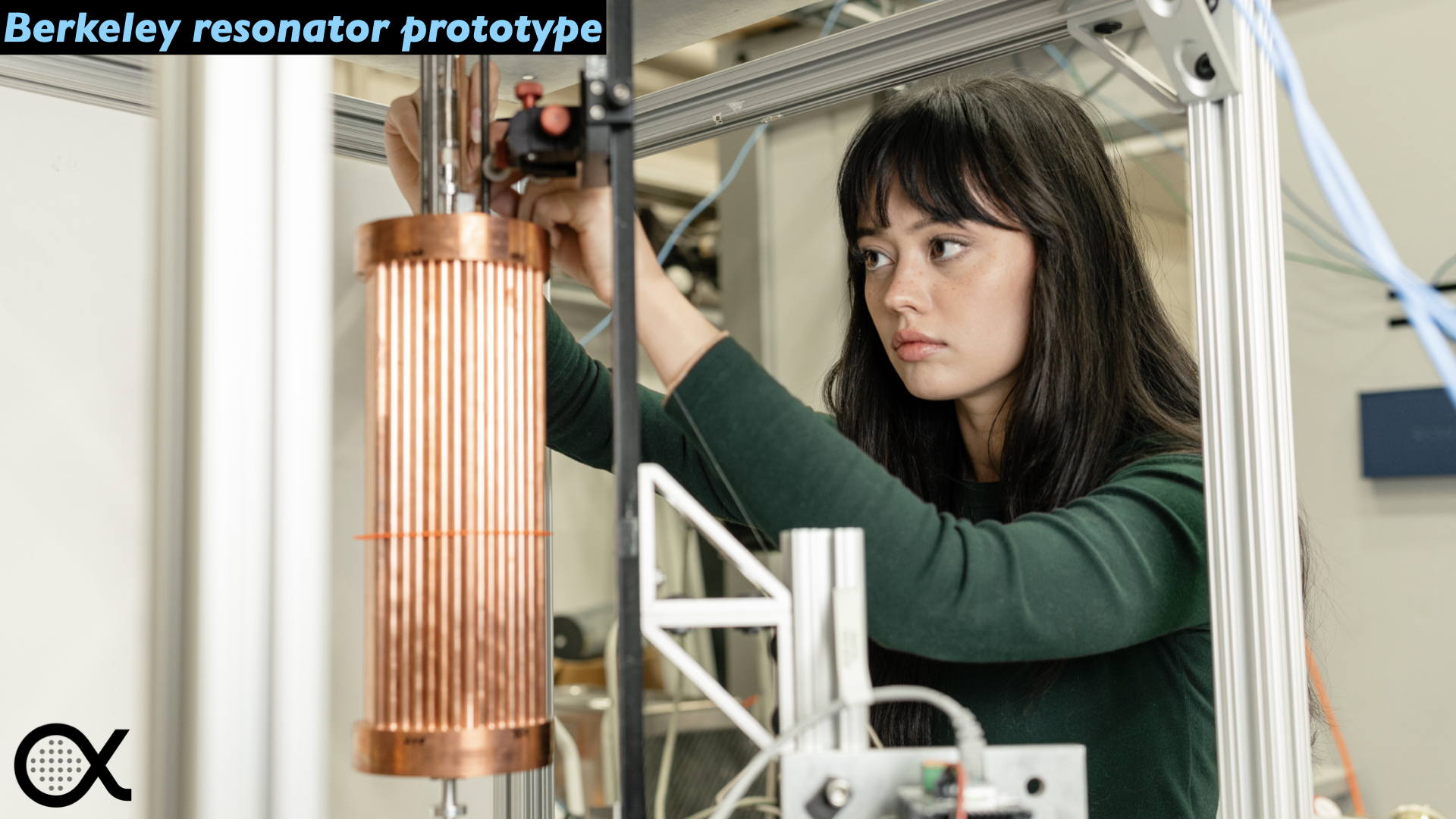
dual phase time projections chambers exper (XENONnT and XLZD). We are founding members of the ALPHA colaboration that builds a cavity plasmon-haloscope for searches for the axion.
Traditionally, we focus on statistical analysis and development of photosensors.
There are no research project connections.
Search for Light Dark Matter in Low-Energy Ionization Signals from XENONnT
We report on a blinded search for dark matter with single- and few-electron signals in the first science run of XENONnT relying on a novel detector response framework that is physics model dependent. We derive 90% confidence upper limits for dark matter-electron interactions. Heavy and light mediator cases are considered for the standard halo model and dark matter up-scattered in the Sun. We set stringent new limits on dark matter-electron scattering via a heavy mediator with a mass within 10–20 MeV/𝑐2 and electron absorption of axionlike particles and dark photons for 𝑚𝜒 below 0.03 keV/𝑐2.v
https://urn.kb.se/resolve?urn=urn%3Anbn%3Ase%3Asu%3Adiva-243543
Searching for new phenomena with profile likelihood ratio tests
Searching for new phenomena with profile likelihood ratio testsLikelihood ratio tests are standard statistical tools used in particle physics to perform tests of hypotheses. The null distribution of the likelihood ratio test statistic is often assumed to be chi (2), following Wilks' theorem. However, in many circumstances relevant to modern experiments this theorem is not applicable. In this Expert Recommendation, we overview practical ways to identify these situations and provide guidelines on how to construct valid inference. We use examples from particle physics, but the statistical constructs discussed here can be used in any scientific discipline that relies on data analysis. This Expert Recommendation provides a guide to identifying practical situations where the likelihood ratio test statistic cannot be approximated by a chi (2) distribution and proposes adequate solutions.
https://urn.kb.se/resolve?urn=urn%3Anbn%3Ase%3Asu%3Adiva-183571