


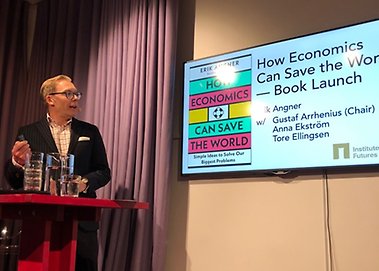
Philosopher: economics can save the world
Erik Angner is professor of practical philosophy at Stockholm University. Recently he came out with the book How Economics Can Save the World.
Erik Angner is professor of practical philosophy at Stockholm University. Recently he came out with the book How Economics Can Save the World.
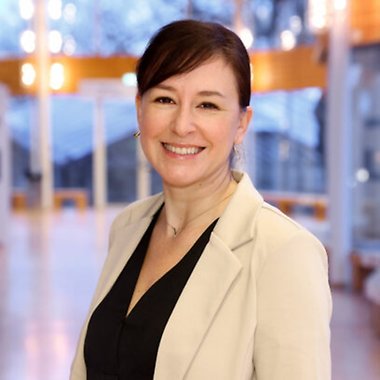
Belén Martín-Matute, professor in organic chemistry at Stockholm University, has been elected new member of the Royal Academy of Science’s (KVA)Class for Chemistry.
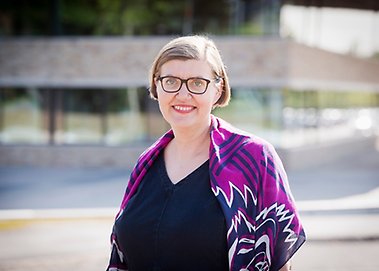
President’s blog 7 February, 2023 The presidents of the universities of the so-called Stockholm trio, the heads of our respective departments for research support and contact persons at the Brussels office are currently in Brussels on a joint trip. The head of the Stockholm trio office in Brussels, Dan Andrée, have put together a meaty programme, including meeting key actors within the European Commission and the European University Association. I personally devoted Monday to an all-day meeting with EUA’s new Research and Innovation Strategy Group, where we met the director of ERA (European Research Area), Anna Panagopoulou. We also received an update on the work with the numerous concrete goals that the member states prioritized, for example academic freedom, career paths, assessment of qualifications and open science. Today, the presidents of the trio each participated in a panel during the annual conference of the Science Business network, where all three universities are members. The theme was Sustainable horizons: Does our future depend on science? The purpose of our trip is twofold: to give a better insight into the work in Brussels and its opportunities for our universities, but also to put the Stockholm trio more clearly on the map. The Science Business conference has also provided rich opportunities to broaden our networks. It is easy to be critical both of the EU bureaucracy and of the risk of locking yourself up in a European fort, forgetting the world outside. But it is also clear that Europe is an extremely important cooperation arena for our universities, not least in times of unrest and change. Astrid Söderbergh Widding President Read more from the President’s blog

Researchers at Stockholm University welcome the proposal from Sweden, The Netherlands, Denmark, Germany and Norway to ban a majority of PFAS-substances from products being used and sold within the European Union.

Thanks to the James Webb Space Telescope’s first images of galaxy clusters, researchers have, for the very first time, been able to examine very compact structures of star clusters inside galaxies, so-called clumps. In a paper published in the Monthly Notices of the Royal Astronomical Society, researchers from Stockholm University have studied the first phase of star formation in distant galaxies.
New research project at the Department of Criminology about court-imposed care orders in a non-treatment paradigm: trends, demographics and outcomes in Sweden, 1994-2020. - The purpose of the project is to map how the penalty has been used during the period 1994–2020, which groups have been sentenced to it and whether this has changed over time. The project also intends to study how it goes for those who receive the sanction regarding labor market connection, health and recidivism, explains Anna Kahlmeter, researcher at the Department of Criminology. - It is a complex sanction that involves many actors, e.g. both probation, social services and treatment institutions and it also contains some paradoxes, for instance that one is sentenced to treatment - but it must be agreed to - whereupon contract care is often described as voluntary. It is an interesting penalty that was introduced in parallel with the criminalization of drug use in Sweden and, with that, treatment for drug use formally became a criminal penalty, explains Anna Kahlmeter. Despite the fact that contract care has existed since the end of the 1980s, there is relatively little research into it. There is limited knowledge about alternative sanctions in general and perhaps contractual care in particular. Contract care has existed in Sweden since the end of the 80s and is a criminal law tool aimed at individuals who have an addiction, usually related to narcotics, and where there is considered to be a connection between the crime and the addiction. - The prescription for a special treatment plan means that the penalty is attributed to a fairly large individual preventive potential, but we do not know how it goes for those who receive the penalty, especially not in the long term. We also do not know how different background factors come into play when choosing a penalty. Knowledge of this can contribute to both the drug policy and criminal policy discussion, says Anna Kahlmeter. The project is funded by NfSK, the Nordic Research Council for Criminology and will continue throughout 2023.
321 European researchers have won 2022 European Research Council (ERC) Consolidator Grants. Two of the researchers awarded the prestigious grants are at Stockholm University. European Research Council (ERC) Consolidator Grants is part of the EU’s Horizon Europe programme and are among the most prestigious grants in Europe. The grants will help excellent scientists, who have 7 to 12 years’ experience after their PhDs, to pursue their most promising ideas. In total, 321 European researchers are awarded the 2022 grants, worth in total €657 million. Twelve of the consolidator grants go to researchers in Sweden. Two of the researchers awarded the grants are at Stockholm University. They will receive approximately €2 million each. The researchers are:
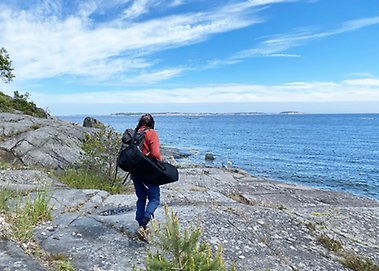
“Climate and energy – An interdisciplinary perspective” will take learners on a digital tour of Utö, a small island off the coast of Stockholm. On their journey, learners will meet academics from several European universities and learn all about the climate crisis, its past, its causes and the possible solutions.

Stockholm University now joins the digital research infrastructure EBRAINS as associate member. The membership is important to strengthen the university´s research on the brain and its relation to behavior.
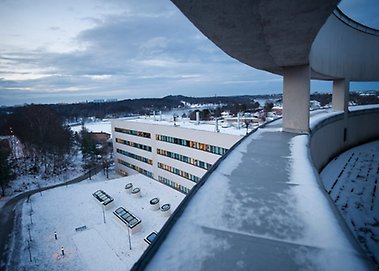
In 2008, the Oskar Klein Centre in Stockholm was founded to tackle the greatest problems in astrophysics and particle physics in an interdisciplinary manner. It is now celebrated as a rich and rewarding research environment that attracts internationally leading researchers, including Nobel laureate Frank Wilczek.
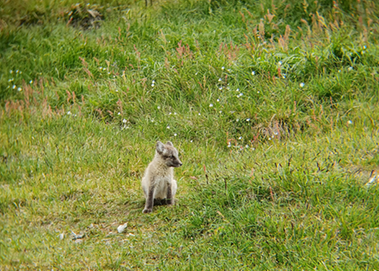
In 2022, a record number of arctic foxes were born in Sweden, Norway and Finland. The inventory, in which researchers at Stockholm University have a leading role, shows 164 new fox litters. Arctic foxes at a den. Film from the Swedish Arctic Fox Project. As recently as the turn of the millennium, the arctic fox was close to extinction in Sweden and Norway. There were then only 40–60 individuals. The arctic fox is still classified as highly endangered in Sweden, but the annual inventories show that the species is increasing in number. The 2021 inventory showed 118 new litters of arctic fox cubs in Sweden, Norway and Finland. In a press release just before Christmas, the Swedish Environmental Protection Agency released the results of the monitoring that was made in the summer of 2022. The results show a record number of arctic fox litters since the inventories began, 164 litters. In addition, an increase of around 88 adult individuals was seen since the monitoring in 2021. The population in the three countries is now estimated to be over 550 adult individuals combined. Conservation measures have had an effect
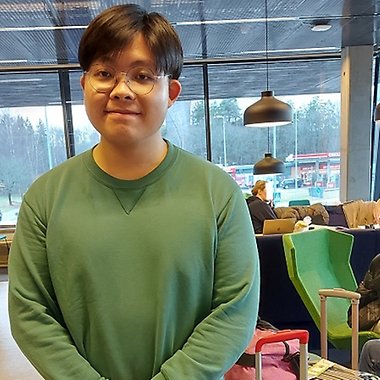
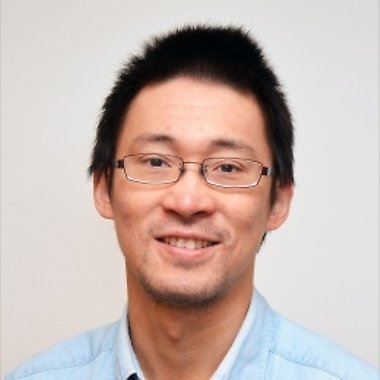
On Sunday 15 January expectant international students were greeted by Stockholm University’s welcome teams at Arlanda Airport. Some of them, like Errel Ung from Singapore, had been travelling for many hours before reaching the country where they will live and study for the next semester. Free shuttle buses took the newcomers directly to Studenthuset on the Frescati campus where other welcome teams were ready to guide and assist them. “I arrived at Arlanda around midnight, the flight took about 19 hours”, Errel Ung smiled as he waited in a queue to register with the Stockholm University Student Union. “It is my first time in Sweden and Europe.”