



Babies or beauty?
When resources are scarce, most animals have to choose. A new study reveals an ancient origin to how female butterflies invest.
When resources are scarce, most animals have to choose. A new study reveals an ancient origin to how female butterflies invest.
Stockholm University is awarded five grants within the framework of the Knut and Alice Wallenberg Foundation's mathematics program. This year, 17 mathematicians will share SEK 28 million in grants within the framework of the Knut and Alice Wallenberg Foundation's mathematics program. The mathematics program is a long-term investment by the Knut and Alice Wallenberg Foundation (KAW). With this year's grants, a total of 134 researchers have been granted grants since 2014. The program is a collaboration between the foundation and the Royal Swedish Academy of Sciences, which evaluates the candidates nominated by universities around Sweden. Six researchers receive postdoctoral positions at universities abroad and support for two years after returning to Sweden. Two of these are at the Department of Mathematics, Stockholm University. They are PhD students Erik Lindell and Thomas Blom. Five researchers receive funding to recruit a researcher from abroad for a postdoctoral position in Sweden. Docent Wushi Goldring at the Department of Mathematics, Stockholm University receives one of these grants. Six established researchers from abroad are recruited as visiting professors at the Swedish universities. Professor Gianpaolo Scalia Tomba, Università di Roma Tor Vergata in Italy and Professor Stefan Schwede at Universität Bonn in Germany are recruited as visiting professors at Stockholm University. Erik Lindell: Elusive symmetries in geometric spaces Erik Lindell will receive his doctoral degree in mathematics from Stockholm University in 2023. Thanks to a grant from the Knut and Alice Wallenberg Foundation, he will hold a postdoctoral position with Professor Nathalie Wahl at the Department of Mathematical Sciences, University of Copenhagen.
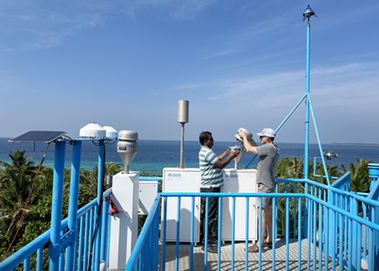
Researchers from Stockholm University are involved in the operation of two strategically placed measurement stations in the Maldives and Bangladesh, which capture air pollutants that affect people’s health and the climate. These pollutants come from diverse sources across the Indian subcontinent, which the research is seeking to pinpoint.

Be alert and do not leave personal belongings unattended in public areas at campus. Unfortunately, there have been thefts, for example at places for studying, at campus Frescati and Albano. Please call the security guards, phone: 08-16 42 00, in the event of theft or if you see something suspicious.
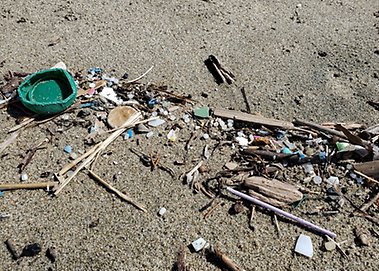
More than 170 trillion microplastic particles are floating in the World’s oceans, new study finds.
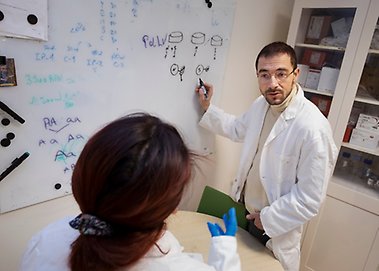
Why are the offspring of a horse and a donkey almost always infertile? This question has long puzzled researchers. Deniz Ozata, from Stockholm University, believes the explanation may lie in very mutable genes that are vital to the development of healthy sperm.
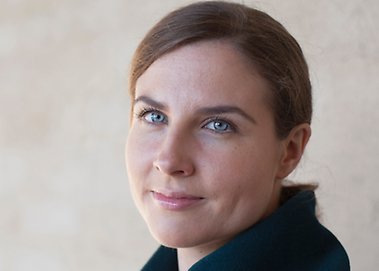
Ilona Riipinen, Professor at the Department of Environmental Science and Co-Director of the Bolin Centre for Climate Research, has been awarded the Göran Gustafsson Prize in Physics 2023 “for her pioneering research on atmospheric aerosol particles and their impact on clouds, climate, and human health.”

Researchers at Stockholm University have been granted SEK 12 millions from Formas for a research project on the role of companies in climate adaptation.
Due to a strong international interest in the open online course on assessment and management of chemicals, the training is being launched a second time in April. The training was developed at the Department of Environmental Science and has so far been completed by participants from almost 60 countries.
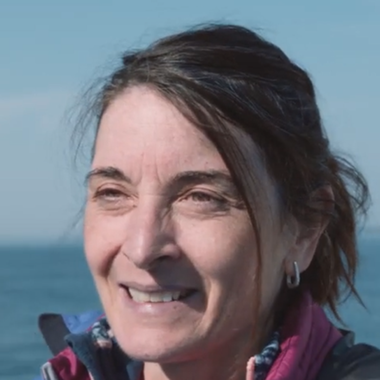
The world’s oceans play a central role in the global climate. Wallenberg Academy Fellow Rachel Foster, Stockholm University, is researching on marine plankton communities that impact nitrogen and carbon cycles. Plankton are of extreme importance for earth’s climate. They produce half of all oxygen, lock up enormous amounts of carbon and reduce carbon dioxide. But exactly how? And how long can they continue, now as the world heats up?
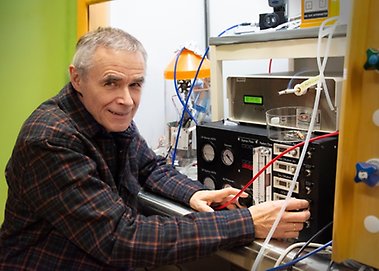
Have we overestimated the health risk posed by low doses of ionising radiation, such as those in houses with radon? And, have we underestimated the risk of exposure to combined types of radiation? Andrzej Wojcik, from Stockholm University, is using specially constructed equipment to investigate the potential effects that low doses of radiation may have on our bodies. We are all exposed to ionising radiation over our lifetime. Sweden’s bedrock contains relatively high levels of uranium, and its decay products continually emit low doses of gamma and alpha radiation. In many places, there are traces of the Chernobyl accident and a large proportion of the population need to undergo diagnostic procedures for various diseases, which use low levels of radiation and radioactive isotopes. Currently, no one definitely knows how these low doses of radiation affect us over the course of our long lives. Because people cannot be exposed to radiation for experimental purposes, scientists’ knowledge is limited to the events in which large numbers of people were irradiated due to war or accidents. “Our risk models are mainly based on research on Hiroshima and Nagasaki atomic bomb survivors, a cohort of about 100,000 people. They have been our most important source of knowledge about radiation risks,” says Andrzej Wojcik, professor at the Department of Molecular Biosciences, The Wenner-Gren Institute, Stockholm University. Damage caused by atomic bombs is the foundation of radiation protection By investigating the effects of the atomic bombs, scientists have drawn conclusions about how industrial workers and healthcare staff should be protected from low doses of radiation. However, there is a difference between a short exposure to a high dose of radiation, such as after a nuclear blast, and exposure to much lower doses of radiation over many years, such as during work. Scientists therefore suspect that the risk predicted from the Hiroshima and Nagasaki study for occupational low dose exposures is exaggerated, leading to unnecessary costs for radiation protection. “Our research group is trying to gain a better understanding of the health risks associated with low doses of radiation, so that we neither underestimate nor overestimate the risks.” A combination of different types of radiation may be more damaging Wojcik has been commissioned by the Swedish Government for various tasks – which include educating biologists about radiation biology – to maintain the level of knowledge in Sweden. A separate room inside his laboratory contains specially built equipment that emits alpha and gamma radiation. There, one thing the research group is studying is how cells are affected by exposure to a combination of two types of radiation. Currently, radiation protection guidelines assume that damage is additive, that one plus one is two. “But our results show that there is an interaction between alpha radiation and gamma radiation, and that this is effect is greater than simply adding them together – so we have probably underestimated the risks of combined exposures,” says Wojcik. Because exposure to several forms of radiation is relatively common – for example, when we fly, we are exposed to cosmic radiation and gamma radiation – this knowledge is important. Smoking and radon – an unhealthy duo

The presidents of the three universities in the so-called Stockholm trio alliance – Stockholm University, Karolinska Institutet and KTH – recently visited Brussels where they met representatives of various EU institutions and bodies.