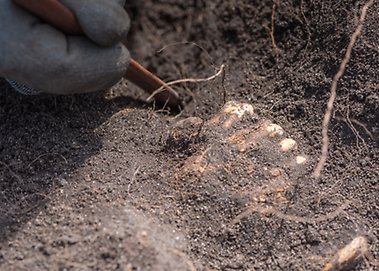
A new study based on 297 ancient Scandinavian genomes analysed together with the genomic data of 16,638 present day Scandinavians resolve the complex relations between geography, ancestry, and gene flow in Scandinavia – encompassing the Roman Age, the Viking Age and later periods. A surprising increase of variation during the Viking period indicates that gene flow into Scandinavia was especially intense during this period.
Temporarily overshooting the climate targets of 1.5-2 degrees Celsius could increase the tipping risk of several Earth system elements by more than 70 per cent. The tipping risk increases even if in the longer term the global temperature stabilizes within the Paris range. This is the result of a new risk analysis by researchers at Stockholm university published in Nature Climate Change.
Researchers at Karolinska Institutet had in 2021 developed a technique making possible to examine how different versions of histones bind to the genome in tens of thousands of individual cells. Now the same team developed a new technology allowing simultaneous probing of several different histone marks in one individual cell and in thousands of cells at the same time. This new method allows to investigate in much greater detail how cells in the mouse brain acquire unique properties and specialize. The study is published in the journal Nature Biotechnology. “This technique is a steppingstone to understand how cells can transition between different states,” says Marek Bartosovic, previously post-doctoral fellow at the Department of Medical Biochemistry and Biophysics, Karolinska Institutet, and now research group leader at Stockholm University. Cells in our bodies can be very different, but they inherit in their genome common genetic information in the form of DNA. To acquire different properties and specializations, cells read and interpret this common genome in different ways. One such mechanism of reading DNA involves proteins called histones, which are bound to the genome. Histones exhibit variable surface landmarks, which carry multiple layers of epigenetic information. These landmark histone modifications are present in different patterns in the genome of different cell types. This allows each cell to interpret the genomic information in a different manner, and then to acquire different properties. Recently, several research teams including the team at Karolinska Institutet, developed methods such as single cell CUT&Tag, allowing to look at individual histone modifications in a single cell level and at a large scale. Now the Karolinska Institutet team has made a further leap by developing a novel technology, Nano CUT&Tag. This technology is based on a new class of molecules called nanobodies. Nanobodies are small proteins that work just like antibodies in recognizing other proteins with high specifity but are smaller and can easily be fused with other proteins. The use of different nanobodies fused with an enzyme called Tn5 transposase allowed the probing of different histone modifications at the same time in the same cell. Nano CUT&Tag gives unique insights how a cell can, via adjusting multiple layers of epigenetic information simultaneously, interpret the genome to specialize and acquire an unique identity, “Nano CUT&Tag, or Nano-CT, as we call it, allowed us to dissect in very much detail how progenitor cells in the brain become specialized into oligodendrocytes, a cell type which is target of an auto-immune attack in multiple sclerosis,” Gonçalo Castelo-Branco, Professor of Glial Cell Biology at Karolinska Institutet, says. “These new mechanistic insights can give us clues on how to stimulate the recovery of the oligodendrocyte population in the context of disease.” “We now want to further develop Nano-CT, by increasing the range of epigenetic landmarks it can probe”, says Marek Bartosovic, who has recently started his research group at Stockholm University, where he will focus on the development of single cell epigenomic technologies, in the context of early human brain development. The research was financed by the Knut and Alice Wallenberg Foundation, the Swedish Research Council, the Vinnova Seal of Excellence Marie-Sklodowska Curie Actions grant, the European Union Horizon 2020 Research and Innovation Programme, the Swedish Cancer Society, the Swedish Society for Medical Research (SSMF), the Göran Gustafsson Foundation for Research in Natural Sciences, Medicine the Ming Wai Lau Centre for Reparative Medicine and Karolinska Institutet.
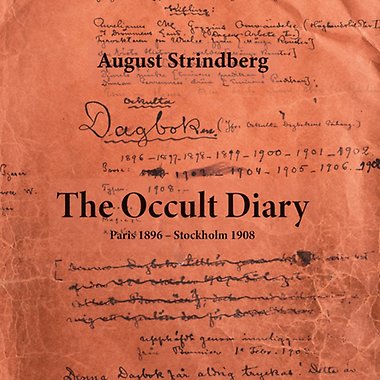
Are you interested in the occult life of August Strindberg or how humanity can steer away from ecological and social catastrophe? Do you want to explore reality based on the deep revelations of modern science? Here are some tips on books with connection to the research at Stockholm University. The Occult Diary, Paris 1896 – Stockholm 1908
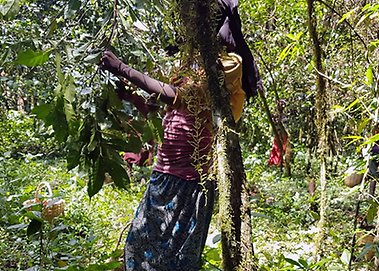
The work with forest preservation in southwestern Ethiopia, where smallholder coffee farmers play an important part, is essential for global sustainability. But there are also negative consequences to the synergy between smallholder cash crop production and biodiversity values. A new study conducted by researchers from Stockholm University, published in the International Journal of Educational Development, shows that child labour plays an important role in the system.
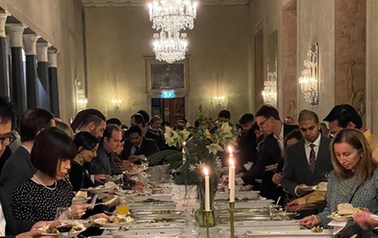
International researchers were welcomed at a reception in Stockholm City Hall at the end of November. Stockholm and Sweden are at the forefront of supporting science and equality, according to researchers attending the reception.
Literature laureate Annie Ernaux visited Stockholm University on Friday to meet students and researchers. She candidly answered questions from the visitors who, among other things, wondered if she thinks we can escape our heritage and asked for her view of society's harsh treatment of the elderly. The conversation can be viewed digitally in French and Swedish in this article. “I am so happy and touched to be back at Stockholm University. It is fantastic that universities like this exist, a green enclave in the middle of a big city, said Annie Ernaux, who pointed out that her real profession is that of a teacher, not a writer.” “A rewarding visit” Astrid Söderbergh Widding, President of Stockholm University, opened the dialogue with a welcome speech in which she stressed that it is a great honor to be visited by Annie Ernaux, who with her books has made such an impression on the contemporary world. “It is not the first time that Annie Ernaux is visiting Stockholm University - she has previously been here as an academic teacher. This was noticeable in the conversation, where her answers were characterized by deep respect for the questions asked by students and researchers, and by a sincere desire for dialogue. It was a very rewarding visit,” says Astrid Söderbergh Widding. "Captures the reader"
Professor Liane Rossi (Universidade de São Paulo) has been awarded the King Carl XVI Gustafs professorship in environmental science (Konung Carl XVI Gustafs professur i miljövetenskap) for 2023/24.
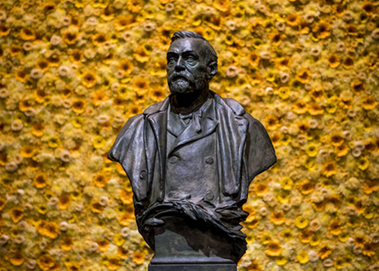
18 Nobel laureates visit Stockholm University during this year's Nobel Week. Listen to this year's Nobel laureates in the Aula Magna on Thursday December 8 at KVA's official Nobel lectures.
Over 8 billion years ago, a star was torn apart as it got too close to a supermassive black hole. Jets of gas directed towards Earth recently made the fate of the star visible to a telescope looking for new sources of light in the night sky. The observation has led to two independent publications including researchers at Stockholm University in Nature and Nature Astronomy. “We had to exclude all other possible explanations to understand what we were looking at. It looked neither like a supernova nor like more exotic phenomena such as gamma-ray bursts or kilonovae, so we concluded that it had to be a black hole tearing a star apart in an unusual way,” says Jesper Sollerman, professor at the Department of Astronomy and co-author of the article in Nature. 8 billion years away On February 11 2022, a team of astronomers using the Zwicky Transient Facility (ZTF) in California discovered an unusual optical flare. ZTF finds dozens of exploding stars each night, but the new object changed in brightness too fast to be a regular supernova. The discovery caused several groups of astronomers to point all kinds of telescopes towards the new transient, dubbed AT2022cmc. A spectrum revealed that it was in fact very distant: the light from AT2022cmc had been traveling towards Earth for the past 8 billion years. Star being torn apart Now two teams of astronomers, both of which include researchers at Stockholm University, have simultaneously published their independent analyses of the distant flash. Both teams conclude that the flash is the result of a star being torn apart by a spinning supermassive black hole, launching jets pointing in the direction of the Earth. Extremely rare The discovery team from ZTF, led by Andreoni and Coughlin, have published their result in Nature. They estimate that relativistic jets are launched in only 1% of such destructive events, making AT2022cmc an extremely rare occurrence. “It has been more than 10 years since a similar event was found previously, and this is the first time it has been discovered in the optical regime. The fact that it was observed in the optical regime enabled the discovery at a very large distance. It may be the only way to identify and study otherwise dormant supermassive black holes in the early universe,” says Jesper Sollerman. Almost the speed of light Another team focused on the very bright X-ray counterpart, and estimated that the jet was launched at more than 95% of the speed of light. Their results appear in Nature Astronomy. “Future telescopes like the Vera Rubin Observatory will probably find many more of these events now that we know what to look for. The trick is just to single these rare events out from the thousands of new flashes of light that this survey will unveil every night,” says Ana Sagués-Carracedo, PhD-student at the Department of Physics at Stockholm University and part of the ZTF team that discovered AT2022cmc. This is an artist’s impression of how the material of a star fell towards the black hole at the centre of a distant galaxy, producing jets of matter and radiation. Because the jets are pointing almost towards us, the event, called AT2022cmc, could be discovered from Earth with an optical telescope for the first time. Credit: ESO/M.Kornmesser More information and download options The publications Nature: The paper, “A very luminous jet from the disruption of a star by a massive black hole,” by Andreoni, Coughlin et al. was published in Nature on November 30, 2022. The paper in Nature includes Ana Sagués-Carracedo and Steve Schulze from the Department of Physics at Stockholm University as well as Jesper Sollerman, Mattia Bulla and Erik Kool from the Department of Astronomy, all affiliated with the Oskar Klein Centre. Find the publication Nature Astronomy: The paper "The birth of a relativistic jet following the disruption of a Star by a cosmological black hole" by Pasham et al. was published in Nature Astronomy on the same date. Co-authors from Stockholm University on the paper in Nature Astronomy includes Oskar Klein Centre-affiliated researchers Janet Chen, Sheng Yang, Sean Brennan from the Department of Astronomy and Steve Schulze from the Department of Physics. Find the pubication Facts - the research on supernovae, stars and black holes Research into supernovae, stars and black holes takes place, at the Department of Astronomy at Stockholm University. The supernova group studies the structure, dynamics and element formation in supernovae via models and observations. Much of the research in the area takes place in collaboration with the Physics department at Stockholm University within the framework of the joint Oskar Klein Centre. Read more about the Supernova group at Stockholm University Zwicky Transient Facility – searching for cosmic explosions Read more about the Zwicky Transient Facility Read more about the research at the Oskar Klein Centre Funding and resources The Swedish participation in ZTF is supported by the Swedish Research Council (Vetenskapsrådet) and by the Knut and Alice Wallenberg Foundation. Read more about the Knut and Alice Wallenberg Foundation Read more about the Swedish Research Council The publication in Nature was done using telescope resources from the European Southern Observatory. Read more about ESO
The Swedish Research Council (VR) has decided on consolidation grants in natural sciences and technology. Of the seven grants awarded, three go to Stockholm University, with a total sum of SEK 30 million. The Swedish Research Council (VR) has granted seven consolidation grants of SEK 10 million each in natural sciences and technical sciences in the application round for 2022. A total of SEK 70 million is granted for the years 2023–2027. Three of the seven grants, totaling SEK 30 million, go to researchers at Stockholm University. Researchers at Stockholm University who receive grants: Jaime de la Cruz Rodriguez , Department of Astronomy, for the project "MAGHEAT: Understanding energy deposition in the solar chromosphere" Marc Friedländer , Department of Molecular Biosciences, Wenner-Gren Institute, for the project "Intrinsic synchronization of gene activity" Timothy Linden , Department of Physics, for the project "TeV electrons shed new light on the Milky Way" Read more on the Swedish Research Council's website.
The renewal of SPSS licenses has been delayed, which means that no one has been able to use SPSS since yesterday. New license keys have arrived and IT Services will distribute them as quickly as possible. The renewal of SPSS licences has been delayed despite the fact that renewal contracts have been submitted well in advance of the expiry date. This means that neither students nor university staff have been able to use SPSS since yesterday, December 1. The reason for the problems is a change in procedures between the University's licensing partner and the license provider, specifically the procedure for generating codes. IT Services has been in touch with the licensing partner, who in turn is in discussion with those responsible at the supplier. Today, on the morning of December 2, IT Services has received the necessary codes and is now working on distributing the codes to the department who use SPSS.