193 applications were submitted in the first PhD and postdoc project call from which 90 projects have been granted funding. The projects are awarded in total 260 million Swedish Crowns by the Knut and Alice Wallenberg Foundation (KAW) for a period of up to four years. Awarded projects are distributed broadly across seven universities, Chalmers University of Technology, KTH Royal Institute of Technology, Linköping University, Lund University, Luleå University of Technology, Stockholm University, and Uppsala University, as well as selected groups at Umeå University and Karlstad University.
President’s blog 20 November, 2022 Last week, around twenty French university presidents and vice-presidents visited Sweden for three days, partly to meet colleagues in SUHF (the Association of Swedish Higher Education Institutions) – a return visit following the trip we Swedish presidents made to Paris last spring – and partly to participate in a trilateral meeting on European university alliances. The meeting was jointly organized by the French and German embassies, and was targeted at various alliances, including those between French, German and Swedish universities. The first part of the meeting, the French-Swedish one, was held at Stockholm University, in Albano. The French delegation had wanted, among other things, innovation as a theme, given Sweden’s role as a top-ranked innovation country – and here we had a series of excellent presentations both on the general issue of success factors and on individual examples. We also had the opportunity to exchange information about Sweden’s upcoming presidency of the EU, in relation to the French experience from holding the presidency last spring. This brought to light differences between our countries – but it also showed opportunities for continued dialogue between the universities about questions that are particularly important to us. Finally, and perhaps most importantly, we had academic freedom as a key theme, an absolutely core issue for both French and Swedish universities. We are completely agreed on – among many other things – the need to protect academic freedom constitutionally. I am convinced that dialogues of this kind are absolutely necessary in a world where the threats to democracy, freedom of expression and academic freedom are only increasing. Exchanging experiences and promoting cooperation between universities in different countries is a way to jointly and actively develop these threatened values instead. Astrid Söderbergh Widding President Read more from the President’s blog
The warming during the summer months in Europe has been much faster than the global average, shows a new study by researchers at Stockholm University published in the Journal of Geophysical Research Atmospheres. As a consequence of human emissions of greenhouse gases, the climate across the continent has also become drier, particularly in southern Europe, leading to worse heat waves and an increased risk of fires. According to the UN's Intergovernmental Panel on Climate Change (IPCC), warming over land areas occurs significantly faster than over oceans, with 1.6 degrees and 0.9 degrees on average, respectively. It means that the global greenhouse gas emissions budget to stay under a 1.5-degree warming on land has already been used up. Now, the new study shows that the emissions budget to avoid a 2-degree warming over large parts of Europe during the summer half-year (April-September) has also been used up. In fact, measurements reveal that the warming during the summer months in large parts of Europe during the last four decades has already surpassed two degrees. “Climate change is serious as it leads to, among other things, more frequent heat waves in Europe. These, in turn, increase the risk of fires, such as the devastating fires in southern Europe in the summer of 2022,” says Paul Glantz, Associate Professor at the Department of Environmental Science, Stockholm University, and main author of the study. Drier ground and less clouds In southern Europe, a clear, so-called, positive feedback caused by global warming is evident, in other words. warming is amplified due to drier soil and decreased evaporation. Moreover, there has been less cloud coverage over large parts of Europe, probably as a result of less water vapour in the air. “What we see in southern Europe is in line what IPCC has predicted, which is that an increased human impact on the greenhouse effect would lead to dry areas on Earth becoming even drier,” says Paul Glantz. Impact of aerosol particles The study also includes a section about the estimated impact of aerosol particles on the temperature increase. According to Paul Glantz, the rapid warming in, for example, Central and Eastern Europe, is first and foremost a consequence of the human emissions of long-lived greenhouse gases, such as carbon dioxide. But since emissions of short-lived aerosol particles from, for example, coal-fired power plants have decreased greatly over the past four decades, the combined effect has led to an extreme temperature increase of over two degrees. “The airborne aerosol particles, before they began to decrease in the early 1980s in Europe, have masked the warming caused by human greenhouse gases by just over one degree on average for the summer half-year. As the aerosols in the atmosphere decreased, the temperature increased rapidly. Human emissions of carbon dioxide are still the biggest threat as they affect the climate for hundreds to thousands of years,” says Paul Glantz. According to Paul Glantz, this effect provides a harbinger of future warming in areas where aerosol emissions are high, such as in India and China. Find the publication in the Journal of Geophysical Research Atmospheres Read more about the research by Paul Glantz Background - the greenhouse effect and aerosol effect Fossil burning leads to the release of both aerosol particles and greenhouse gases. Although their source is common, their effects on climate differ. About the greenhouse effect Greenhouse gases are largely unaffected by solar radiation while they absorb infrared radiation efficiently, leading to re-emission towards the Earth's surface. The Earth absorbs both solar radiation and infrared radiation, which leads to the warming of the lower part of the atmosphere in particular. Time-space: Greenhouse gases are generally long-lived in the atmosphere and this applies above all to carbon dioxide where human emissions affect climate for hundreds to thousands of years. It also means that greenhouse gases spread evenly over the entire planet. About the aerosol effect In contrast to greenhouse gases, aerosol particles affect incoming solar radiation, i.e. they scatter part of the sunlight back into space causing a cooling effect. Human emissions of aerosols can enhance this cooling effect. Time-space: Airborne human aerosol particles have a lifetime of about a week, which means that they mainly cool the climate locally or regionally and in the short term. According to the Paris Agreement, all parties must commit to drastically reduce their greenhouse gas emissions, but it is also important to decrease concentrations of aerosol particles as well because, in addition to their effects on climate, aerosol particles in polluted air cause approximately eight million premature deaths each year around the world.
Mika Sipponen and Michael Grätz at Stockholm University are awarded with the prestigious European Research Council (ERC) Starting Grants. Four hundred eight researchers have won this year’s European Research Council (ERC) Starting Grants. The funding is worth in total €636 million and part of the Horizon Europe programme. It will help excellent younger scientists, who have 2 to 7 years’ experience after their PhDs, to launch their own projects, form their teams and pursue their most promising ideas. This call for proposals attracted nearly 3,000 proposals, which were reviewed by panels of renowned researchers from around the world. Twelwe researchers in Sweden have been awarded grants. Two of these grants go to researchers at Stockholm University. These researchers are Mika Sipponen, assistant professor at the Department of Materials and Environmental Chemistry (MMK) and Michael Grätz, associate professor at the Swedish Institute for Social Research (SOFI). Each of them will receive grants worth EUR 1.5 million. Mika Sipponen: Research on lignin
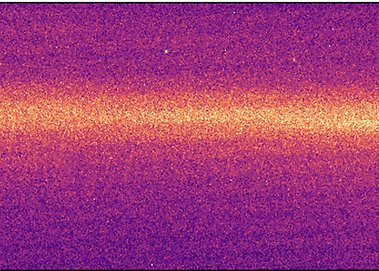
On November 9th, it was time for MATS to take the first images of the atmosphere. At 10:32 CET, MATS was approaching Esrange Space Center – a centre for space activities and satellite communication located about 40 kilometers east of the town of Kiruna in northern Sweden. At that moment, the control center, operated by OHB Sweden that built the MATS satellite platform, came in contact with the satellite via the tracking antenna at Esrange.
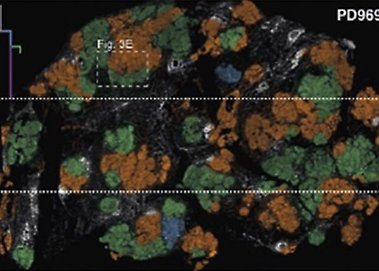
Researchers have created a tool that maps how breast cancer grows in previously unseen detail, and highlights how the cells around the tumor may be the key to controlling the spread of disease.
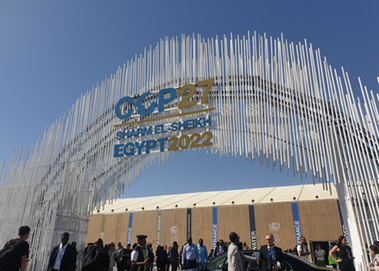
New research presented at COP27 shows that water is much more important in mitigating climate change than previously believed. Better management of water is critical to tackling today’s food and energy crises, both of which are exacerbated by climate change.
Archeologists from Stockholm University have participated in a new study on DNA from 13 individuals at the Stone age site Çayönü in south-eastern Turkey.
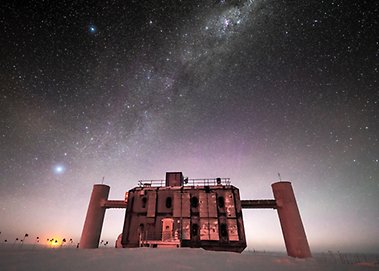
For the first time, an international team of scientists has found evidence of high-energy neutrino emission from a nearby galaxy. The galaxy, NGC 1068 (also known as Messier 77) is an active galaxy in the constellation Cetus and one of the most familiar and well-studied active galaxies. The results are published in Science.
Most languages lack a specialized vocabulary to describe smell experiences. People instead use words from other domains, such as “heavy”, “good” or “fruity”, when talking about smells. But which words are really used and how do they relate to each other? This has been answered for English by researchers at Stockholm University by using a fully automatic method that is based on texts from the Internet.