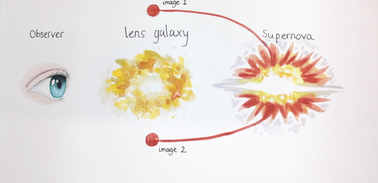
A team of physicists and astronomers led by researchers from the Oskar Klein Centre at Stockholm University has made an intriguing breakthrough in our ability to explore how galaxies warp the surrounding space with the discovery of a multiply-imaged lensed Type Ia supernova, dubbed “SN Zwicky”. The results are published in Nature Astronomy.
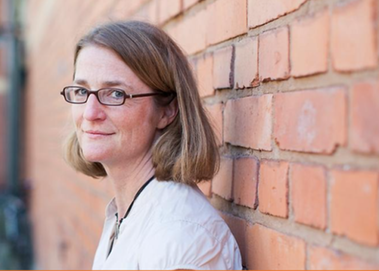
Maja Schlüter, professor at Stockholm Resilience Centre, has been very successful in applying for European Research Council (ERC) grants. Read about her experiences in applying for ERC funding.
Today, 8th June, we celebrate our oceans, our planet’s “lungs”. While all oceans are very susceptible to climate change, among of the most affected ones is the Arctic Ocean.
One in four industry-funded studies examining the potential harm from pesticides on the developing brain were not shared with EU authorities by the producing companies. This finding raises concern about the reliability of EU safety evaluations of pesticides and undermines trust in the system designed to protect European consumers.
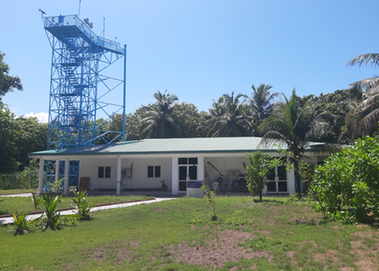
The Covid pandemic shutdowns in South Asia greatly reduced the concentration of short-lived cooling particles in the air, while the concentration of long-lived greenhouse gases was barely affected. Researchers were thus able to see how reduced emissions of air pollution leads to cleaner air but also stronger climate warming.
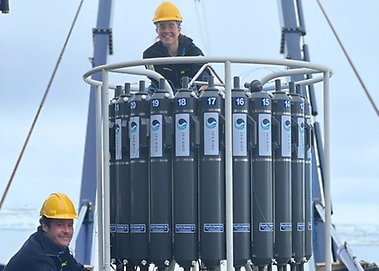
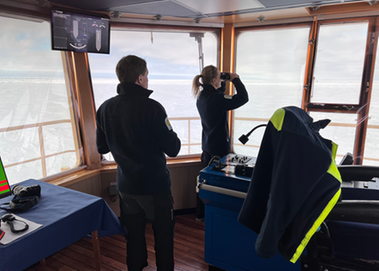
Greetings from N 80°! The icebreaker Oden has the last week been moored onto an ice floe, to enable easy access to the sea ice and for running long-term measurements.
President’s blog 17 May, 2023 At the end of last week, Academia Europaea and the Wenner-Gren Foundations held an important joint three-day conference on the theme “Publishing in Academia – Digital Challenges”. Unfortunately, I only had the opportunity to attend the last day of the conference, when I participated in an interesting panel on the increasing costs of open publishing from the perspective of university management – a growing problem that universities have to grapple with. The topic came up again when the National Library of Sweden, the Swedish Museum of Natural History, the Swedish Research Council, VA – Public & Science and others yesterday inaugerated a two-day conference on the theme “Open Science – from Policy to Practice”, within the framework of Sweden’s presidency of the Council of the European Union. The conference was opened, apart from the organizers, by State Secretary Maria Nilsson, who spoke about the Swedish proposal for the Council of the European Union’s conclusions on open science, which is expected to be decided already next week, on 23 May. A first keynote, by Hanne Monclair, from the UNESCO Open Science Steering Committee, presented UNESCO’s recommendations on open science which form an overall framework also for the EU’s work. I took part in a panel about the Council’s conclusions, which really paves the way for going from politics to practice in terms of open science – this is also noted by LERU (the League of European Research Universities), which scrutinizes political developments critically, in its comments. LERU points out that this proposal for Council Conclusions is aimed at the researchers and the research community. I also participated in a panel on EOSC – the European Open Science Cloud – which is under strong and exciting development and will become an extremely important resource for open research data for the future. Even here, however, there is reason to listen to LERU, which advocates stronger incentives on the part of the European Commission to promote collaboration between the two main stakeholders: EOSC itself, on behalf of the Commission, and the research performers – mainly universities and colleges. Here it is quite clear that in-depth cooperation is required – not least more commitment from universities and colleges. The Association of Swedish Higher Education Institutions’ roadmap for open science recommends all Swedish higher education institutions to consider joining the EOSC Association in 2023 – this in order to be able to participate more actively and have the opportunity to influence future developments. One session was devoted to citizen science – an integral part of the transition to open science which has tended to be a bit neglected in favour of open access to publications and research data. This time the conference participants received an overall and broad update on citizen science with several interesting national examples. “Open science” is no longer a side issue that can be ignored. As several of the participants emphasized, “open” ought to be a redundant specification soon. In short, it is about science – and about its conditions, where openness, transparency and reproducibility are necessary components. Astrid Söderbergh Widding President Read more from the President’s blog
Department of Biochemistry and Biophysics and Science for Life Laboratory researcher Marta Carroni is this years’ winner of the Hugo Theorell Prize in Biophysics.
Mental health issues affect quality of life for millions of people. Many people first experience anxiety in their early teen years as their brain rapidly develops. Armita Golkar is doing research on this sensitive period in the hope that new findings will improve the treatment of mental illness.
On Monday 15 May, between 10 am and 3 pm, we offer walk-in HIV testing at the Student Health Services reception on the Frescati campus. The testing is free of charge and anonymous. Stockholm University collaborates with the Noaks Ark organisation in Stockholm during the European Testing Week 2023. The ETW is a campaign that takes place in countries across Europe between 15 May and 22 May. One of the main aims is to increase awareness of the benefits of HIV testing. It’s better to know your status as soon as possible because today people living with HIV can live well with a long life expectancy when treatment starts early.
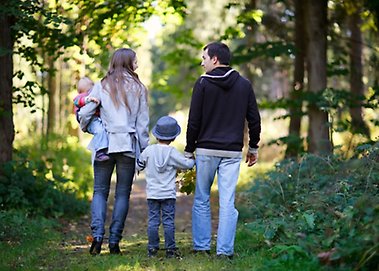
The age of the youngest child impacts parental mortality, with a significant survival advantage observed for parents of newborns due to both selection and behavioral changes, while controlling for parental age. This is revealed by a Swedish study published in the scientific journal Genus.
A new international archaeogenetic study in which researchers at Stockholm University contributed with studies of ancient DNA shows that the Picts, who lived in Scotland during the early Middle Ages, were a heterogeneous group with local genetic roots.