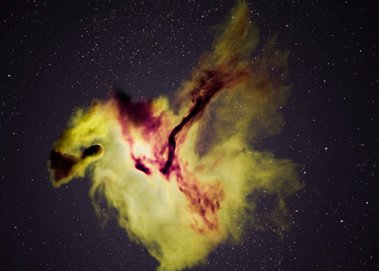
In the latest issue of the journal Nature, astronomers from Stockholm University participate in a study of an exploding star that lacks all of the most common elements in the Universe. This rare stripped star helps scientists understand how and where elements like sulphur and silicon form.
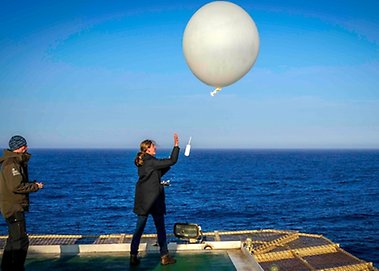
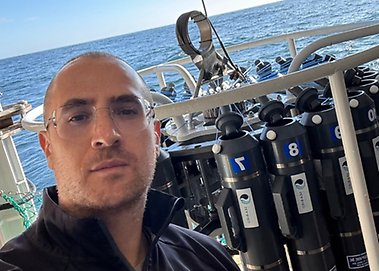
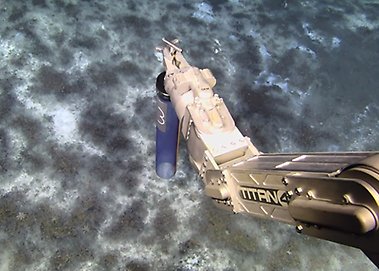
In August and September, the icebreaker Oden is in the waters around the Arctic to map the seabed. On board are also 18 PhD students from several countries attending a research school where practical work is combined with lectures.
They are now in the final stages of developing a prototype of a next-generation Botox variant. “We’ve created a version that binds better to human receptors and could be longer acting,” explains Geoffrey Masuyer. “That means fewer injections for patients - especially those living with chronic conditions - resulting in better outcomes and quality of life.” Their project was recently awarded SEK 2.5 million from the Knut and Alice Wallenberg Foundation and SciLifeLab’s Proof of Concept program to support the development of therapeutic toxins for neuromuscular disorders. Bridging the Gap Between Lab and Market Their work has already attracted interest from the pharmaceutical industry. But getting there hasn’t been easy. “In academia, we’re trained to focus on discovery, not patents or business plans, but none of this will ever reach patients unless we take those steps,” says Stenmark. The duo credits early support from innovation offices, particularly KI Innovations and Stockholm University's own Innovation Office, for helping them to navigate commercial waters. “You need help to feel safe in the legal and strategic decisions, timing is crucial, filing patents too early or too late can derail a project,” says Masuyer. With the help of pitch coaching and business strategy training, they’ve learned to communicate their science differently. “We still talk about the science, but now we focus on the value proposition - what this innovation could mean for patients and the healthcare system,” says Masuyer. A Message to Other Researchers They want other scientists to see themselves as innovators, too. “Everyone at a university is an inventor, you just need someone to ask the right questions and guide you through the process,” says Stenmark. He adds that support structures must become more visible and accessible: “There’s still a big difference in innovation culture between universities like KI, KTH, and SU. At SU, we need to lower the threshold for translational projects,” says Stenmark. “If we want our research to make a real-world impact, we need to keep building those bridges between academia and industry and Stockholm is a great place to do that,” says Masuyer. Read more about Pål Stenmark’s research here. Scientists reveal the first structure of the complete botulinum neurotoxin complex
Stockholm University ranks 100 in the 2025 Academic Ranking of World Universities (ARWU). The university thus takes third place among Sweden’s higher education institutions. Highest ranked in Sweden is Karolinska Institutet followed by Uppsala University.
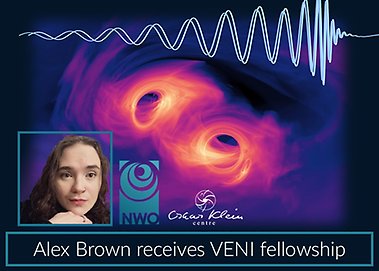
Oskar Klein Centre researcher Alex Brown has been awarded the VENI grant for her work on gravitational waves and neutron star mergers. Now she will apply the powerful frameworks developed for black hole binaries to neutron star binaries, using cutting-edge machine learning inference pipelines.
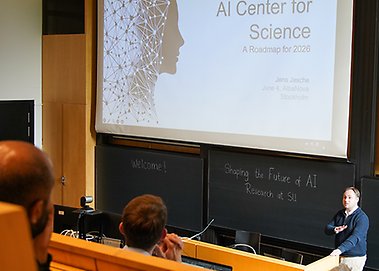
Jens Jasche, astrophysicist at the Oskar Klein Centre (OKC), has been appointed the new AI Coordinator for the Faculty of Natural Science at Stockholm University. This appointment is part of the university's initiative to strengthen and broaden the use of artificial intelligence in research and education.
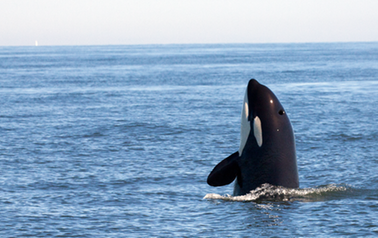
Scientists from Stockholm University and the Swedish Museum of Natural history, in collaboration with partners in Greenland and Canada, have identified a previously undocumented class of PFAS* in the blubber of killer whales.
Studying in a second language can be harder than in your native one, with complex terms in lectures and readings, and group work made tougher by varying skills. In an article by Una Cunningham in The Conversation, she shares some tips for success.
Anomalies in temperature and salinity that originate in the midlatitude North Atlantic can affect the Atlantic Meridional Overturning Circulation (AMOC) in the Nordic Seas up to a decade later. The study published in Nature’s journal Communications Earth & Environment shows that the anomalies that travel northward with the Atlantic Water are an important part of the system, and actively modulate both the inflow of warm water into the Nordic Seas and the overflow of dense water back into the deep Atlantic.
A recent study in Nature Geoscience offers important new insights into the hidden role of ancient groundwater beneath the ocean floor – and how it may have interacted with ice sheets and rising sea levels during past climate changes.
27 million tons. That is the total estimated amount of plastic floating in the North Atlantic Ocean as particles of less than one micrometer each. This is shown by a comprehensive study recently published in the scientific journal Nature. “Measuring nanoplastics in environmental samples is extremely challenging. That’s why this novel pollutant has remained hidden for so long in our methodological blind spot. Our results were surprising - there is a similar or even greater amount of nanoplastics in this part of the ocean compared to microplastics. It’s quite widespread, and we detected it at depths greater than 4,500 meters," Dušan Materić says. He is head of the nanoplastics research group at the Helmholtz Centre for Environmental Research (UFZ) in Germany, and one of this year’s nominees from SU for the Swedish Wallenberg Academy Fellows program. Ocean expedition Sophie ten Hietbrink is a PhD student at the Department of Geological Sciences at Stockholm University. During her master´s degree at Utrecht University, she spent four weeks aboard the research vessel RV Pelagia . On a trip from the Azores to the continental shelf of Europe, she took water samples at twelve locations. Anything larger than one micrometer was filtered out. “By drying and heating the remaining material, we were able to measure the characteristic molecules of different types of plastics, using mass spectrometry,” says Sophie ten Hietbrink. Shocking amount Extrapolating the results from different locations to the whole of the North Atlantic Ocean, the researchers arrived at the immense amount of 27 million tons of nanoplastics. “A shocking amount. But with this we do have an important answer to the paradox of the missing plastic,” says Sophie ten Hietbrink. Until now, not all the plastic that was ever produced in the world could be recovered. So, it turns out that a large portion is now floating in the water as tiny particles. The research provides the first estimate of the amount of nanoplastics in the oceans. Sun, rivers and rain The nanoplastics can reach water by various routes. Larger particles can disintegrate under the influence of sunlight. Some nanoplastics probably flows along with river water. It also appears that nanoplastics reach the oceans through the air, as suspended particles fall down with rainwater or fall from the air onto the water surface as ‘dry deposition’. “Now that we know they are so ubiquitous in the oceans, it's also obvious that they penetrate the entire ecosystem; from microorganisms to fish and humans,” says Helge Niemann. He is a researcher at the Royal Netherlands Institute for Sea Research (NIOZ) and professor of geochemistry at Utrecht University. Is there a solution? Nanoplastics are a serious environmental problem, and they are here to stay. But according to Dušan Materić, two key strategies come to mind: prevention and mitigation. “Prevention means reducing unnecessary production, like in fast fashion, and replacing plastics with natural materials or effective alternatives. And no, ‘degradable’ or ‘compostable’ plastics are often not good substitutes, they are usually just weaker plastics that break down faster into nanoplastics.” As for mitigation, most methods are still under development and tend to be expensive solutions for a global problem. “However, some of these technologies can be effectively applied in pollution hot spots, where they make the most impact,” says Dušan Materić. Full article Nanoplastic concentrations across the North Atlantic is published in the journal Nature DOI: 10.1038/s41586-025-09218-1 More reading More about Sophie ten Hietbrink and contact details Helmholtz Centre for Environmental Research (UFZ) Utrecht University Royal Netherlands Institute for Sea Research