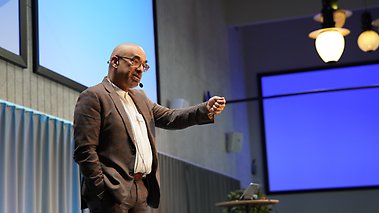
On May 28, 2025, the Oskar Klein Centre (OKC) hosted its annual OKC Day at Stockholm's National Museum of Science and Technology. The event featured presentations from leading researchers highlighting recent achievements, ongoing challenges, and future opportunities in cosmology and astrophysics.
The project “ACCELERATE – Transition to and Scale-Up of bio-CO2 Utilization” will receive a grant of SEK 60 million from the Foundation for Strategic Research, SSF. The Royal Institute of Technology, KTH, will run a multidisciplinary research center together with Stockholm University.
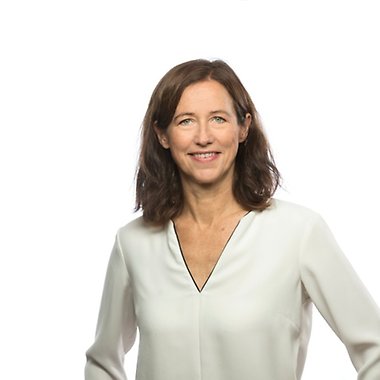
Patrizia, who recently successfully defended her thesis "Essays on Elder Care, Intergenerational Mobility, and Firms in the Labor Market", is one of ten finalists. Young economists have a vital role to play in shaping Europe’s future. Every year the ECB recognizes this through the Young Economist Prize, a research competition that offers talented students the chance to share their fresh perspectives on today’s challenges. Finalists are invited to the annual ECB Forum on Central Banking, and the overall winner is awarded €10,000 .
Berit Olofsson, professor at Stockholm University, has been awarded this year’s Ulla and Stig Holmquist Science Prize in Organic Chemistry. She receives the award for her research in the field of hypervalent iodine chemistry. The prize is worth SEK 1.9 million.
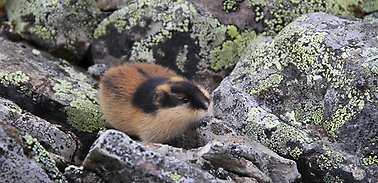
Using whole genome sequencing and cutting-edge analyses researchers at Stockholm University have uncovered the surprising evolutionary history of the Norwegian lemming ( Lemmus lemmus ), revealing it to be one of the most recently evolved mammal species. The results published in Proceedings of the National Academy of Sciences (PNAS), reveal that the Norwegian lemming is a distinct species that split from its closest relative, the Western Siberian lemming, approximately 35,000 years ago — just before the peak of the last Ice Age.
Stockholm University has launched a new network for marine research. The network aims to strengthen collaboration, knowledge exchange and the visibility of marine research across the university.
Belén Martín-Matute, professor of Organic Chemistry at Stockholm University, has been awarded the prestigious 2024 Arrhenius Plaque by the Swedish Chemical Society. The award was presented at the Society’s 3rd National Meeting, held in Västerås on 16–18 June 2025.
Some chemical reactions in nature are virtually impossible to replicate in research labs, particularly the way proteins control chemical reactions using metal ions and radicals. Martin Högbom is seeking to understand nature’s ability to perform seemingly impossible chemistry.
Emil Marklund at the Department of Biochemistry and Biophysics at Stockholm University has been named one of the future research leaders by the Swedish Foundation for Strategic Research. The award includes a research grant of SEK 15 million and leadership training.
Three researchers at Stockholm University are awarded Advanced Grants by the European Research Council ERC. In total, it is about SEK 86 million for research in evolutionary biology, biochemistry and molecular bioscience.
On August 18, Julie Lattaud and Flor Vermassen will set off on a research expedition to southeast Greenland aboard ATKA, a 16-meter sailing vessel equipped for scientific work. The boat is operated by the French organization Témoins Polaires and accommodates five people, including two researchers. “I’m trying to understand the role the ocean plays in glacier melting within the fjord,” says Flor Vermassen at the Department of Geological Sciences. Thanks to its small size and specialized equipment, ATKA can access narrow, shallow fjords where larger research vessels cannot reach. This allows scientists to study the effects of glacier melt on the ecosystem – up close and on site. Ocean currents carrying warmer water into the fjords accelerate glacier melting. By gaining deeper insight into this process, the researchers hope to contribute valuable knowledge about how climate change is impacting the Arctic, and how we might address these changes in the future. The expedition is also carried out with minimal environmental impact. “With ATKA, we can conduct research in a highly carbon-neutral and cost-effective way,” says Julie Lattaud at the Department of Environmental Science.
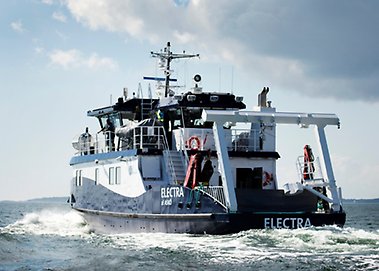
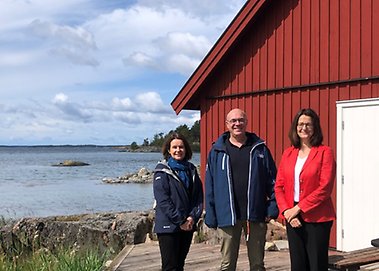
Surveillance at Askö field station is an important early warning system for the Baltic Sea's sensitive ecosystem. This conclusion was made by Germany's ambassador Christina Beinhoff after a visit to Askö together with the Austrian ambassador Doris Danler.