The volcanic eruption that left its mark on both landscape and science
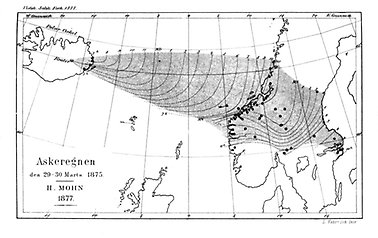
An article by Simon Larsson at the Department of Physical Geography, Stockholm University, presents the story behind the discovery of the Askja volcano in Iceland and the subsequent studies of the ash that spread from the eruption in 1875. The studies of the ashes have been important for scientific progress in geosciences — advancements that continue to resonate today. The article is published in Dynamica, the university library’s new open science platform. An Eruption's 150th Anniversary This year marks 150 years since the powerful Plinian eruption of Askja in Iceland. The ashes from the eruption reached as far as Stockholm. Observations of the ashfall were collected from the North Atlantic, Norway, and Sweden in what can be considered an early example of citizen science. The gathered data was used to create the first detailed map of the geographical spread of volcanic ash, visualising the event hour by hour. Ash samples were also collected from Hagaparken in Stockholm and examined by geologist and member of the Royal Swedish Academy of Sciences, Adolf Erik Nordenskiöld, who later led the Vega Expedition.