News

  • Researchers fight against fake science 

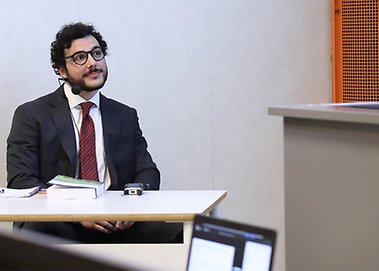
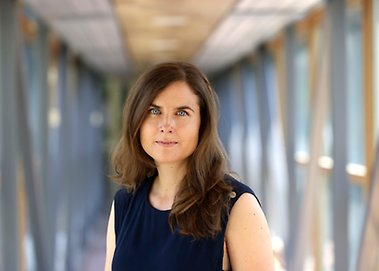
    Fake studies produced with the help of AI risk damaging the credibility of research while academia must regain control over scientific publishing. This is according to the initiators of the Stockholm Declaration that receives support from leading persons at Stockholm University. At the beginning of the summer in 2025, the Royal Swedish Academy of Sciences (KVA) organised a workshop with Swedish and international researchers on how the system for scientific publishing works and how it can be reformed. As a result of this workshop, Dan Larhammar, Uppsala University and former chairman of KVA, and Bernhard Sabel, Otto von Guericke University of Magdeburg, have now, in November 2025, published an article with proposed measures according to the Stockholm Declaration. Hundreds of thousands of fraudulent articles, more or less generated by AI, have in recent years begun to erode the scientific system. This risks undermining the fundamental credibility of science. It becomes difficult to build further on research that in its entirety, or in parts, is not accurate. It becomes impossible to replicate studies that may not even have been conducted in the first place, according to the authors of the Stockholm Declaration. “Our entire societal development is based on having a factual foundation. This is evident when it comes to medical treatments where patients can be harmed or even die. But one can also imagine bridges and buildings collapsing if the calculations they are based on are incorrect. And if macroeconomic models are inaccurate, decision-makers may receive wrong information. Ultimately, our democracies rely on us being able to make informed choices, which is why it is so important that the basic information is correct,” says Dan Larhammar.   Need to prioritise quality He argues that it is time for the researchers themselves to tackle the problem and find countermeasures. There is something in the structure of the entire scientific system that can tempt people to cheat. To merit themselves, researchers have been required to publish as much as possible. Steering towards quality instead of quantity when researchers apply for positions could be a way to move away from this. Dan Larhammar also points out that the rapid implementation of open access – which he fundamentally considers good – has created a market for unscrupulous opportunists. According to the article’s authors, so-called article mills produce false articles and offer researchers the opportunity to buy co-authorship. It also happens that editors of scientific journals are bribed to accept articles. The article’s authors are also critical of established large publishers who make large profits from research conducted with the help of grants from the state or foundations. Instead, they would like to see the academy itself take greater responsibility for scientific publishing without a profit motive. Another problem with the large number of false studies is that the peer review system risks collapsing.    SU professor urges signing the declaration
  • Apply for Research Support and Grants 2025–2026 | Call for Applications

    The Stockholm Center for Global Asia invites applications for its 2025–2026 round of small research grants. The primary aim of these grants is to strengthen Asia-related research within the social sciences at Stockholm University. A further purpose is to enhance collaborations between teachers and researchers at the Faculty of Social Sciences, Stockholm University, and their counterparts in Asia, as well as with other higher education institutions and research environments focused on Asian studies. These are small grants, typically intended to support shorter fieldwork trips or research visits to universities and research institutions. The grants are designed to encourage the exchange of ideas, foster new collaborations, and contribute to the development of research related to Asia. They do not normally cover salary costs. Funding may be used to support the travel of scholars and teachers employed at a social science department at Stockholm University to institutions abroad or to host incoming guest researchers at Stockholm University. Grants may also be used for fieldwork or archival research. In addition, the Center provides planning grants for individual researchers or research groups preparing applications for external research funding. Planning grants constitute an exception to the rule regarding salary coverage. In these cases, the grant may include support equivalent to up to one month of salary (including LKP and OH) to enable researchers to develop and write research proposals. While planning grants give priority to junior researchers, they are not exclusively limited to them. Applicants must have completed a doctoral degree to be eligible for a planning grant. Grants are open to staff members and doctoral students at the Faculty of Social Sciences, Stockholm University. Applications from foreign scholars must be submitted through their host department or unit at Stockholm University. The funding period runs from Monday, 5 January 2026, to 5 January 2027. Applications must be submitted no later than 12 December 2025. All applications should be sent both by e-mail to asianstudies@su.se and in two printed copies (including one signed original) to: Stockholm Center for Global Asia   Attn: Eva Hansson   Stockholm University 106 91 Stockholm, SWEDEN   Each application must include a signed application form (download PDF below)  a curriculum vitae of no more than two pages (including recent publications) a short description of the project’s background, purpose, and expected outcomes; a budget specifying travel costs, housing, and daily allowance. For planning grants, the budget should also include any requested salary component, a concise project description, projected sources of future external funding, and a list of collaborating institutions abroad. There is no fixed amount for travel grants, but the maximum allocation for individual planning grants is 100,000 SEK. Applications should not exceed three pages for travel grants and five pages for planning grants (double-spaced, 12-point font). Priority will be given to applications that are expected to result in publications authored by researchers at Stockholm University, or that include Stockholm University researchers in forthcoming external funding applications. Acceptance will be announced on 5 January 2026. A brief final report (1–2 pages) summarizing the outcomes of the funded activity must be submitted to the Forum for Asian Studies no later than 31 January 2027.   Download the Application Form The application form can be downloaded here: Application Form – Research Support and Grants SCGA (207 Kb)

    Stockholm Center for Global Asia
  • The First Swedish Biodiversity Symposium: From Knowledge to Action for Transformative Change

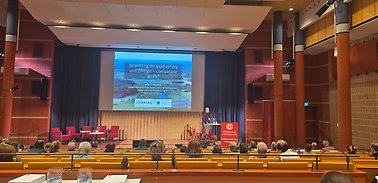
    The first Swedish Biodiversity Symposium was held at the Conference Centre Wallenberg in Gothenburg 21–23 October. The Bolin Centre and RT4 were co-organizers of the symposium, which was fully booked with over 400 participants. The Symposium was focused on Transformative change- from knowledge to action and was oriented to a science-policy interface to improve communication and discussion of knowledge on biodiversity. Besides Bolin Centre members, other participants were from many different biodiversity stakeholders, such as other universities, authorities such as the Swedish Board of Agriculture and the Swedish Environmental Protection Agency, municipalities including the City of Stockholm, companies such as those involved in agriculture and steel, NGOs like WWF, and other research- and museum entities. It was the largest gathering of biodiversity scientists and other biodiversity stakeholders in Sweden. Each day had a theme and started with a thought-provoking discussion panel around topics like “Is Swedish biodiversity governance transformative?”, “Societal transformation – how do we make it happen?” and “Future Directions? Unlocking a sustainable future”. For many attendees, these discussions were a highlight of the meeting. Each topic brought together people with different approaches and viewpoints about how Sweden can apply scientific knowledge about biodiversity concerns to actionable change.

    Bolin Centre for Climate Research
  • The photo that wasn't a photo

    Open lecture on science communication by Thomas von Heijne, honorary doctor in astronomy at Stockholm University.

    Department of Astronomy
  • Glacier of the month

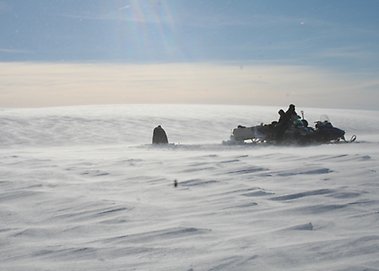
    The United Nations declared 2025 as the International Year of Glaciers' Preservation, accompanied by the proclamation of the 21st March of each year as the World Day for Glaciers starting in 2025. We would like to share pictures and our knowledge about glaciers around the world and present the project “Glacier of the month” starting in March 2025. Background The aim of the International Year of Glaciers’ Preservationis is to raise global awareness about the critical role of glaciers, snow and ice in the climate system and the hydrological cycle, and the economic, social and environmental impacts of the impending changes in the Earth’s cryosphere. At the Department of Physical Geography, Stockholm University we have a long history of research focusing on glaciers. Many researchers have field experience from a wide range of icy environments such as for example; Antarctica, Greenland, Canadian Rockies, Norway and of course northern Sweden where we have a long tradition of glacier research and Tarfala monitor glacier change. We would like to share pictures and our knowledge about glaciers around the world and present the project “Glacier of the month” starting in March 2025.   Glacier of the month 2025 March Blåmannsisen, Norway: 67° 15’ N, 16° 05´E

    Department of Physical Geography
  • Grant to recruit American guest researcher 

    Stockholm University has been awarded another grant by the Swedish Research Council to recruit an international guest researcher, this time an atmospheric scientist.  At the end of October 2025, The Swedish Research Council announced additional funding to higher education institutions in the call for Proposals to recruit international guest researchers to Sweden. Funding is provided to recruit distinguished researchers whose research activities are outside Europe.

  • Smelling Without A Smell

    Stephen Pierzchajlo defended his doctoral thesis “Smelling Without A Smell: How olfactory-perceptual representations are activated by words” on October 17 at Stockholm University.

    Department of Psychology
  • Conference on digital human sciences resources and tools

    On November 12–13, Stockholm University will host the HumInfra Conference 2025. At the conference, nearly 100 researchers from different parts of Sweden and other countries will gather to discuss and showcase various resources within digital human science.

    Digital Human Sciences
  • Ida Rahu: “AI should never replace the scientist”

    When Ida Rahu was 14, she sat in a chemistry classroom and made a declaration that would shape her life. “I literally said to the person next to me, ‘See, I will become a chemist.’”

    Department of Environmental Science
  • SCGG recommends these partner events

    Learn about other events related to global governance that our partners, such as The Hans Blix Centre or the Stockholm Centre for International Law and Justice (SCILJ), are hosting.

    Stockholm Center on Global Governance
  • Successful thesis defense for Iacopo Bianchi

    His thesis explores how structural, informational, and historical forces shape development outcomes in Sub-Saharan Africa.

    Institute for International Economic Studies