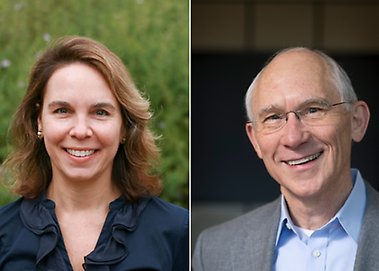
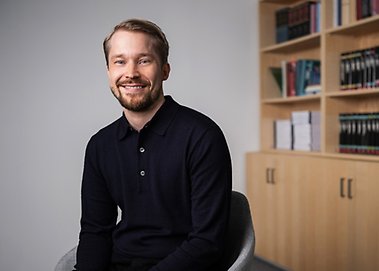
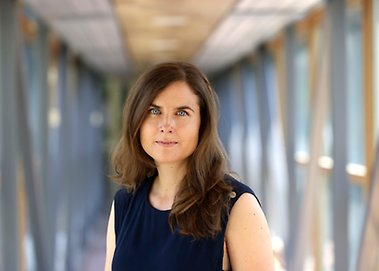
The winners of The Stockholm Prize in Criminology 2026 are Charis E. Kubrin and Mark W. Lipsey. They are awarded for their myth-busting research on crime rates and measures against crimes.
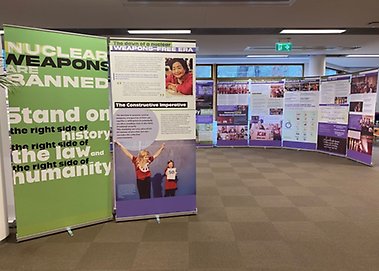
During November the End Nuclear Weapons exhibition will be displayed at Stockholm University Library. In connection with the exhibition, a panel discussion will be held on November 19, featuring researchers, educators, and civil society voices.
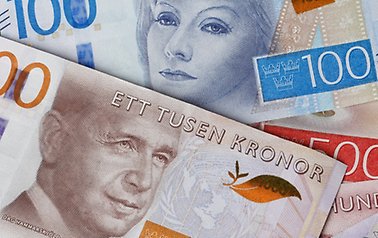
If the e-krona becomes a reality, it could shift the balance of power in Sweden’s monetary system. In an opinion piece in Dagens Nyheter, Lennart Erixon, professor emeritus of economics at Stockholm University, discusses why the move toward digital money has been so slow in Sweden.
The SciLifeLab Planetary Biology strategic area has selected five new high-impact research projects for further development, two of them with researchers from Stockholm University. The chosen projects will be based on the SciLifeLab infrastructure, and aim to drive significant environmental life sciences advancements, which could have high societal impact. "ARCTIMES – Arctic Reference Catalogue for Taxonomic Identification of Modern and Extinct Species" is lead by Peter Heintzman, Centre for Palaeogenetics and Department of Geological Sciences, Stockholm University. The project builds on a comprehensive genome catalogue of ancient and modern Arctic species to improve eDNA studies, revealing biodiversity dynamics and ecosystem resilience to climate change across time. "Forecasting adaptation in a changing planet: evolutionary insights from 16 million museum specimens" is lead by Mafalda Ferreira and Lisandro Milocco, Department of Zoology, Stockholm University, together with Jennifer James and Gabriela Montejo-Kovacevich, Uppsala University. They will use museum collections and cutting-edge genomics and phenomics to integrate genotype, phenotype, and environment into predictive models of evolution under anthropogenic change. Five high-impact planetary biology projects selected for further development
A new international report argues Artificial intelligence (AI) can help accelerate science and research about climate change, biodiversity loss, and other urgent crises related to planetary boundaries. Responsible use of AI for sustainability research and governance is an opportunity the world cannot afford to miss, the report concludes.
When lawyer Sara Varda St Vincent enrolled in a course called Deep Time, she didn’t expect it to completely reshape how she viewed the world. “I was looking for courses about time,” she recalls. “When I found Deep Time, my brain exploded at every lecture. It was the first time I encountered Environmental Humanities – and it shifted my perspective on many things.” What is Environmental Humanities? “Environmental Humanities is an interdisciplinary field that combines the humanities with environmental and social sciences to understand the relationship between humans and nature,” Sara explains. Rather than seeing nature as
Two researchers at Stockholm University have been awarded the European Research Council's most prestigious grant, the ERC Synergy Grant 2025. Gustaf Hugelius, professor of Physical Geography at Stockholm University, is coordinating a project that has been awarded just over €12.5 million over six years. Axel Brandenburg, professor at Nordita, is part of a project that has been awarded almost €10 million, also over six years. Gustaf Hugelius is the first researcher at Stockholm University to be the administrative coordinator for an ERC Synergy Grant project. Peatlands in the face of climate change Gustaf Hugelius, together with Christina Biasi, University of Innsbruck, Pierre Friedlingstein, University of Exeter, and Philippe Ciais, Laboratoire des Sciences du Climat – CEA, leads a project to investigate how peatlands in the northern hemisphere responds to climate change and future warming. These peatlands contain huge amounts of carbon and nitrogen, which, if released, could amplify global warming making climate stabilisation targets significantly harder to meet than current models predict.
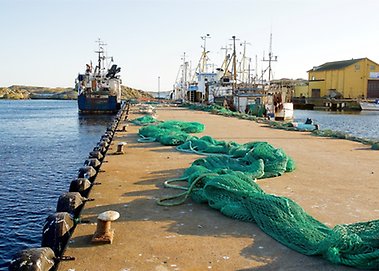
EU fisheries ministers decided on higher catch quotas (TACs) than the Commission had proposed in the Baltic Sea next year. The TAC for Gulf of Bothnia herring was reduced, but not enough to comply with EU regulations. ‘It is remarkable that the Council is not complying with its own legislation,’ says Sara Söderström, fisheries researcher at the Baltic Sea Centre.
Joonas Tuhkuri, Assistant Professor of Economics at Stockholm University, was recently interviewed in the German daily newspaper Tagesspiegel. ”Economic growth in Finland has practically stagnated for two decades,” Tuhkuri says.
Fake studies produced with the help of AI risk damaging the credibility of research while academia must regain control over scientific publishing. This is according to the initiators of the Stockholm Declaration that receives support from leading persons at Stockholm University. At the beginning of the summer in 2025, the Royal Swedish Academy of Sciences (KVA) organised a workshop with Swedish and international researchers on how the system for scientific publishing works and how it can be reformed. As a result of this workshop, Dan Larhammar, Uppsala University and former chairman of KVA, and Bernhard Sabel, Otto von Guericke University of Magdeburg, have now, in November 2025, published an article with proposed measures according to the Stockholm Declaration. Hundreds of thousands of fraudulent articles, more or less generated by AI, have in recent years begun to erode the scientific system. This risks undermining the fundamental credibility of science. It becomes difficult to build further on research that in its entirety, or in parts, is not accurate. It becomes impossible to replicate studies that may not even have been conducted in the first place, according to the authors of the Stockholm Declaration. “Our entire societal development is based on having a factual foundation. This is evident when it comes to medical treatments where patients can be harmed or even die. But one can also imagine bridges and buildings collapsing if the calculations they are based on are incorrect. And if macroeconomic models are inaccurate, decision-makers may receive wrong information. Ultimately, our democracies rely on us being able to make informed choices, which is why it is so important that the basic information is correct,” says Dan Larhammar. Need to prioritise quality He argues that it is time for the researchers themselves to tackle the problem and find countermeasures. There is something in the structure of the entire scientific system that can tempt people to cheat. To merit themselves, researchers have been required to publish as much as possible. Steering towards quality instead of quantity when researchers apply for positions could be a way to move away from this. Dan Larhammar also points out that the rapid implementation of open access – which he fundamentally considers good – has created a market for unscrupulous opportunists. According to the article’s authors, so-called article mills produce false articles and offer researchers the opportunity to buy co-authorship. It also happens that editors of scientific journals are bribed to accept articles. The article’s authors are also critical of established large publishers who make large profits from research conducted with the help of grants from the state or foundations. Instead, they would like to see the academy itself take greater responsibility for scientific publishing without a profit motive. Another problem with the large number of false studies is that the peer review system risks collapsing. SU professor urges signing the declaration
Erik Elfwing is 23 years old and lives in Tyresö outside Stockholm. He is studying for a bachelor's degree in physics, year 3, specialising in physics. ‘Considering that I didn't study science in secondary school and also had great difficulty with mathematics, sometimes even to the point of failing, I want to show that you don't have to be a natural genius to study physics. All it takes is interest, curiosity and hard work.’ Starting next week, Erik will be writing about his studies on Fysikum's Facebook and Instagram pages.