The Academic Ranking of World Universities (ARWU) by Subject 2025 places Stockholm University in the global top 50 in four subjects, and number one in Sweden in four subjects. The highest ranked subject is Environmental Science & engineering where Stockholm University is ranked 18 in the world.
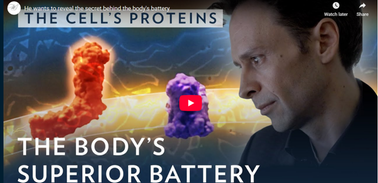
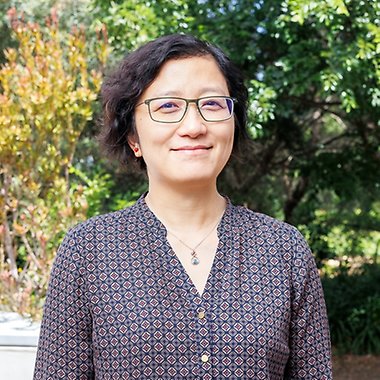
How can the cells in our bodies be charged with energy, so that we have the power to move? No one knows exactly how it works, but professor Ville Kaila and his team at Stockholm University, is investigating special proteins within our cells which capture and convert energy from the food we eat, turning it into an electrical charge, so that our cells become like charged batteries that power us.
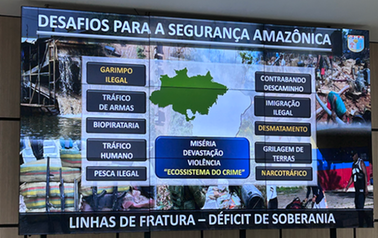
Adam Nordström gained a unique insight into Brazil's security challenges during his internship at the country's Army War College. He is helping to research various issues linked to organized crime in the Brazilian part of the Amazon
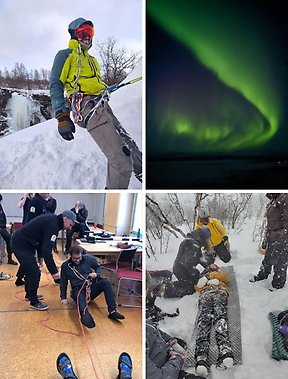
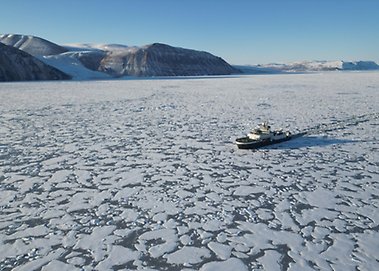
Now it is only one month left before our researchers leave for field work in Antartica. Before venturing into such extreme environments, rigorous field training is essential. We caught up with several participants from the recent iQ2300 field training to hear about their motivations, experiences, and what they're looking forward to as they prepare for their mission to the ice.
New research has documented for the first time how methane and oil escape from the seafloor off northeast Greenland. The release of hydrocarbons from the seafloor affects marine ecosystems and alters the carbon cycle in the Arctic. The study by an international team of scientists clearly documents gas hydrates are present on the Northeast Greenland shelf and are now exposed to a rapidly warming Arctic Ocean.
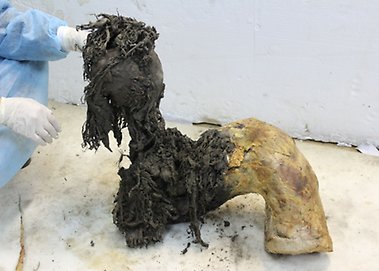
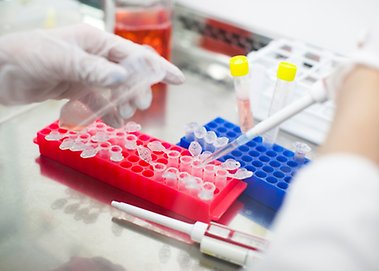
Researchers from Stockholm University have – for the first time ever – managed to successfully isolate and sequence RNA molecules from Ice Age woolly mammoths. These RNA sequences are the oldest ever recovered and come from mammoth tissue preserved in the Siberian permafrost for nearly 40,000 years. The study, published in the journal Cell, shows that not only DNA and proteins, but also RNA, can be preserved for very long periods of time, and provide new insights into the biology of species that have long since become extinct.
British-American analytics firm Clarivate annually publishes a list of the world’s most cited researchers. For 2025, nine names from Stockholm University are among the 6 868 on the list.
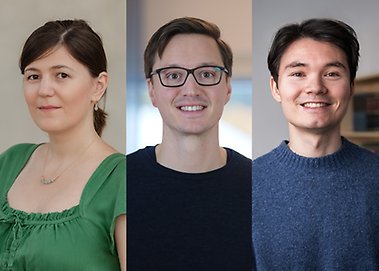
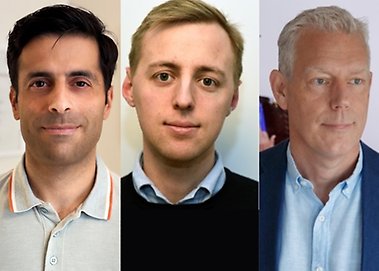
Each year, the Department of Economics at Stockholm University presents a new cohort of job market candidates – doctoral students who are ready to take the next step in their academic careers. For 2025/26 we highlight Sonia Giurumescu, Nils Landén Mammos, and Jens Oehlen.
Diabetes is one of the fastest-growing diseases in the world. According to the World Health Organization (WHO), the number of people living with the condition has quadrupled globally since the 1980s. Several major research projects at Stockholm University are exploring fundamental factors that may help prevent or even reverse diabetes, including approaches that aim to activate the body’s own immune system.
A new study reveals that sons born to mothers with type 1 diabetes may develop early vascular dysfunction – independently of metabolic health. The finding may help shape future strategies to prevent cardiovascular disease early in life. Children of women with type 1 diabetes are known to be at increased risk of developing cardiovascular diseases. A new study by researchers from Stockholm University and Karolinska Institutet and others is the first to show that the risk is linked to early dysfunction in blood vessel cells in sons, even before any metabolic issues arise. The study is published in Cell Reports Medicine. The researchers used a combination of animal models, Swedish and Danish health registries, and a small clinical study to explore the link. Results show a sex-specific effect: only sons displayed early vascular changes.
Three Stockholm University political scientists have been awarded research grants to examine how organized crime erodes public trust, how transnational actors shape global institutions, and support for radical right parties, the university announced in early November.
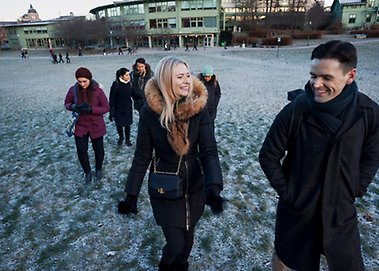
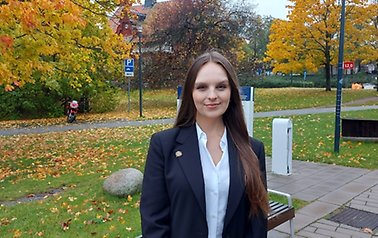
“When I moved to Sweden from Poland as a 16-year-old, I could never have imagined that, one day, I would be holding a speech in that room. In fluent Swedish. I believe in doing your best in life and taking every chance that comes along.” Kamila Marzynska, a law student at Stockholm University, smiles happily as she reflects on her role as toastmaster at the Nobel Prize banquet. For the third year in a row, she will be welcoming guests to dinner at the City Hall, leading the toast to the Chairman of the Nobel Foundation and the Swedish King. Once the main course has been enjoyed and it's time for dessert, she gets back up on the podium. At that point, the Nobel Laureates giving speeches will be introduced – in Swedish, in their mother tongue and in English. It's a big moment in their lives, so I want to introduce them in a supportive way.