News

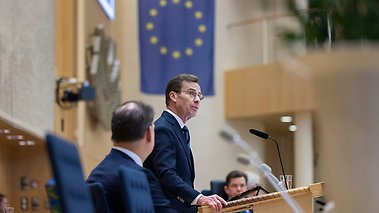
  • Prime Minister Ulf Kristersson, the leader of the center-right Moderate Party, speaking during a debate among party leaders on European Union policy in the Swedish Parliament on Nov. 12, 2025. Photo: Melker Dahlstrand/Swedish Parliament

    When ‘Sweden Decided,’ Who Is Actually Deciding?

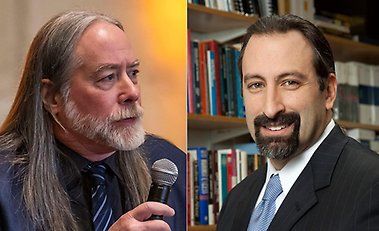
    A state’s intentions can ultimately be traced to the small circle of people who make its foreign policy. That is the argument of a new article in the journal International Theory by Marcel Jahn, a postdoctoral fellow in philosophy at Stockholm University affiliated with the Stockholm Center on Global Governance, and Moritz S. Graefrath, an assistant professor of international security at the University of Oklahoma.

    Stockholm Center on Global Governance
  • Artist's impression of UVEX with a starry background.

    New space telescope for mapping the sky in ultraviolet light approved by NASA

    On October 27th NASA announced its commitment to launch UVEX, the UltraViolet EXplorer, a new space telescope that will survey the sky in ultraviolet light. The project is led by Caltech in the United States, and the launch is planned before 2031. At the Department of Astronomy assistant professor Ylva Götberg is involved in the project and plans to use the data to look at hot and massive stars.

    Department of Astronomy
  • New policy brief calls for action to mitigate the impacts of Baltic heatwaves

    Marine heatwaves are becoming more frequent and more intense in the Baltic Sea. This affects some organisms directly, but also the ecosystem as a whole, for example by amplifying the effects of eutrophication. In a new policy brief, researchers within the collaboration CoastClim call for societal measures to increase ecosystem resilience to heatwaves.

    Stockholm University Baltic Sea Centre
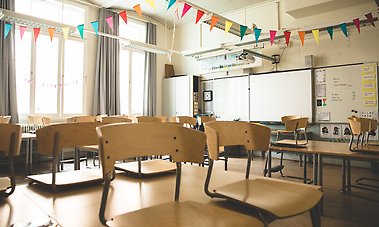
  • Classroom in Sweden

    What drives families’ school choices? Research project awarded SEK 5 million

    A new research project examines what drives families’ school choices. Do they choose schools based on quality, or on the types of pupils who already attend them? Jonas Vlachos, Professor of Economics at Stockholm University, and Helena Svaleryd, Professor at Uppsala University, have been awarded funding from Riksbankens Jubileumsfond.

    Department of Economics
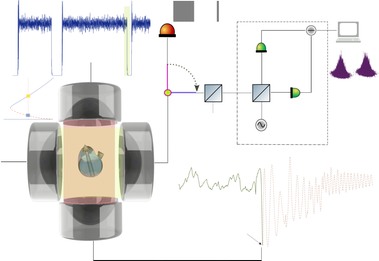
  • When light makes quantum jumps: tracing coherence between macroscopic states

    Light trapped inside an optical cavity can switch abruptly between two very different states – one bright, the other almost dark. In a new theoretical study, Th. K. Mavrogordatos at the Department of Physics, Stockholm University, proposes a method for probing the quantum coherence behind these remarkable jumps.

    Department of Physics
  • Empty freezer cabinets in a Swedish supermarket after a cyberattack on the refrigeration system.

    How can cyberattacks knock out freezers?

    When fridges and freezers in several European countries were hacked, food worth millions was destroyed. How can attackers get into these systems? And what will happen next? We asked cybersecurity researcher Fredrik Blix.

    Department of Computer and Systems Sciences
  • Stockholm University researchers attend COP31

    The UN climate summit COP31 takes place on 9–20 November in Antalya, Turkey. Turkey is the host country and chairs the summit, while Australia, represented by Climate Change Minister Chris Bowen, leads the negotiations themselves.

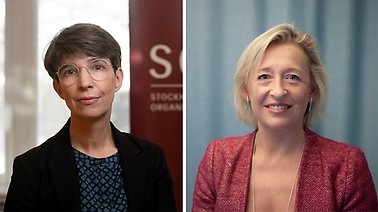
  • COP31: Why it’s important to see the glass half full in the climate gloom

    Expectations for COP31 are low, and frustration is high that emissions aren’t falling fast enough. But the international climate negotiations have delivered more than many realize, say two researchers at Stockholm University. The big problem, they argue, isn’t lobbyists but states whose economies run on oil.

  • The jobs divide: Growth in highly paid jobs linked to lower support for Brexit

    Where are people most likely to reject populist initiatives like Brexit, and why? A new study by Katy Morris from the Swedish Institute for Social Research (SOFI), Stockholm University, and the University of Leeds, highlights the importance of long-term changes in the occupational structure for understanding the geography of Brexit support.

    Swedish Institute for Social Research