
News

  • How can more people contribute as the dependency ratio rises

    As Sweden's population ages, fewer people of working age will be supporting a growing number of older people. In a report for the Expert Group on Public Economics (ESO), Professor Emeritus of Economics Eskil Wadensjö examines measures that could help more people work and remain active in the labour market for a larger part of their lives.

    Swedish Institute for Social Research

  • Gender gap persists among top-performing students

    Although women make up a majority of top-performing students in many countries, they remain underrepresented in science, technology, engineering, and mathematics (STEM).

    Swedish Institute for Social Research

  • The jobs divide: Growth in highly paid jobs linked to lower support for Brexit

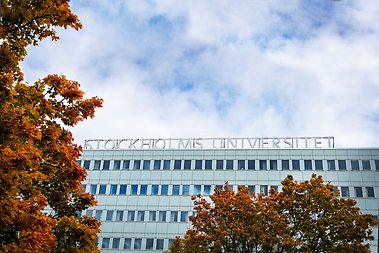
    Where are people most likely to reject populist initiatives like Brexit, and why? A new study by Katy Morris from the Swedish Institute for Social Research (SOFI), Stockholm University, and the University of Leeds, highlights the importance of long-term changes in the occupational structure for understanding the geography of Brexit support.
    Swedish Institute for Social Research

  • Apply for the Wallander Scholarship at SOFI

    We are now accepting applications for a postdoctoral position. The selected candidate will be nominated for Handelsbanken's Wallander Scholarship.

    Swedish Institute for Social Research

  • How do you measure income when income data are missing?

    Income data are often unavailable in historical datasets, international comparisons and survey studies. Researchers have now developed a new measure that estimates the economic position of an occupation based on its typical earnings level.

    Swedish Institute for Social Research

  • Our researchers awarded project grants from Forte

    Three researchers at SOFI have been awarded project grants from Forte, the Swedish Research Council for Health, Working Life and Welfare. Their projects examine marital agreements, attitudes towards gender equality, and long-term trends in the gender wage gap in Sweden.

    Swedish Institute for Social Research

  • Father and daughter on ice in hockey gear, other parents and children in the background.

    Intensive parenting culture is not a deterrent to childbearing intentions

    Fertility rates are on the decline in Sweden. At the same time, intensive parenting attitudes have become a norm. However, these two developments are not related in a way that we would expect, according to a new study by Sunnee Billingsley, Stefanie Möllborn and Gerda Neyer from Stockholm University.

    Department of Sociology
  • Mental health problems more common among younger adults

    Fifty years ago, mental health problems were more common among older people than among younger adults. Today, the pattern is reversed. An analysis of data from the Swedish Level-of-Living Survey (LNU) shows that younger generations are much more likely to report mental health problems than previous generations were at the same age, while such problems have decreased among older people.

    Swedish Institute for Social Research
  • Porträttfoto Erik Sjödin.

    Nordic research collaboration in labour law

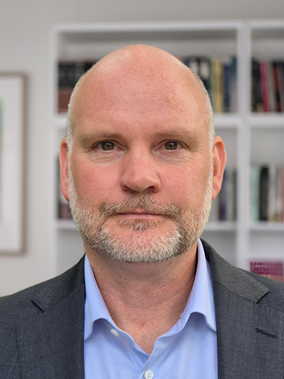
    How can we build a stronger Nordic research environment in labour law? One way is to create opportunities for early-career researchers to meet and exchange experiences across national borders.

    Swedish Institute for Social Research

  • Union-represented parents were less likely to lose their jobs during the pandemic but worked fewer hours

    What happened to working parents in the US when the pandemic hit, and what role did union representation play? A study of working parents in the United States finds that those covered by union representation were less likely to lose their jobs during the COVID-19 pandemic, but more likely to have their working hours reduced. Flexible work arrangements and leave policies accounted for part of the differences in employment outcomes.

    Swedish Institute for Social Research

  • Barbed wired border fence.

    Ideas of exclusion go beyond far-right movements

    Beliefs about who belongs in the society and who can be excluded are well established in mainstream political ideas of liberal democracy, according to recent studies by Vanessa Barker, professor of sociology. Additionally, the results suggest that tools of repression within criminal justice to punish and deter migrants have destabilising effects on the society.

    Department of Sociology