


Courses
The Doctoral School in the Humanities offers courses on PhD level.
All courses are free-standing, and are mainly meant for the PhD students at the Faculty. The courses are also open for PhD students at other faculties and universities in Sweden and abroad, and thus welcome all who are enrolled in third cycle studies, regardless of their home faculty or university. The courses are offered free of charge.
Since 2016, the Doctoral School has welcomed participants from more than 50 universities in 17 countries.
In the autumn semester of 2026, the Doctoral School offers a total of five free-standing courses.
PhD courses offered in Autumn 2026
Applications for courses offered in the autumn semester of 2026 were accepted between 15 May and 30 June. Late applications are still accepted for some courses, as indicated on the respective course pages.
From text to tech: Digital literacy and the transformation of history, 7,5 ECTS

Photo: Wikipedia
The aim of this course is to critically examine the technologies supporting historical research and to train participants in the critical handling of humanities data. Participants will develop a foundational understanding of theoretical concepts and gain practical experience in tools and methods for organising and analysing data, based on their own doctoral projects.
Open for late applications.
The Philosophy of the Cultural Sciences, 7,5 ECTS

The course provides an opportunity for reflection on methodological and philosophical aspects of research in the humanities. Students are expected to present their projects in class, from a methodological perspective, and the course content will to some extent be tailored to the specific interests of the group.
The Dynamics of Multilingualism: Affinities and Affordances, 7,5 ECTS
This course introduces theoretical and methodological frameworks to explore the global challenges of increased mobility and multilingualism. It engages with the emergence of new – often temporary – linguistic communities and the affordances that enable their existence. It examines how such communities are formed through communicative practices in education, on social media, and in other contexts.
Open for late applications.
Litteraturvetenskaplig teori 7,5 hp (Swedish)

The objective of the course is to facilitate a comprehensive and nuanced comprehension of the fundamental problem areas in literary theory, thereby preparing students for autonomous research and development endeavours.
Språkvetenskaplig text- och diskursanalys för humanister 7,5 hp (Swedish)

The course provides an in-depth insight into national and international text and discourse research through both classic and contemporary studies, and explores the types of questions that text- and discourse-analytical methods can address, as well as the contributions to knowledge they offer. Furthermore, the course fosters doctoral students' capacity to discern future research requirements and their individual contributions within the discipline.
Open for late applications.
Phd courses offered Spring 2027
Below are the courses offered in the spring semester of 2027. Applications open on 15 November and close on 15 December 2026.
Towards the Modern City: People, Spatiality and Social Change, 1850–2000, 7,5 ECTS

The course examines the transformation of European cities between 1850 and 2000, focusing on the modern city as both built structure and lived environment. It provides doctoral students with historical perspectives, knowledge of cities in welfare development, and analytical tools for comparative study, while relating urban history to segregation, inequality, and sustainability.
Methods for Handling of Text Data 7,5 ECTS

The course provides an introduction to methods for collecting, processing, and analysing textual data in the humanities and social sciences. Participants will gain both theoretical knowledge and practical experience of tools for corpus analysis, annotation, and text processing.
Lived Religion, representation and practice 7,5 ECTS
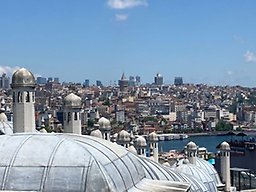
This course introduces doctoral students to the field of lived religion, examining how religious practice, belief, and identity are shaped and expressed in everyday life. Combining theoretical perspectives with ethnographic field studies, it explores how religion is represented and practiced in specific sites, developing analytical skills for studying contemporary religious life.
Previously offered PhD courses
Here you can find courses previously offered by the Doctoral School in the Humanities.
PhD courses offered by other departments and universities
Find courses offered at Stockholm University, by other universities in Sweden and the Nordic Countries, as well as within the CIVIS university alliance:
Contact
The Humanities Faculty Office
Research Officer
Mikael Kalm, PhD, Senior Lecturer
Administrator
Sandra Eriksson
Last updated: 2026-09-30
Source: Doctoral School in the Humanaties