Within a new graduate school in marine, climate and environmental issues, 12 doctoral students at several of Stockholm University's departments will be hired. The graduate school is directed towards students who are interested in understanding their own research in a broad and interdisciplinary context. A particular focus is on deepening the understanding and provide new knowledge of the specific conditions and challenges of the Baltic Sea in a changing climate.
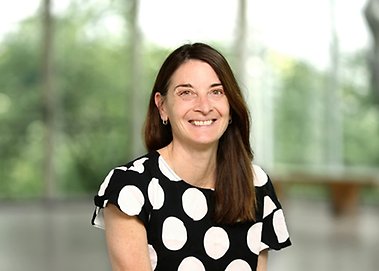
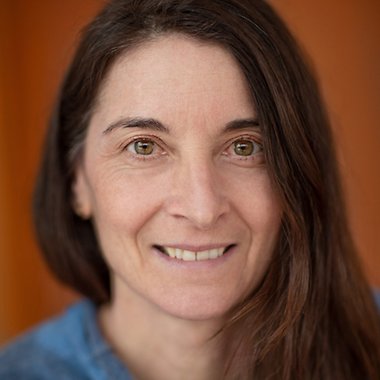
Rachel Foster is professor of microbial oceanography at the Department of Ecology, Environment and Plant Sciences. She is one of Stockholm University’s new professors who will be installed at a ceremony in the Stockholm City Hall on September 29.
The BIO-Lush consortium led by professor Aji Mathew from MMK/SUCCeSS has been awarded almost 5 M€ in funding from the EU-call Circular Bio-based Europe (CBE). The four-year project is planned to start in 2023 and will address a growing need to utilize biomass for sustainable and high-quality fibre extraction.
The seabed and the bedrock could play an important role for the green transition; for mining of minerals and storing of carbon dioxide. But the environmental consequences of such activities are not fully understood, showed the presentations at the last Baltic Breakfast.
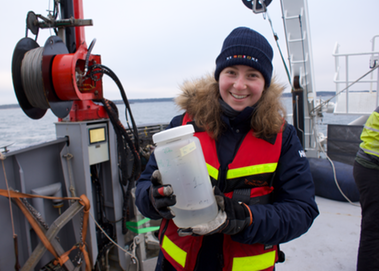
The world’s oceans play a central role in the global climate. Wallenberg Academy Fellow Rachel Foster, Stockholm University, is researching on marine plankton communities that impact nitrogen and carbon cycles. Plankton are of extreme importance for earth’s climate. They produce half of all oxygen, lock up enormous amounts of carbon and reduce carbon dioxide. But exactly how? And how long can they continue, now as the world heats up? Watch the video here
Department of Ecology, Environment and Plant Sciences
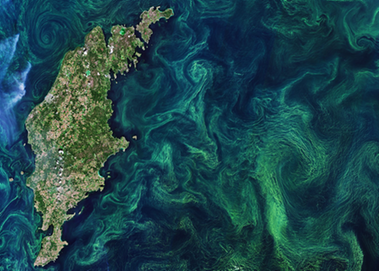
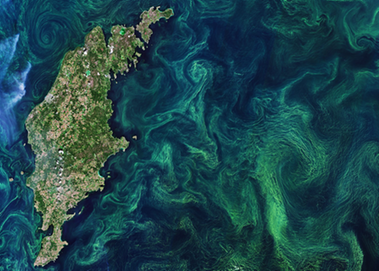
The Formas Scientific Council has awarded SEK 14.5 million to Inga Monika Koszalka, to lead a multidisciplinary project on forecasts of algae blooms, and their impact on water resources on Gotland.
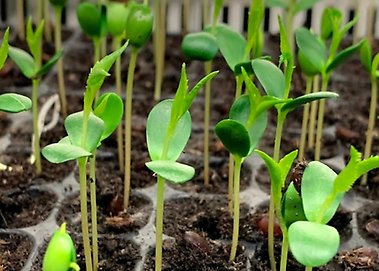
What defines us and other living organisms best: nature or nurture? Researchers at, among others, the Leibniz Institute and the Department of Ecology, Environment and Plant Sciences (DEEP) got another piece of the puzzle in a recently published study. Only recently, researchers were able to prove experimentally that even microorganisms can be inherited from one plant generation to the next via the seed. The article From seed to seed: the role of microbial inheritance in the assembly of the plant microbiome, which has just been published in the journal Trends in Microbiology, examines the process of microbial inheritance via the seed in more detail and identifies factors that significantly influence the assembly of the plant microbiome. With their basic work, the authors create an important milestone in microbiome research and point to a variety of possible and necessary research for the future. Experimental studies suggest that plants not only inherit genetic traits with their seeds, but also a complex microbiome consisting of fungi, bacteria and archaea.
Department of Ecology, Environment and Plant Sciences
The Baltic Sea Fellows initiative, a network of young Baltic Sea researchers from several disciplines, was launched to strengthen the environmental Baltic Sea research at Stockholm University. The results of this year's awarded research grants from the Swedish Research Council and Formas show that it is going well. The group of researchers has raised over 25 million Swedish crowns this year.
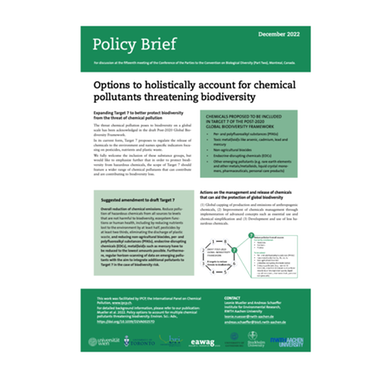
The Post-2020 Global Biodiversity Framework needs to consider additional groups of chemicals, according to a large international group of researchers. For the UN Biodiversity Conference, COP15, they have developed a perspective article and a policy brief with concrete proposals for better inclusion of hazardous chemicals in the forthcoming targets.
Rachel Foster has been promoted to professor at Department of Ecology, Environment and Plant Sciences (DEEP). We therefore have three questions for Rachel about becoming a professor. Did you always think you were going to be a professor? No. It was something I worked towards and in recent years after a few different accomplishments (research, collaborative efforts, and pedagogics) I felt motivated to apply.
Department of Ecology, Environment and Plant Sciences
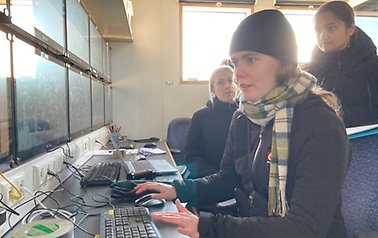
The newly built drifter balances at the end of the four-metre-long boat hook. In a few seconds it will be launched and tested for the first time. At best, it will provide measurement data and can soon be picked up again. At worst, it disappears, forever. It's November when Master students from the course in Physical Oceanography set sail on the research vessel Electra, together with researchers and PhD students from the Department of Meteorology at Stockholm University (MISU). Oceanographer and course leader Inga Koszalka and technician Joachim Dillner at MISU have designed and built drifters that, if they work, will give researchers a better idea of how ocean currents move in the Baltic Sea. That knowledge is needed, among other things, to see how ocean currents affect the oxygen content of the water and to be able to make forecasts for algal blooms during the summer. The drifters are one of several instruments that the Master students will learn to use during the sea excursion. They will also collect data from an instrument on the hull of Electra, called an ADCP (Accoustic Doppler Current Profiler), which measures ocean currents by bouncing sound waves off plankton and other suspended particles in the water.
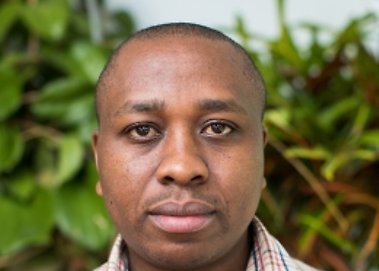
Barnabas Alphonce Tarimo defended his thesis titled "Patterns of fish larvae and zooplankton distribution in mangrove-seagrass seascapes of East Africa" the 4th of November. Discover more about his findings here. Read the full thesis here Abstract
Department of Ecology, Environment and Plant Sciences