


Performing Citizenship
Research projectPerforming Citizenship: Social and Political Agency in Non-Professional Theatre Practice in Germany, France, Britain, Sweden and Switzerland (1780-1850).
Discover the research at Stockholm University through our pages for research subjects, projects and research groups!
They also lead you to our researchers profile pages, our departments and courses and programmes.
Showing 1801-1820 of 2793 results
Performing Citizenship: Social and Political Agency in Non-Professional Theatre Practice in Germany, France, Britain, Sweden and Switzerland (1780-1850).
Performing Premodernity is a five-year research project based at the Department of Culture and Aesthetics at the University of Stockholm.
The Arctic is warming 3-4 times faster than the global average and already now shows rapid thaw of land and subsea permafrost, vegetation shifts, increased coastal erosion, sea ice decline and changes in ocean currents.
Peatlands cover vast areas in the permafrost region and store large amounts of soil organic carbon. In a future warmer climate, permafrost thaw will probably lead to a positive climate feedback due to increased emissions of greenhouse gases when more organic matter becomes available for decay.
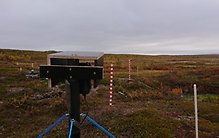
The aim of this project is to provide a holistic understanding of permafrost thaw, pollution, and human and environmental well-being in the Arctic.

Stereotactic radiotherapy is a highly successful radiotherapy modality for specific types of cancer involving the delivery of the treatment in one (radiosurgery) or very few sessions.
Personality psychology concerns relatively enduring structures and processes within individuals. These structures and processes can vary between different individuals and contribute to organization (coherence), continuity and stability (consistency) in people’s behavior.

The aim of the research project is to analyse the extent to which representatives of legal persons who have been made personally liable for the legal persons’ unpaid taxes and fees have rights to recourse against others.

Disability research deals with issues around societal barriers and structures that affect people with disabilities. The department's research is about increasing knowledge about disabling structures in society, with a focus on societal structures, social conditions, working life and active citizenship.

We aim to study the bioaccumulation and toxic impact of pesticide mixtures on aquatic biofilms, and to determine the influence of pesticide properties and the role of the biochemical composition of biofilms on pesticide bioaccumulation and toxicity.
We use time-resolved spectroscopic techniques to study each component of the respiratory chain of aerobic bacteria - assemblies of components and intact mitochondrial membranes. A long-term goal is to visualize the dynamic processes of respiration in 3D - to reconstruct “molecular movies” showing functional dynamics of complex molecular machines in action.
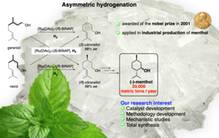
Stereoselective synthesis is a crucial process in organic chemistry and is extremely important in the field of pharmaceuticals, as the different enantiomers or diastereomers of a molecule often have different biological activity.
The Philippine History Forum is an educational project for students at all levels, aiming to promote dialogue between universities in the Nordic region and the Philippines through education and knowledge exchange.

The research group Philosophical and Critical Studies in Education generates knowledge about transformative process that effect institutions and people through engaging with critical studies of theoretical and philosophical perspectives on education and learning.
Stockholm University has a strong tradition in Practical Philosophy. We explore fundamental issues concerning human conduct. Some questions go back two millenia, others have surfaced recently. What is right and wrong? What does it mean to say that something is right or wrong? How ought we to act? Are there even objectively right answers to moral questions?

Research in theoretical philosophy is focussed on fundamental questions concerning reality, knowledge, mind, language, logic and philosophy of science. Some questions have been researched for two millenia, others have emerged recently.

The research group explores the potential of philosophy in schools and higher education, and works to develop knowledge about how philosophical thinking can be given a meaningful place in teaching and learning.
Philosophy of language studies the nature of language, its use in communication, its relation to thought and the world. Investigations range widely: from foundational questions concerning the constitution of linguistic meaning, the development of formal semantics for artificial or natural languages, the pragmatics of language use and its social significance.

Philosophy of mind investigates a broad set of questions concerning the mind and its nature. One set of issues relates to the so called mind-body problem. This includes research on the nature of consciousness, its relation to the brain and to behavior.

Stockholm University has a strong standing in the philosophy of science. It takes a meta-level look at the scientific process and asks questions such as: how does the scientific process work? In which sense and on what grounds can scientific investigations be successful? What is the relation between scientific results and truth?
