Research catalogue

Discover the research at Stockholm University through our pages for research subjects, projects and research groups!

They also lead you to our researchers profile pages, our departments and courses and programmes.

Refine
Research type

Research type

Status

Research areas

Research areas

Departments

Departments

Showing 1821-1840 of 2793 results

  • Philosophy of the social and behavioural sciences

    Research subject

    The philosophy of social science addresses philosophical questions raised by the social and behavioral sciences. That’s sciences dealing with human attitudes, beliefs, behaviors, practices, cultures, and institutions.

  • Phonetics

    Research subject

    Phonetics is about speech communication, that is, how humans create and perceive sounds, speech, and conversation. Stockholm University’s experimental phonetics research is carried out at the Phonetics Laboratory.

  • Photochemical pathways for bond rearrangements and spin dynamics in azides

    Research project

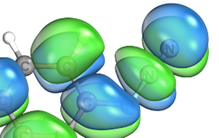
    The photochemistry of energy-rich azides (R-N=N=N) shows great diversity in organic synthesis. Precise determination of short-lived species is challenging, and theoretical simulations are important for unravelling mechanistic details in the reaction.

  • Photography

    Research subject

    The word 'photography' comes from the Greek words 'photos', meaning light, and 'graphé', meaning drawing. Literally, photography means 'drawing with light'.

  • Physical and geothermal properties of Arctic Ocean sediments

    Research project

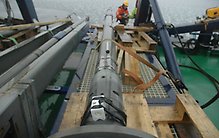
    Vast quantities of methane are believed to be trapped within sediments on the continental shelves and slopes of the Arctic Ocean in the form of gas hydrate.

  • Physical Chemistry

    Research area

    All material things around us (and we ourselves) consist of molecules. Molecules consist of atoms, atoms consist of electrons and atomic nuclei. Behavior of all these small parts of materia is determined by the fundamental laws of quantum mechanics.

  • Physical Geography

    Research area

    Physical Geography is a wide-ranging scientific field dealing with the diverse physical and biological features of Earth, their characteristics, processes, patterns and interactions with humans.

  • Physics

    Research area

    Physics is the science of studying the constituents of matter at a fundamental level and the forces that affect them. It studies the smallest elements of nature, but also the evolution and structure of the universe.

  • Pia Harryson's research group

    Research group

    The Harryson group investigates the molecular function of the dehydrins, a class of structurally disordered stress proteins that are induced under drought, cold or high salt content in soils, to broaden our understanding of how plants adapt to altered environmental conditions. 

  • Pia Ädelroth's research group

    Research group

    The Ädelroth group aims at elucidating the structure-function relationship, assembly, cross-reactivity, energy conservation and evolution of the nitric oxide and oxygen reducing terminal oxidases. An important application for this line of research is the feasibility of drug/antibiotics development.

  • Pictorial Knowledge and Lantern Lectures in the 19th-Century Media Culture

    Research project

    A research project between image science and media history.

  • Places and Boundaries: Migrant Children’s Educational Transitions in Sweden

    Research project

    Research shows that an increasing segregation has created a tangible inequality between different municipalities and individual schools. Where children and young people live and which school they attend has become of decisive importance for the possibility of reaching the knowledge requirements and continuing their studies.

  • Plankton-fish interactions: an understudied link in Baltic Sea food webs and fisheries management

    Research project

    Small-sized pelagic fish have a central role in marine food webs as they control production of predatory fish and at the same time feed on zooplankton and indirectly control algal blooms.

  • PlantFish

    Research project

    PlantFish is a three year research project about the role of interactions between benthic plants and large predatory fish in coastal areas of the Baltic Sea. The project examines the functional role of vegetation and predatory fish and how they interact, with focus on the ecosystems of shallow Baltic Sea bays.

  • Plant Physiology

    Research subject

    Plant Physiology studies the life processes of photosynthetic organisms. The aim is to better understand how plants develop and function in changing environments.

  • PLANTS

    Research project

    Planners as agents for the transition towards sustainable cities and regions – implications for future needs in expertise and education

  • Plant Sciences

    Research area

    The plant science research covers several areas, among them life processes, ecological interactions and the evolutionary history of plants. The research is based on laboratory work as well as field work, performed in Sweden, in Mediterranean climates, and in the tropics, among others.

  • Plant Systematics

    Research subject

    Plant Systematics research encompasses plant diversity, phylogeny, and evolution. The research seeks explanations for species richness, character evolution and diversity distribution in time and space. 

  • Plastic in Arctic Clouds: Microplastics And their influence on ice-Nucleation (PAC-MAN)

    Research project

    Do microplastics reach Arctic clouds and influence how ice forms? PAC-MAN combines cloud sampling at the Zeppelin Observatory in Svalbard with laboratory experiments and atmospheric modelling to provide the first direct evidence of microplastics inside clouds and their climate impact.

  • Plastics, Chemicals, and Pollution: How Science Can Guide Global Policy for a Healthier Planet.

    Research project

    This FORMAS project aims to enhance global decision-making on chemicals and plastic pollution by providing robust and science-based guidance to policy-makers at key international forums like the United Nations Environment Assembly (UNEA) and the UN Environment Programme (UNEP).