Research catalogue

Discover the research at Stockholm University through our pages for research subjects, projects and research groups!

They also lead you to our researchers profile pages, our departments and courses and programmes.

Refine
Research type

Research type

Status

Research areas

Research areas

Departments

Departments

Showing 161-180 of 2793 results

  • ASSESS - Assessment of Knowledge in Educational Systems

    Research project

    ASSESS is a research school focused on conducting knowledge assessments within teacher education. The purpose is to enhance research competence and educational science research to better assess and evaluate knowledge and skills.

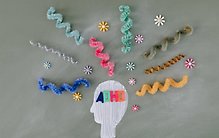
  • Assessing ADHD

    Research project

    ADHD is one of the most prevalent psychiatric conditions, consuming a large proportion of resources in psychiatric care, often accompanied by long waiting lists to receive proper assessment.

  • Assessing Nuclear Power Reliability: A Global Analysis of Unplanned Outages

    Research project

    This project investigates the reliability of nuclear power by analyzing global data on unplanned reactor outages. The findings will provide insights to help strengthen energy security, improve reactor performance, and support resilient low-carbon power systems.

  • Assessing polarization of non-lethal violence via data triangulation

    Research project
  • Assessing the Feasibility of Marine Cloud Brightening – Physical Processes, Climate Effects, and Ethical Considerations

    Research project

    Aerosol-cloud interactions are one of the main uncertainties climate models and future climate projections. At the same time, they form the basis for Marine Cloud Brightening (MCB) – a suggested method for deliberate climate intervention.

  • Assessing the role of nuclear power in designing a robust energy system

    Research project

    Nuclear power has an overall high capacity factor, but it also has operational uncertainties due to unplanned outages. This project aims to investigate how the operational uncertainty might affect the role of nuclear power in robust energy system design for Sweden.

  • Assessment of pedagogical competencies

    Research project

    Assessment of pedagogical and scientific competence must be done with equal care when employing academic staff. This project aims to investigate challenges associated with assessing pedagogical competence in academics’ teaching portfolios.

  • Assimilating and producing text via assistive technology

    Research project

    An alternative to read and write for pupils in compulsory school for pupils with learning disabilities.

  • Assistive technology for students with severe writing difficulties

    Research project

    The project focuses on writing strategies and assistive technology. The participants are students with severe writing difficulties. They are aged 10-12 years. All students have received special educational support but continue to have challenges with writing.

  • Astrid Gräslund's research group

    Research group

    The Gräslund group works on two groups of biomolecules – ribonucleotide reductase and bioactive peptides – with a special focus on their membrane interactions. The aim is to relate structure, dynamics, and interactions studied by spectroscopy to the biological reactions and functions.

  • Astronomy

    Research area

    Astronomy is the science of the Universe. This includes just about everything from our own Sun, the planets and moons in our solar system and beyond, stars, interstellar gas clouds, galaxies, to the edge of the observable Universe. Within the subject there are two main methodological paths: observational and theoretical astronomy.

  • Astroparticle and Elementary Particle Physics

    Research subject

    The division for astroparticle and elementary particle physics conducts research within large international experiments, in order to deepen our understanding of the universe and its fundamental constituents.

  • Astroparticle Physics

    Research group

    In astroparticle physics we are interested in the constituents of the Universe, most notably the nature of dark matter. In our research we connect elementary particle physics, astronomy and astrophysics to explore the dark matter, both theoretically, but also phenomenologically together with experimental groups.

  • A study of cravings and relapses among people with addiction problems

    Research project

    Craving is absolutely central to addiction problems. Unfortunately, the knowledge about craving is still rudimentary. A crucial, but largely unexplored question concerns what triggers craving in everyday life.

  • Asymmetrical language proficiency in dialogue interpreting

    Research project

    This experimental study investigates the correlation between cognitive load, directionality and the Swedish-Spanish dialogue interpreter’s (asymmetrical) language proficiency.

  • Asymmetric synthesis of boronic acids and organofluorine compounds by organocatalysis

    Research project

    This project is focused on development of new synthetic methodology for organic synthesis of chiral fluorine and boron containing species.

  • ATEM Attendance Engagement Mentorship: promoting school engagement with Check & Connect – a structured mentoring intervention

    Research project

    The project focuses on how the Check & Connect mentoring programme can strengthen students’ school engagement and attendance, while helping to prevent problematic school absenteeism.

  • A test to assess chemical persistence in the natural environment

    Research project

    We will optimize a simple laboratory test that measures chemical persistence in water-sediment suspensions and apply this test in diverse aquatic environments with the overarching objective of developing guidance for its use in regulation.

  • ATLAS - Accelerator based particle physics

    Research group

    The ATLAS experiment detects the particles created when protons or heavy ions collide at very high energies in CERN's largest accelerator - the Large Hadron Collider, LHC. This is where the Higgs particle was discovered in 2012.

  • Atmosphere, ocean and climate science

    Research area

    Research in atmospheric science, oceanography and climate science covers a wide range of fields. For example chemical and dynamic processes in the atmosphere, polar stratospheric clouds, ocean currents, and aerosols are studied.