Research catalogue

Discover the research at Stockholm University through our pages for research subjects, projects and research groups!

They also lead you to our researchers profile pages, our departments and courses and programmes.

Refine
Research type

Research type

Status

Research areas

Research areas

Departments

Departments

Showing 1521-1540 of 2793 results

  • Mathematical analysis

    Research group

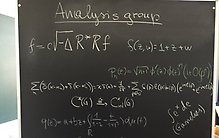
    Mathematical analysis deals generally with problems that involve questions like how does a quantity develop, that is, how does it depend on variables/parameters? In our group we are mainly working in operator theory, in particular, differential operators, as well as in complex analysis.

  • Mathematical logic

    Research group

    Logic as an academic subject is the study of reasoning, and mathematical logic is the study of mathematical reasoning in its various precise forms. This research group is active in several areas of the field including, constructive mathematics, type theory and category-theoretic logic, as well as the philosophical aspects of logic and mathematics.

  • Mathematical statistics

    Research group

    We focus on applications in biostochastics and biostatistics, discrete random structures, and finance and insurance.

  • Mathematical Statistics

    Research subject

    The research in mathematical statistics comprises probability theory and statistical inference theory with applications in many domains.

  • Mathematics

    Research area

    Mathematics is a diverse field, which at Stockholm University is structured in the three subjects of mathematics, mathematical statistics and computational mathematics.

  • Mathematics

    Research subject

    The division of mathematics is structured into three groups, which are conducting research in algebra, geometry, topology and combinatorics, in analysis and in logic, respectively.

  • Mathematics Education

    Research subject

    Research in mathematics education is the systematic study of the many facets of mathematics as a subject of teaching and learning in current society. The research covers all the levels of the educational system.

  • Mats Johnsson group

    Research group

    We focus on developing inorganic electrocatalysts for water splitting, especially for the oxygen evolution reaction as the hydrogen reduction reaction is easier to catalyze.

  • Mats Nilsson's research group

    Research group

    Our work is focused on the development of novel molecular analysis concepts for research and diagnostics, focused on infectious and cancer diagnostics. Our approach is interdisciplinary, spanning from physics to clinical research, with the goal of providing industrial products available to the scientific community and hospital laboratories.

  • Matteo Costantini group

    Research group

    Development of methodologies for organic synthesis based on electronically unsaturated main-group elements.

  • Mattias Edén research group

    Research group

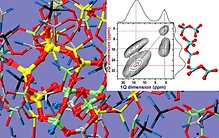
    Solid-state NMR spectroscopy, molecular dynamics (MD) simulations, and density functional theory (DFT) calculations. Our recent work is focussed on establishing structure-composition-property relationships of disordered materials:

  • Mechanisms by which pathogens manipulate vector behaviour to enhance transmission

    Research project

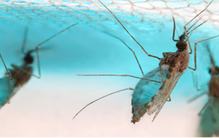
    Pathogen renders host more attractive to vector, increasing the risk of its transmission.

  • Mechanistic investigations of antibiotic–drug interactions

    Research project

    Many pharmaceutical drugs are known to alter bacterial physiology and influence the efficacy of clinically important antibiotics. In this project, we aim identify novel antibiotic-drug interactions and determine their underlying molecular mechanisms.

  • Mechanistic understanding of phytoplankton sensitivity to chemical mixtures: ecological consequences

    Research project

    We will investigate how a vital group of organisms in the earth's cycle, phytoplankton, is affected by the chemicals constantly present in the environment, as well as to better understand how conditions in the environment affects the sensitivity of phytoplankton to chemicals.

  • Media, materiality and literature

    Research subject

    Media-oriented literary studies are concerned with how literature is affected by its physical channels, but also how it relates to other art forms and media.

  • Media and Communication Studies

    Research area

    Media and communication studies is a field that focuses on the most pressing issues of our time, as they appear at the intersection of communication, technology, politics and culture. We explore, in various ways, the basis for and content of mediated communication, its roles in society and in everyday life.

  • Media History

    Research subject

    Media history deals with the relationship between different forms of media, and the materiality of media, in a historical perspective.

  • Media Practices and Technological Media Studies

    Research subject

    Media practices and technological media studies is a research area which combines studies of how media are being used in various, more or less colloquial, contexts, and studies of how the functionality and design of media can influence and be influenced by these contexts.

  • Mediating the Maghreb: Literary Creation, Institutions, Circulation.

    Research project

    Internationellt samarbete 2021-2022 - STINT

  • Medical Radiation Physics

    Research subject

    Medical Radiation Physics is a vast and complex translational research topic that deals with radiation physics applied to medicine and biology for medical radiation imaging and radiation therapy.