Michelangelo's The Last Judgment and the Celebration of Tenabrae in the Sistine Chapel
Research projectThis study will reinterpret Michelangelo’s The Last Judgment (1535-1541) in the Sistine Chapel.
Discover the research at Stockholm University through our pages for research subjects, projects and research groups!
They also lead you to our researchers profile pages, our departments and courses and programmes.
Showing 1561-1580 of 2793 results
This study will reinterpret Michelangelo’s The Last Judgment (1535-1541) in the Sistine Chapel.
Molecular SeaLab is a joint research venture between the Baltic Sea Centre at Stockholm University and the Environmental Genomics group at SciLifeLab. By combining biogeochemical, ecological, molecular and meta-omic expertise and know-how, the aim is to understand the fundamental microbial processes of coastal ecosystems.
SeaLab is a joint research venture between the Baltic Sea Centre at Stockholm University and the Environmental Genomics group at SciLifeLab. By combining biogeochemical, ecological, molecular and meta-omic expertise and know-how, the aim is to understand the fundamental microbial processes of coastal ecosystems.
SeaLab is a joint research venture between the Baltic Sea Centre at Stockholm University and the Environmental Genomics group at SciLifeLab. By combining biogeochemical, ecological, molecular and meta-omic expertise and know-how, the aim is to understand the fundamental microbial processes of coastal ecosystems.
Will the ice continue to disappear at an ever-increasing rate as the exposed ocean surface absorbs increasing amounts of solar radiation? Or might conditions become progressively more favorable for biological activity and associated cloud-formation, decreasing the amount of solar-radiation received at the surface?

Microeconomic research at Stockholm University covers a range of topics. Projects study questions about the relation between law and economics, social norms and networks.

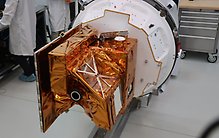
Middle atmosphere research at MISU focuses on altitudes between about 10 and 130 km. We use satellites, sounding rockets and ground-based instruments to explore this fascinating part of our planet. As a current highlight, we launched Sweden’s new research satellite in November 2022: MATS.
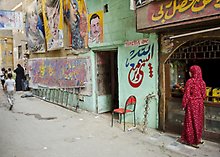
Research in this section covers various areas of study related to the Middle East and North Afria, ranging from Arabic and Semitic languages and literature to area studies, including politics, economy, history, sociology, anthropology, among others.

Research in this section covers various areas of study related to the Middle East, ranging from Arabic and Semitic languages and literature to area studies, including politics, economy, history, sociology, anthropology, among others.
Inequality in the length of life is the most fundamental of all inequality, but has been overlooked in the study of international migrants. For migrants, this represents a complex mix of their previous conditions in the origin country, the migration process, and current and often disadvantageous conditions in the host country.
This project deals with a critical dimension of the intensification and deepening of circular migration, namely the expansion of what we term “migrant preparatory training,” vocational education in the deployment of low-skilled documented international labor migrants from sending to receiving countries.
Migrant Trajectories is a research programme that explores the life trajectories of migrants from their arrival in Sweden to the present, focusing on the five main life domains – geographical residence and housing, family formation, labour market participation, educational careers, and social security – and the interrelationships between them.
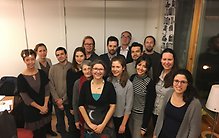
PhD project that aims to examine migrants' access to employment and labour law protection in Sweden.
This project investigates migrants’ experiences of language education and language learning from a longitudinal perspective.
This research domain focuses on multiple relationships between migration and education. Migration can affect the education system both indirectly and directly. Indirect impact relates to the consequences for local schools of increases in the number of migrants settling in or being referred to certain residential areas.

Applying a social determinants of health perspective, we study how risk factors, health, disease and mortality are distributed between migrants and natives. Specifically, we investigate how various downstream and upstream social factors contribute to the development, continuity, or reduction of health inequalities by country of origin.

Migration is a key factor in contributing to population change, with different impacts on population structures dependent on whether people are moving into or out of a particular geographical area.


The group develops lignin-based functional materials for sustainable energy and environmental applications.
The research project investigates how the Sami people’s exemption from military conscription in Sweden came about. It thereby contributes new and important knowledge about racism and discrimination against the Sami and the role of conscription the in settler colonial expansion of nation-states.