Management, organization and society
Research subjectResearch in management, organization, and society focuses on the individual, the organization, society, and the environment.

Discover the research at Stockholm University through our pages for research subjects, projects and research groups!
They also lead you to our researchers profile pages, our departments and courses and programmes.
Showing 1481-1500 of 2793 results
Research in management, organization, and society focuses on the individual, the organization, society, and the environment.
Striving to limit global warming, there is an increased scientific focus on the feasibility of realizing low-emission scenarios where CO2 is actively removed from the atmosphere.
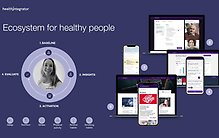
Digital business ecosystem involves many actors and can be difficult to manage. This PhD thesis project aims to address management concerns by developing a modelling method supporting the dynamics and resilience of digital business ecosystems.
Since the turn of the millennium, a research group has studied the phenomenon of shared leadership between managers in Swedish working life. Managerial shared leadership is a practice that goes beyond traditional, singular ways of organising leadership functions. It has long been hidden behind our societies’ individualistic, heroic view of leadership.
A new manager enters the workplace with no previous knowledge of employees, organizational culture, or history and is supposed to lead a development project for six months with no future in the business. This scenario is increasingly common in contemporary working life. But what happens when even the manager is there temporarily?
In this PhD thesis project, the KYKLOS method is developed. Its purpose is to provide methodological and tool support for changing organizations using enterprise modeling and a capability-oriented approach.

The project Managing Conflicts within the Wild Ungulate Legal Framework examines the role of legal regulation in the governance and management of wild ungulate populations in Sweden.
The overall aim of this project is to explore the link between mangrove ecosystem services (MES) and community livelihoods and well-being, changes in MES and associated drivers of change, adaptation options and their management in Tanzania, using the Rufiji Delta and Pangani Estuary as case studies.
Topological semimetals are a class of materials in which electrons obtain exotic propoerties that are not found in elementary particles in nature. We examine Coulomb interaction in these.
The MapIneq project studies the trends and drivers of intergenerational, educational, labour market and health inequalities over the life course during the last decades.
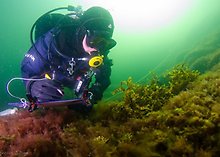
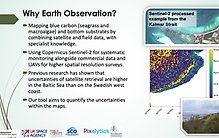
Seagrass meadows and seaweeds are vital for marine life, carbon storage, and shoreline protection, but they are declining due to human impacts and climate change. To safeguard these ecosystems, we need better ways to track where they grow and how they change.
The project want to generate a nuanced understanding of how inequity in socio-material conditions can affect students' opportunities to learn mathematics.

How can culture and urban planning be integrated, so that culture can be better used as a resource for social development? This project aims to develop those types of processes.
Marital Contracts, Economic Security, and Gender Equality The MARCON project examines how marital agreements are used in Sweden and how they affect economic security and gender equality, drawing on unique population-wide data on registered marital agreements.

MaRCU is a research group that conducts research focused on various mathematical concepts, such as functions. Other areas, like algebra, statistics, and skills such as problem-solving and reasoning, are also central to their research.

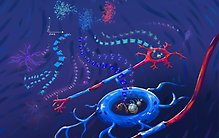
The Bartosovic group is interested in epigenetic programs that regulate gene expression in the central nervous system.
What happens when religious traditions become so deeply embedded in society that they come to be perceived as neutral? This project examines how Lutheran Protestantism has shaped the Swedish school system and how this legacy continues to influence education today.

The Marine Ecological Laboratory (MEL) at DEEP carry out field sampling and analyses of water chemistry, plankton, benthos and macrophytes with focus on the Baltic Sea. The lab is accredited through Swedac and is a leading lab in many areas, particularly regarding nutrient analyses.
The field embraces the study of the geology and history (paleoceanography, paleoclimatology, marine cryosphere) of the oceans using marine sediment archives.

Oceans and seas cover more than 70 percent of the Earth’s surface. Despite this, we know more about space than about what happens beneath the water’s surface. At Stockholm University, research is underway to deepen our understanding of the oceans and how they are connected to human activities.