


Early modern art
Research subjectThe early modern period stretches from the mid 15th century to around 1800 and covers the art historical styles of Renaissance, Baroque, Rococo and Neoclassicism.

Discover the research at Stockholm University through our pages for research subjects, projects and research groups!
They also lead you to our researchers profile pages, our departments and courses and programmes.
Showing 641-660 of 2793 results
The early modern period stretches from the mid 15th century to around 1800 and covers the art historical styles of Renaissance, Baroque, Rococo and Neoclassicism.
The Early Modern period (c. 1500-1800) evades easy characterization. Traditionally it has been regarded as a transition period between Medieval and Modern times in European history. However, historians today are more interested in global developments and their local manifestations.

We study how landscapes are shaped and changed over time through natural processes such as erosion, weathering and colonization of plants and animals, as well as how human activity affects these processes through land use and climate change.

The project examines the role of meals as pedagogical spaces within religious traditions. From a religious education perspective, it explores how food and drink contribute to religious socialization, the transmission of values, and identity formation in homes, schools, and religious communities.

The Ecography Lab at the department is engaged in an ongoing research project focusing on environmental and multispecies anthropology, with the aim of combining ecology and ethnography into one ecographic method and way on anlysis.
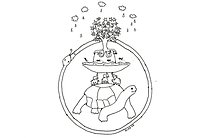
Ecological research studies the distribution and abundance of species in time and space, and the interactions among organisms and with their environment.
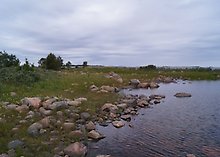
We investigate ecological patterns and processes in coastal environments, the links between biodiversity, ecosystem functions and biogeochemical cycles, and the effects of human impact and restoration measures on ecosystems.
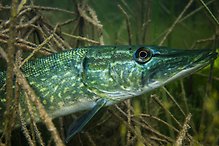
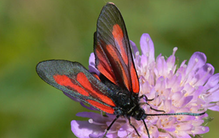
In this project we study habitat preferences, population dynamics, phenology and host plant preferences in six co-occurring species of burnet moths in southern Sweden. Yearly inventories have been carried out since 2012 and currently include about 100 sites with burnet moths.
Economic abuse (EA) takes different forms and is a widespread yet under-researched form of intimate partner violence (IPV) affecting large parts of the population. The project aims to explore how EA is experienced, framed and dealt with on and across micro, meso and macro levels in Sweden.

Firms around the globe are increasingly connected through their supply chain and their managerial social networks. These networks may create incentives for firms to become more sustainable, because the networks can channel climate impact of one firm to interlinked firms.
Why are some countries rich and others poor? When does inequality trigger social conflict? How do financial crises occur? With a historical perspective, we can reach in-depth understanding how to answer these questions.

Research in economics seeks to answer fundamental questions related to the workings of the economy, how to best utilize limited resources and how to design economic policies conducive to a desirable and sustainable economic development.

Economic sociologists analyze economic phenomena with sociological theories and perspectives. Sociologists have always been interested in understanding and explaining economic phenomena, from the household’s economy to the modern market society.

The study of species interactions involves both pair-wise interaction, entire food webs, how these are affected by the surrounding environment and ecosystems.

The marine ecosystem around the North Pole, the Central Arctic Ocean (CAO), is in fast transition from a permanently to a seasonally ice-covered ocean as a result of global warming. The sea-ice loss will enable summer access to the CAO for non-icebreaking ships, including fishery vessels, in the near future and this project is assessing the impact.
We develop models to facilitate decision-making at national and international level, particularly with regard to eutrophication and its links to climate change and higher nutrient levels.
The Baltic Nest Institute (BNI) at Stockholm University provides scientific basis for ecosystem-based management of the Baltic Sea by maintaining and developing data bases and models with a holistic Baltic Sea perspective.
Exploring Causes of Species and Trait Alterations in Terrestrial ecosystems: Impacts and Consequences.
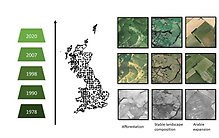
How can schools teach about the relationship between religion and science? The project explores the points of contact between religion and science, the educational potential such contact zones or intersections may hold, and how they can be translated into teaching practice in the classroom. The aim is to provide research-based support for teachers and for teacher education.

Educational philosophy is about philosophical foundations for pedagogical issues. It can be about epistemological, moral-philosophical and aesthetic studies regarding learning, teaching, school and education in national and international contexts.