


Research catalogue
Discover the research at Stockholm University through our pages for research subjects, projects and research groups!
They also lead you to our researchers profile pages, our departments and courses and programmes.
Refine
Showing 2681-2700 of 2793 results
USER-GRAM: Uncovering how Speaker Efficiency Reshapes Grammar
Research projectEfficiency shapes grammar, yet the changes it triggers spread into contexts it cannot license. USER-GRAM asks how efficiency operates diachronically, and what becomes of the structures it leaves behind.
User participation and innovation to increase person centering in social services
Research projectDespite a strong emphasis on person-centered care in social service provision, scientific knowledge is limited regarding the actual impact and how these goals can be realized.
Using AI to predict the retreat of glaciers
Research projectThis project explores some of the most inaccessible fjords in the Northern Hemisphere to map the seafloor and trace evidence of past and present glacier movement.

Using OLC I Sentinel-3 data to assess the impact of climate change in coastal waters and lakes
Research projectSatellite observations provide new opportunities to monitor how climate change affects coastal and inland waters. By combining advanced remote sensing with environmental monitoring data, this project develops methods to track changes in water quality, runoff and biological productivity in the Baltic Sea and Swedish lakes.
Using rational models to interpret results of experiments in speech perception.
Research projectExposure to unfamiliar non-native speech tends to improve comprehension. One hypothesis holds that listeners adapt to non-native-accented speech through distributional learning—by inferring the statistics of the talker’s phonetic cues.
U-Train: Training to Teach Online in Wartime and After
Research projectThe U-Train project addresses the needs regarding design and delivery of online courses during wartime and after, as a part of reconstructing the higher education sector in Ukraine. The project engages teachers from Ukrainian universities to complete pedagogical training which is hard to accomplish in the turmoil of war.
Utveckling av kunskapsstöd för barns delaktighet vid matchning mellan barn och familjehem inom socia
Research projectWallenberg Academy Fellows tackle issues in future research
Research projectWill future computers operate solely using light? Could human hearts be healed in the same way as those of ribbed newts? How do dwarf galaxies form and develop, and how can we improve the assessment of risk probabilities linked to catastrophes? These are just a few of the research questions that this year’s Wallenberg Academy Fellows will be examining.
Wallenberg Centre for Quantum Technology (WACQT)
Research projectWACQT is a national research programme, coordinated from Chalmers, that aims to take Swedish research and industry to the forefront of quantum technology.
Values, Choices and Uncertainty in Modelling of future climate (VaChUM)
Research projectIn an interdisciplinary project we explore the role of values in shaping the way researching climate science is planned, performed and presented.
Wanting to be here - family life and belonging in rural northern Sweden
Research projectThe aim of this doctoral thesis project is to study and analyze the everyday life of rural families with children in the sparsely populated areas of northern Sweden.
Variation in the texts of Georg Mancelius
Research projectEmploying a single-author corpus for the study of language variants.
Varieties of Democracy (V-Dem)
Research projectVarieties of Democracy (V-Dem) is an unique approach to conceptualizing and measuring democracy. They provide a multidimensional and disaggregated dataset that reflects the complexity of the concept of democracy as a system of rule that goes beyond the simple presence of elections.
Warmer and darker climate: Effects on mental health and health behaviors (CLIMENT)
Research projectClimate change has increased temperatures in Scandinavian countries. Changes in winter temperatures have caused increased rainfall and decreased snowfall. Moreover, increased cloudiness has reduced the amount of solar radiation reducing the daylight exposure in already dark winters.
WASP-ED work area 4: Pedagogical development and learning analytics
Research projectRecent developments in AI affect us in many ways, also in higher education. The research project “WASP-ED work area 4: Pedagogical development and learning analytics” is a part of the national WASP-ED program which aims to increase AI capability and capacity in Sweden.

WASP-HS: AI and Law
Research projectResearch Project that is a part of the national research program The Wallenberg AI, Autonomous Systems and Software Program – Humanity and Society (WASP-HS).
WASP-HS: The Rule of AI - AI, Regulation and Society
Research groupThe research environment The Rule of AI – AI, Regulation, and Society within WASP-HS examines how AI affects legal and societal governance systems.
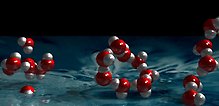
Water, Ice and Aqueous Solutions
Research projectIt is known since several decades that many properties of water such density, compressibility, heat capacity etc. become strongly anomalous as the temperature decreases. In particular, this deviation from a simple liquid behaviour becomes strongly enhanced as water is cooled below the freezing point into the metastable supercooled regime.
Water use, water quality/quantity and biodiversity across landscapes:
Research projectSynergies and trade-offs in an era of climate change and modernization.