Ulrika Nilsson group
Research groupOur research is focused on the development of analytical methods and techniques enabling studies and measurements of compounds involved in skin sensitization (contact allergy).

Discover the research at Stockholm University through our pages for research subjects, projects and research groups!
They also lead you to our researchers profile pages, our departments and courses and programmes.
Showing 2641-2660 of 2793 results
Our research is focused on the development of analytical methods and techniques enabling studies and measurements of compounds involved in skin sensitization (contact allergy).
The group’s research focuses on bioengineering and bioanalytics, with a particular emphasis on biopolymer research.

Welcome to the group of Ultrafast Dynamics in Condensed Matter!
An often forgotten energy consumer is the internet. Data centres, where information is stored in the form of magnetic bits, waste most of their energy as heat. Improve the control over magnetic information is crucial for our society is to prosper.
Solid catalysts are frequently used to enhance the rate or selectivity of desirable chemical reactions. We aim to study the underlying mechanisms of these reactions by examining model catalytic systems.
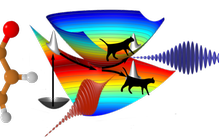
Modern light sources like free electron lasers and high harmonic generation sources can provide brilliant, broadband and ultrashort pulses of light. This opens up new possibilities to investigate non-adiabatic phenomena in molecules.
The project uses life stories as a method. Empirically, it is based on in-depth interviews with 15 unaccompanied children and young people originating in Afghanistan.
This project explores precarious work in Sweden from the 1960s to the early 2020s, focusing on atypical contracts, job instability, and unemployment. It examines long-term trends vs. short-term fluctuations, and how they affect income, health, and differ by education, gender, immigrant status, and urbanity.

Emotions play a crucial role in intergroup conflicts by motivating support for aggressive or conciliatory policies and behaviors.

Economy issues are important to understand and manage, yet they are also complex to teach and to grasp. This project explores how teaching can support upper secondary students’ holistic understanding of economics and develop their critical thinking.

Understanding changes in levels of occupational sex segregation in Sweden and Europe during half a century

The aim of the project is to examine changing and enduring attitudes towards epilepsy and how these changes have affected access to school and education for people with epilepsy.
The project "Understanding health inequalities experienced by self-identified sexual minorities, same-sex partners, and their children", aims to broaden the knowledge about health inequalities experienced among those who identify themselves as belonging to a sexual minority and their children, as well as among those living in a same-sex relationship.

Savannas are a globally important ecosystem for climate change and grazing wildlife and livestock. Fire is a major driver of savanna vegetation dynamics, and we aim to better understand how fire management affects plant species distributions.

The "Cell differentiation and coordination in tissues" group investigates the formation and organization of the plant carbon biomass that is accumulated in plant cell walls.
The project analyses how massmedia distribute scientific knowledge of the brain to the general public. By taking texts published in Swedish daily newspapers during one year (2019) as a point of departure it aims to further the understanding of how neuroscientific knowledge, and the value of such knowledge, is presented in massmedia.

Understanding the Roles of Origin and Destination: Behavioral Patterns and Health among the First and Second Generation of Finnish Migrants in Sweden

The project will offer unique insights into decision-making processes influencing how EBIs are used in practice. Such knowledge is needed for a more granular understanding of how practitioners manage the fidelity to and adaptation of EBIs and thus, ultimately, how the value of implementating EBIs can be optimized.
There is scientific consensus on the significant alteration of the nitrogen cycle from local to global scales caused by human activities.
Mapping out socio-economic status inequalities between and within Swedish households.