


How to be successful in applying for ERC funding
Maja Schlüter, professor at Stockholm Resilience Centre, has been very successful in applying for European Research Council (ERC) grants. Read about her experiences in applying for ERC funding.
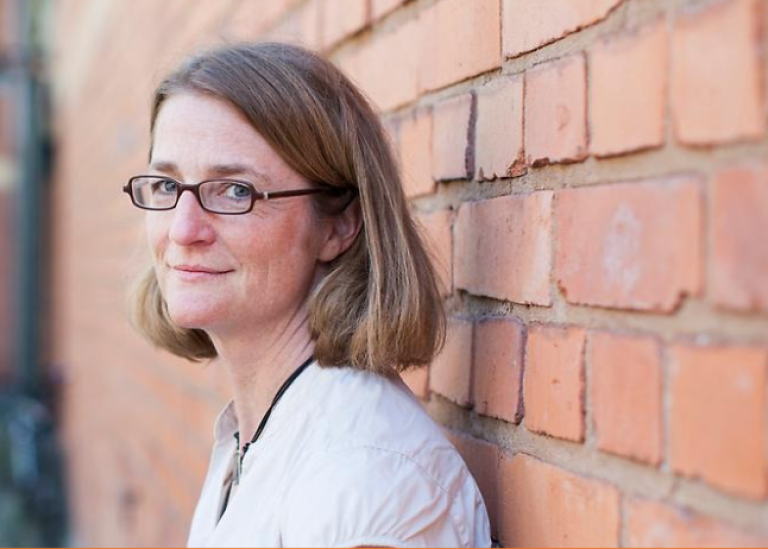
Maja Schlüter is the first researchers at Stockholm University receiving an ERC Starting Grant, an ERC Consolidator Grant and an ERC Advanced Grant. Photo: Niklas Björling
This spring, three researchers at Stockholm University were awarded the prestigious European Research Council Advanced Grant. One of them is Maja Schlüter, professor at Stockholm Resilience Centre (SRC), who receives 2.5 million Euros for the project “Building models of, with, and for sustainability transformations” that will run for five years and bring together an interdisciplinary team of researchers. She will also hire four PhD students.
“This is a wonderful opportunity to continue some of the exciting interdisciplinary work on the dynamics of social-ecological systems we have been doing as a team over the last 10 years,” says Maja Schlüter.
The European Research Council (ERC) is the European Union’s main body for funding frontier research. The council’s funds come in different schemes that depend on the academic age of the applicant, like Starting Grant, Consolidator Grant and Advanced Grant. Maja Schlüter is the first researchers at Stockholm University receiving all these three prestigious grants. In year 2011, she was a awarded a Starting Grant, in 2016, a Consolidator Grant, and now an Advanced Grant.
Why are you so successful in applying for ERC grants?
“It is difficult to say. Several things probably come together. The ERC is looking for research that pushes frontiers and is high risk/high gain. In my project proposal I tried to find the right mix of pushing the frontiers of my field while at the same time showing that I have a solid basis and been able to tackle similar challenges in the past so that the reviewers trusted that it could work, even if there is a high risk of failure,” says Maja Schlüter.
She also believes the fact that she has been awarded other EU grants before (such as a Marie Curie Fellowship) helped building that trust. She has also throughout her career worked at different institutions/labs that provided her with a diversity of experiences, skills and knowledge that helped build that basis and could have affected the evaluation positively.
“But of course, there was also some luck involved,” adds Maja Schlüter.
Difference between ERC grants and other grants
According to Maja Schlüter there is a difference in applying for ERC grants compared to other research grants.
“It is a large grant so it allows one to think about bigger questions that need more time and requires a team to address them. You can take an idea you are excited about and run with it,” says Maja Schlüter.
Furthermore, it is not a collaborative project with partners at different institutions, which makes preparing a coherent proposal somewhat easier because there is less time and effort needed for aligning different interests and views.
“But that said, a proposal will always benefit from a plurality of perspectives and contributions. Given the collaborative and interdisciplinary nature of my work, I co-developed the research ideas with the project team (which will be a mix of people I have worked with before and new students and postdocs).“
ERC applications are also different in that one needs to submit already at stage 1 the two parts for a two-stage procedure (a five-page synopsis and a fourteen-page full application). She says it can be hard to motivate oneself to write the full application not knowing if anybody will ever read it (only those applications that pass to stage 2 based on the synopsis are evaluated).
What is most important to think about if you are considering applying for an ERC grant?
“Do you have a research idea that you are excited about, that is novel, and will advance your field or bring two fields together and that will benefit from having a group working on it together? Do you have the qualifications required by the ERC, e.g. shown independence in your work (starting and consolidator grants), are established (the ERC asks for ten first author publications in the last ten years) and support younger researchers (advanced grants)?”, says Maja Schlüter.
Support and interview training
Maja Schlüter has received advice from the Office for Research, Engagement and Innovation Services (REIS) at Stockholm when writing her application, e.g. with respect to how to present the ten selected publications or to make sure that she discusses possible risks and ways how to deal with them. They also organized an interview training, a coaching session with a trainer and a mock interview with colleagues at the university when she was preparing for the interview in the second stage.
“Particularly the support in preparing the interview and the exchange with colleagues who recently went through this process was very helpful,” says Maja Schlüter.
Additional reading: New ERC advanced grant boosts centre’s research on transformative change
Maja Schlüter´s advice when applying for ERC grants
1) If you are a young researcher, start writing grants early in your career and don't hesitate to apply for an ERC starting grant (even if you do not have a paper in the highest ranking journals; other merits in your CV count as well).
2) Be courageous in proposing novel ideas, even if they have not been tested before (but make sure they build on your work and you have convincing arguments that you can do this). Don't be afraid if not everything is worked out in every detail (it can't be, given the scope of the grant).
3) Test out and share ideas in discussions with colleagues.
Last updated: 2023-06-13
Source: Communications Office