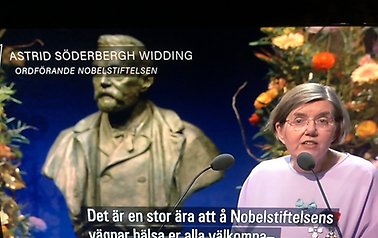
In December, The Nobel Week is celebrated at Stockholm University. On 8 December, the Royal Swedish Academy of Sciences' official Nobel Prize lectures were held in Aula Magna. This year, Stockholm University President Astrid Söderbergh Widding also played a prominent role at the Nobel Prize ceremony.
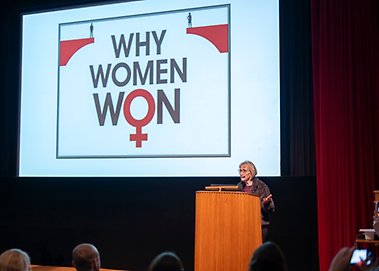
On Monday, Nobel Laureate in Economics Claudia Goldin held a lecture for researchers and other economists. Claudia Goldin has meant a great deal for gender economics, according to Professor Anne Boschini.
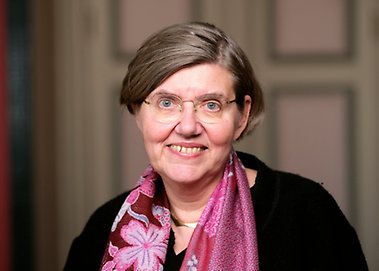
President’s blog 12 December, 2023. We are just coming out of this year’s Nobel Week, the big annual celebration with focus on science, literature and peace. On Thursday the Nobel lecture in physiology or medicine and the Nobel lecture in literature were held. On Friday morning the queue was winding outside the Aula Magna, where the Royal Swedish Academy of Sciences was organizing the Nobel lectures in physics and chemistry as well as the lecture in economic sciences in memory of Alfred Nobel. Festivities were happening during the weekend – The Nobel concert on Friday night, a reception at the Royal Swedish Academy of Sciences’ and the Nobel Foundation on Saturday and of course the Nobel Day itself with the award ceremony and the banquet. It is sometimes said that it is only the celebration itself that matters here in Sweden. This is strongly contradicted by the great interest in the lectures, with a packed auditorium and an audience of mixed ages. After having participated as President and guest in the Nobel Week’s various activities during all these years, now, with my new assignment as chairman of the Nobel Foundation, I have been given a hosting role, where I also get the opportunity to meet the prize winners a little more informally behind the scenes. Not everyone seems particularly amused to be in focus. But it is clear that they all have something in common; the contagious passion for their own work and for conveying their insights to others, and their perseverance. In times of indifference or, at worst, contempt for science, the Nobel Week is a powerful reminder of the great importance of basic research to society, whether it concerns attosecond physics – to Pierre Agostini, Ferenc Krausz, Anne L’Huillier – or the discovery and development of quantum dots – to Moungi G. Bawendi, Louis E. Brus, Alexej Jekimov. The achievements that are rewarded, sometimes far in retrospect, hardly had any known applications at the time of the scientific discovery. Not infrequently, the horizon of possibilities for whether and how they could be applied has also widened over the years. This year’s prize in physiology or medicine – to Katalin Karikó, Drew Weissman – which was the basis for the rapid development of mRNA vaccines during the covid 19 pandemic, is an unusually clear example, but the hatred and threats to which these prize winners have been subjected also shows a frightening polarization where science is reduced to opinions in a debate. The recipient of the prize in economic sciences in memory of Alfred Nobel, Claudia Goldin, does the opposite; through her research, she substantiates what is often presented as mere opinion. Today, it is more important than ever that researchers do not tire in advancing knowledge and truth. At the same time, the literature prize shows that the search for knowledge and truth can also be pursued in other ways than those of science. When the focus, as in Sweden today, one-sidedly tends to end up on what technological or other benefit can be quickly extracted from research, literature and this year’s prize winner Jon Fosse remind us of the complexity and richness of reality. It happens that the Nobel Peace Prize gets a little overshadowed here in Stockholm. But this year’s award, whose recipient Narges Mohammadi is imprisoned in Iran, really deserves to be highlighted – it rewards a tireless fight against the oppression of women in her homeland, for human rights and freedom. Astrid Söderbergh Widding President Read more from the President’s blog
A new version of Serviceportalen will be launched soon. Serviceportalen will still contain knowledge articles and answers to frequently asked questions, and you can ask questions and report problems. A new feature is that you must log in with your university account to be able to access Serviceportalen.
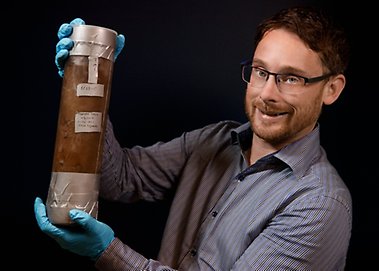
Our climate is becoming ever warmer – impacting plant and animal ecosystems. But this is by no means the first time Earth has experienced climate change. Wallenberg Academy Fellow Peter Heintzman is using genetics to examine how prehistoric climate change has impacted life on Earth.
A holy grail in biology is to map all the functions of the cell. The existence of vast quantities of data combined with rapid progress in AI methodologies has enabled scientists to take the next step. A team of researchers is now working to understand the molecular language of the cell.
Mothers who took parental leave part-time or for shorter periods were more likely to engage in income-generating activities or pursue education. A new study uncovers surprising patterns in parental leave usage among newly arrived migrant women in Sweden, specifically focusing on their integration into the labor market.
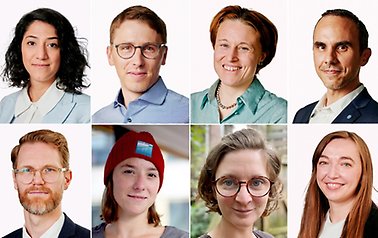
Of the 31 younger prominent researchers who are appointed Wallenberg Academy Fellows this year, eight are nominated by Stockholm University. Among other things, they do research on methane in the Arctic seabed and how we can make decisions about potential disasters.
At COP28 in Dubai, world leaders convene to discuss climate change, but beyond the public eye, certain actors operate to influence negotiations: think tanks and other private organizations. Adrienne Sörbom, professor at SCORE, investigates their influence and clandestine role behind the scenes at this global summit. COP28 in Dubai marks the 28th annual conference within the UN where world leaders gather to discuss climate change measures. However, it's not just a gathering for states but also for companies, grassroots organizations, and other entities, including think tanks. It's these latter groups that Adrienne Sörbom, professor at SCORE, will focus on when she travels to the climate summit in the United Arab Emirates. "My interest is in understanding how organizations such as think tanks, companies, private research institutes, and others attempt to influence negotiations at COP events," says Adrienne Sörbom. Her research projects, 'Global Climate Change Governance and Private Diplomacy: The Case of Transnational Think Tanks' and 'Climate Policy and Non-State Diplomacy: Nordic Think Tanks,' conducted with colleagues at SCORE, will shed light on the role these organizations play in shaping global climate policy. Why are think tanks important to study in the climate field? "We know from previous research that think tanks and all these types of organizations are active in global governance. We believe they will also be active in this type of area. We can also see from previous participant lists that these organizations are there." Adrienne Sörbom explains that a summit like COP28 provides an excellent arena for think tanks. It's a sphere where influential players gather, allowing active participation and the development of crucial relationships. Is there a conclusion to draw about the influence of think tanks during COP? "We believe, based on previous research, that they will try to act as what we call 'private diplomats.' "This means they will try to act as ambassadors for certain issues and solutions. They will also be there as private conveners for discreet meetings behind the scenes." When all UN member states are to agree on the way forward in the climate issue, there are significant challenges. Therefore, the involvement of non-state actors in influencing processes can be beneficial for a smooth progression. However, these are not organizations that voters have elected or can directly hold accountable. Could there be a democratic problem with the influence of think tanks?
This is the fifth year of the mentorship programme. In addition to exchanging experiences, this year's participants will also learn more about communication and active listening. The mentorship programme at Stockholm University connects alumni and students for a shared exchange of experiences and inspiration. The programme runs over one academic year, and each mentor pair meets regularly throughout the programme. Eight departments and 35 mentor pairs are participating in the programme this year.
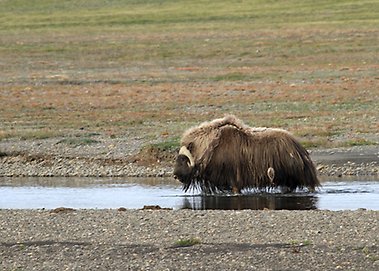
At the end of the last Ice Age, many iconic species became extinct. However, one Ice Age relict, perfectly adapted to the harsh climate of the tundra environment, has survived until the present day. In a new research study in Molecular Ecology, scientists investigate how the muskox mastered living on the edge – geographically, ecologically, and genetically.
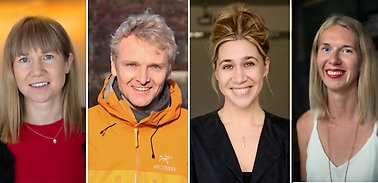
Four researchers at Stockholm University receive the prestigious ERC Consolidator Grant 2023. They are in the areas of economics, social psychology and analytical chemistry.