News

  • Collaboration vs sanctions

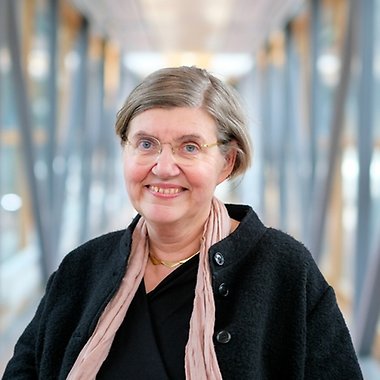
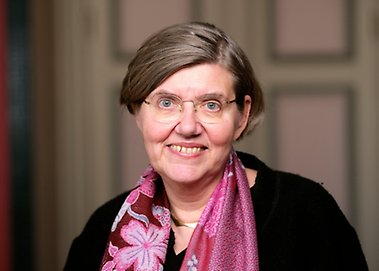
    President’s blog 13 November, 2023. We find ourselves in difficult times of war and conflict, worse than in a very long time. It also means major challenges for us as a university. A new concept of responsible internationalization had just been launched, among other things, through The Association of Swedish Higher Education Institutions’ (SUHF) geopolitical council, before the demands from various quarters now only increase to limit international collaborations. The academy is by its very nature international. Universities have, since their creation in the Middle Ages, been hubs for international exchange. Freedom of research is fundamental. Today, however, geopolitical considerations force us to limit the total openness that has long been our guiding light. “As open as possible, as closed as necessary” is the formula for the exchange of research data, and it has increasingly become more generally applied to academic exchanges. But the universities are also increasingly subject to pressure from various groups to impose sanctions of various kinds and to suspend collaborations with universities in countries whose regimes are considered unpleasant. Over the years, I have received a number of such requests, to take a stand and make statements against one or the other. As President, however, my view is clear: Stockholm University should not comment on anything other than things that belong to the academy. Collaborations between researchers often work well, regardless of the country in which they operate, and that in itself is a strong political force, which can also influence those in power. In today’s debate, however, the interrupted collaborations with Russian universities are often invoked in support of sanctions also against other countries. These interrupted collaborations had two specific reasons. Partly, the government wanted all government authorities’ cooperation with Russia to be suspended as a result of the large-scale invasion of a peaceful and democratic neighboring country. Partly, and above all, it also became unsustainable from a merely academic perspective to maintain collaborations with higher education institutions whose presidents signed a petition in support of Putin’s war of aggression. They thereby excluded themselves from all collaborations based on respect for the academy’s core values. By a unique measure, even the Magna Charta Universitatum excluded all Russian universities that had signed the agreement. My strong hope is that this measure will remain unique. It is popular these days to say “We have been naive”. To the extent that it is naive to continue to believe in the value of research as a free and common global arena and in “science diplomacy”, i.e. that universities and higher education institutions through their global collaborations constitute an important force for bridging contradictions and promoting peace, cooperation and understanding, I am proud of my naivety. Astrid Söderbergh Widding President Read more from the President’s blog
  • Fungal infections in living host tissue reveals proline metabolism facilitates virulence

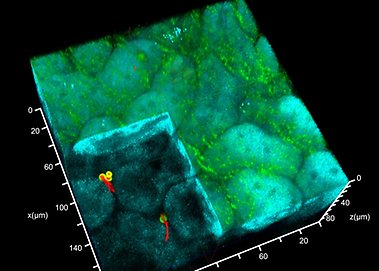
    An international team of scientists led by researchers from the Department of Molecular Biosciences, The Wenner-Gren Institute, SciLifeLab, Stockholm University has published in PLoS Pathogens the first successful application of 2-photon intravital microscopy (IVM) to image the dynamics of fungal infections in the kidney of a living host. The study reveals that the opportunistic human fungal pathogen Candida albicans requires the ability to metabolize proline, an amino acid obtained from the host, to mount virulent infections.

  • Sperm's secret voltage switch: Scientists unlock the mystery of motility

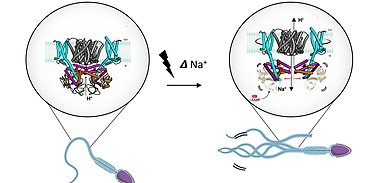
    Researchers at Stockholm University have unveiled the hidden intricacies of how sperm go from passive bystanders to dynamic swimmers. This transformation is a pivotal step in the journey to fertilization, and it hinges on the activation of a unique ion transporter. The study was published in Nature.

  • The budget bill, the universities and Stockholm University

    President’s blog 24 September, 2023. Last week, the autumn budget bill was presented (20 September), which has certainly not escaped anyone. The following day, the Minister for Education, Mats Persson, presented the bill from the Ministry of Education’s perspective in front of Presidents for universities and other heads of authorities under the Ministry. He particularly emphasized that the general saving in the state of 1% over three years, in order to achieve efficiency, has been reduced to 0.5% in terms of education and research at the universities. Important, of course, not least for the signal value – but at the same time we already have the productivity deduction which erodes our grants from year to year, and it is hardly in efficiency that we may lack. It would have been easier to digest a more straightforward motivation, that despite this, savings are required to invest in other, specific sectors of society. The most important point was otherwise to present the so-called “ingenjörspaketet”, an investment at Uppsala University, Lund University and Chalmers University of Technology with new education slots. It goes hand in hand with a strategic research investment for the same universities, aimed at electrification and battery technology, and an investment in excellence in education regarding batteries, technology and the green transition. However, KTH will not be out of luck either, as responsible for the upcoming national “Cybercampus Sweden”. Furthermore, a higher price hike was announced for science and technology, which also includes the subject knowledge part of the teacher training courses. It is both requested and welcomed, but now it only means an increase of 1.6% before 2024 – fully realised, however, 4.8% in 2026. As a whole, despite this reinforcement, Stockholm University will receive somewhat less resources for education at basic and advanced level next year. Investments are also made in retraining and lifelong learning, and CSN receives temporary funds to be able to manage the new student finance scheme – at the same time as a task is announced regarding a change in the courses and programmes offered – and an investment in a short supplementary teaching practice, which also benefits Stockholm University. A number of additional initiatives are aimed specifically at individual universities or other authorities. During the coming “school year” – the minister made a special point of this university-adapted formulation – as is well known, a research policy bill is waiting to be included in next year’s budget bill, a national STEM strategy (Science, Technology, Engineering, Mathematics) is promised covering preschool to higher education, at the same time that the work for a reduced administrative burden on the part of the government must continue. The bill emphasizes, however, that the universities themselves bear a great deal of responsibility here for having increased the administrative burdens. On the contrary, I would like to claim that we at Stockholm University strive to minimize them. Finally, a redistribution of the funding cap between the higher education institutions is announced, with SEK 100 million in 2025, SEK 200 million in 2026 and SEK 250 million from 2027. The purpose of this is to strengthen the motivation for a high-quality educational offer as well as to prioritize and strengthen areas with skill shortages, especially STEM. This is extremely worrying from Stockholm University’s perspective, where over 85% of the courses are within the Human Science Academic Area. A major problem today lies in the lack of applications for STEM educations, and this will hardly be remedied so quickly through the planned STEM strategy. It also testifies to a significant and worrying single-mindedness, that all other important areas of education now suddenly seem to have faded into the background – when, at the same time, ahead of the EU’s next framework program, on the contrary, there is talk of the desperate need for SSH (Social Sciences and Humanities) to be able to address, interdisciplinary, the major societal challenges. In addition to this, there is another change that the Government did not mention, but which has a great impact on us as institutions of higher education: the cut of no less than a third of the funding for student influence to the student unions that has been announced from 2026 onwards. Student influence is an important part of our mission as a university. Now, in practice, the government leaves it up to the universities to finance the cut funding – at the same time that most of us are already significantly strengthening the unions’ work towards the students. Astrid Söderbergh Widding President Read more from the President’s blog
  • You don’t lose if you snooze

    It is often claimed that using the snooze button can have negative effects on sleep and cognitive processes, but there has been no direct evidence to this effect. New research from the Department of Psychology at Stockholm University shows that snoozing may actually support the waking process for regular snoozers.

  • Inauguration and conferment ceremony 2023

    President’s blog 2 October, 2023. It has been some intense days leading up to this year’s Inauguration and conferment ceremony, which took place Friday 29 September. As usual, it was a brilliant ceremony in the City Hall with the installation of this year’s new professors, ten new honorary doctors who were conferred in the various faculties, a large number of new doctors and a record number of jubilee doctors – a result of the introduction of doctoral degrees when the number of doctoral students increased greatly. In addition, Robert Weil received the University’s large gold medal and two teachers received this year’s Award for Good Teaching. It’s always a little tight for space – will there be enough room for us in the Golden Hall for the banquet? As long as it is possible I see it as a strength to be able to gather it all at a joint annual ceremony, where several generations of researchers meet and the entire University’s activities – research, education and collaboration – are symbolically represented. Now it’s back to everyday life – but this week several lectures and seminars will be held with the new honorary doctors. And already on Wednesday 4 October it’s time for one of the University’s other recurring events: Sustainability Forum, which is now held in collaboration with colleagues in the Stockholm trio. Astrid Söderbergh Widding President Read more from the President’s blog
  • Open access: Need to move away from transformative agreements

    Sweden is far ahead when it comes to promoting open access to scholarly publications. But there is risk of getting stuck in a permanent transformation that favours large commercial publishers. A new report from the Association of Swedish Higher Education Institutions develops a strategy on how to work in negotiations with the publishers. In 2021, the Association of Swedish Higher Education Institutions (Sveriges universitets- och högskoleförbund, SUHF) convened a “Beyond transformative agreements” working group (the BTA group) to lay the foundation for further advancing the transition to open access. Now, the group has proposed a strategy for how Sweden – and the Bibsam Consortium – should operate in its negotiations with the publishers. The aim is to move away from transformative agreements to a financially sustainable system that stimulates the transition to a fully open publishing system. The current publishing system has several flaws that negatively affect research, at the individual level (the researcher), and at the systemic level (Higher Education Institutions, HEIs and research funding).

  • Genomic study reveals impact of near extinction and hunting in Swedish moose

    Intensive hunting almost wiped out the moose population in the Nordics in the 19th century. The first large-scale genomic study of moose in Scandinavia reveals the effect of this near-extinction. It shows that inbreeding does not seem to have increased and the species seems to have maintained most of its historical genetic diversity.