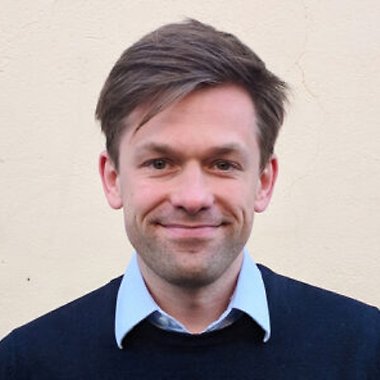
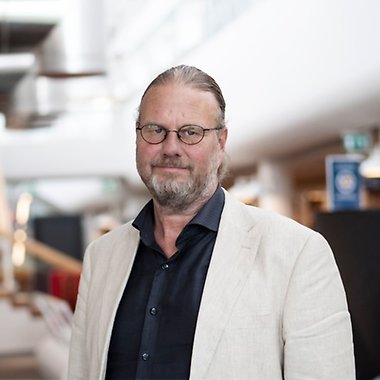
Alexander Berglund, docent in mathematics at Stockholm University, is awarded this year's Göran Gustafsson prize in mathematics. The Göran Gustafsson Prize, this year worth a total of SEK 33 million, is awarded to five young outstanding Swedish researchers in five categories: chemistry, physics, medicine, mathematics and molecular biology. The award is considered to be the foremost Swedish award for young researchers and is awarded by the Royal Swedish Academy of Sciences, KVA. The prize in mathematics to Alexander Berglund
An American Hercules airplane visits Kiruna until the beginning of April. The visit is part of a research project to better understand outbreaks of cold air over the Arctic.
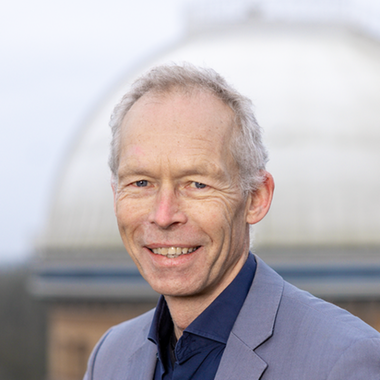
Johan Rockström, director of the Potsdam Institute for Climate Research in Germany and professor at Stockholm University and former director of the Stockholm Resilience Center, is awarded the world's top environmental prize. The Tyler Prize for Environmental Achievement is considered to be the world's most prestigious prize for efforts in environmental science, environmental health and energy. The prize is 250,000 US dollars and is sometimes called the "Nobel Prize in the Environment". The 2024 prize is awarded to Johan Rockström, director of the Potsdam Institute for Climate Impact Research in Germany, for his pioneering work on the planetary boundaries framework (see below). Professor at Stockholm University
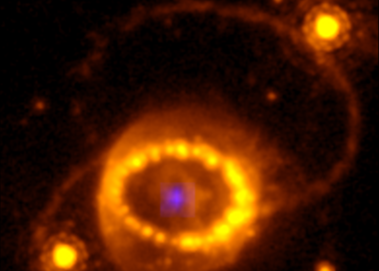
Scientists can finally show that a neutron star formed from our most well-studied supernova, SN 1987A. The breakthrough was made possible thanks to the James Webb telescope.
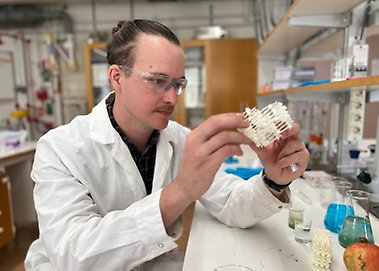
Researchers from Stockholm University have developed porous crystals made from pomegranate extract to capture and degrade pharmaceutical molecules found in local municipal wastewater. The article was first published 22 February 2024. Pharmaceutical compounds affect the human body to improve our health, but they can also have unintentional adverse effects for the wellbeing of wildlife. Hence wastewater treatment plants are facing the challenge of removing emerging organic contaminants (EOCs) such as active pharmaceutical ingredients, and therefore new materials and technologies are required. One strategy for removing pollutants from water is by using porous materials that behave like sponges. Metal-organic frameworks, so called MOFs, are a type of nanoporous material that are made of metal ions and organic molecules. Most MOFs are made using synthetic organic molecules. But now researchers from the Department of Materials and Environmental Chemistry, Stockholm University, have managed to develop new porous MOFs using a naturally occurring molecule found in plants – ellagic acid. “Ellagic acid is one of the main building units of naturally occurring polyphenols known as tannins, which are common in fruits, berries, nuts, and tree bark. By combining ellagic acid, which was extracted from either pomegranate peel or tree bark, with zirconium ions, we developed a new highly porous MOF which we named SU-102,” says Erik Svensson Grape, who did the study during his time as a PhD student at the Department of Materials and Environmental Chemistry, Stockholm University.
Stockholm University is currently seeking a new President, and the advertisement for the position has been published. Students and employees can suggest candidates for the position no later than 15 March.
The Association of Swedish Higher Education Institutions (SUHF) has recently issued a new recommendation aimed at all Swedish higher education institutions to actively engage with open educational resources. This is something welcomed by Christophe Premat, lecturer and associate professor at Stockholm University, who means that open educational resources (OER:s) can offer more time for pedagogical work and promote the research community.
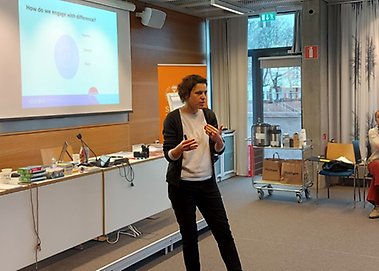
The more you stretch, the more you can grow, and it all happens outside of your comfort zone. Intercultural communication is about challenging your own and other people's beliefs; learning, sharing and, while doing so, having a lot of fun together. These were some of the takeaways from Marina Casals Sala's and Marina Vives Cabré's workshop during the “Train The Trainers” staff week. The international staff mobility event was organised by the University of Glasgow, but held on the premises of Stockholm University in late January. Around twenty people from eight different universities within the CIVIS Alliance participated.
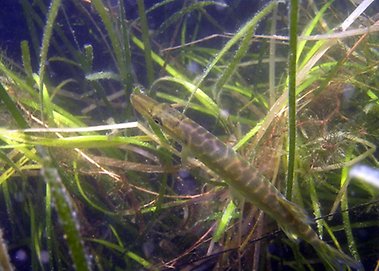
A regime shift is gradually spreading through the archipelagos of the Swedish Baltic Sea coast, where shallow bays, previously dominated by pike and perch have one by one become dominated by one of their prey species, the three-spined stickleback. Now, research shows that the ability of the pike and perch to maintain dominance over stickleback increases if there are plenty of pike and perch close-by that can help the local population withstand the stickleback intrusion. The researchers also found that the resilience of the pike and perch populations decreased with increasing predation from grey seal and great cormorant. Populations of pike and perch have shown marked declines along the Swedish Baltic Sea coast. One of the main causes of these declines is the dramatic increase of three-spined stickleback. The stickleback is a small species of fish that reproduces quickly and shows a good appetite for the eggs and larvae of pike and perch. Through this predation, it has knocked out local populations of pike and perch, especially in the outer archipelago. As the shift has spread successively from bay to bay, it has been nicknamed ‘the stickleback wave’. When the stickleback comes to dominate an area, it has cascading effects on the rest of the ecosystem, with consequences for water quality and habitat-forming vegetation. Predatory fish hold out against the stickleback wave
You don't have to be happy to live a good life, according to Professor Erik Angner, who do research happiness. He is also one of the lecturers on the new summer course on happiness and the good life.