News

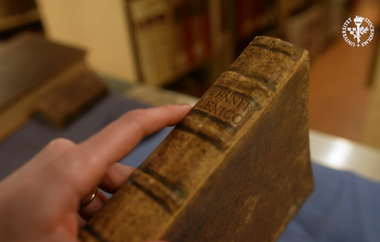
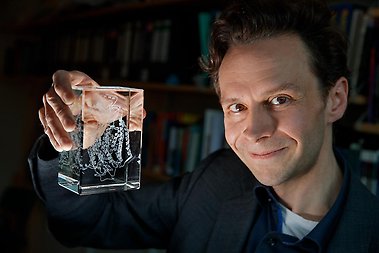
  • Person holding up DNA structure. 

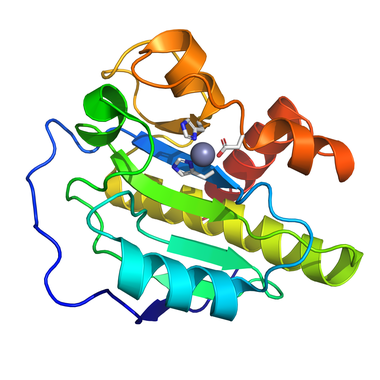
    Cell powerhouses could offer cures for genetic diseases

    We still know very little about how energy flows within our cells. Ville Kaila is using advanced methods to understand how a complex protein chain keeps the flow running. This knowledge may contribute to new treatments for severe genetic and neurodegenerative diseases.

  • Dammed – conversations against the current

    What happens when we stop a river’s flow? What happens when we intervene, interrupt and disturb its course, to harness its powers in the name of renewable energy? And is a dammed river still a river?

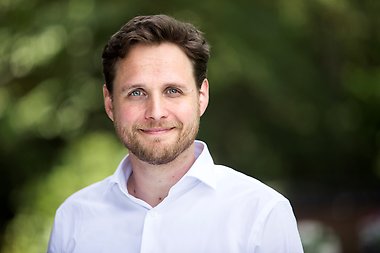
  • Profile photo of Jesper Sollerman

    New Swedish delegate on the ESO Council

    Jesper Sollerman, professor and vice director of the Department of Astronomy at Stockholm University has been chosen as a new Swedish delegate to the council of the European Southern Observatory (ESO).

    Department of Astronomy
  • Emil Bergholtz, professor i fysik

    “Enormous potential in quantum technology”

    Professor Emil Bergholtz is at the forefront of the application made by Stockholm University, Linköping University and Uppsala University to create a broad and cohesive strategic research area in quantum physics.

  • An old puzzle solved: astronomers discover the world is flat

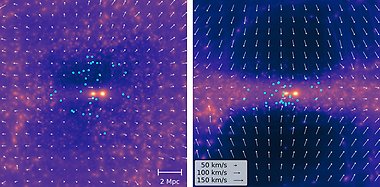
    A pan-European group of astronomers has used newly developed computer technology to solve a 100 year-old puzzle. While most galaxies in our neighborhood move away from us almost as expected for an unperturbed cosmic expansion, our nearest giant neighbour is approaching at high speed.

  • Nordic QCI: Cybersecurity in the Quantum Era

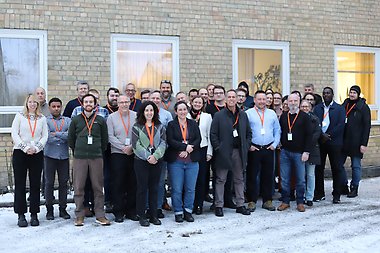
    Nordic Quantum Communication Infrastructure (NordicQCI) held a kick-off meeting for the consortium and its partners on January 22–23. The project aims to develop and implement the most effective solutions for secure communication – from local city networks and long-distance connections to land-based networks, satellites and submarine cables.

    Department of Physics
  • Virus protein could protect cheese from Listeria

    A piece of cheese may seem harmless, but in some cases it can carry a deadly stowaway: Listeria monocytogenes. As unpasteurized cheeses become increasingly popular, the need for new methods to ensure food safety is growing. Traditional ways of combating Listeria have limitations, so researchers are turning to an unexpected ally: viruses that attack bacteria.

    Department of Biochemistry and Biophysics
  • Farouq Sessah Mensah’s: The Didactics of Mathematics with Educational Technology

    Farouq has a long experience as a mathematics teacher and teacher educator in Ghana, where he has also played a key role in supporting colleagues in the use of digital tools. His dissertation builds on his master’s thesis on educational technology and compares the contexts of Sweden and Ghana.

    Department of Teaching and Learning